Mixed-Use Properties: Financing Both Retail and Residential Space
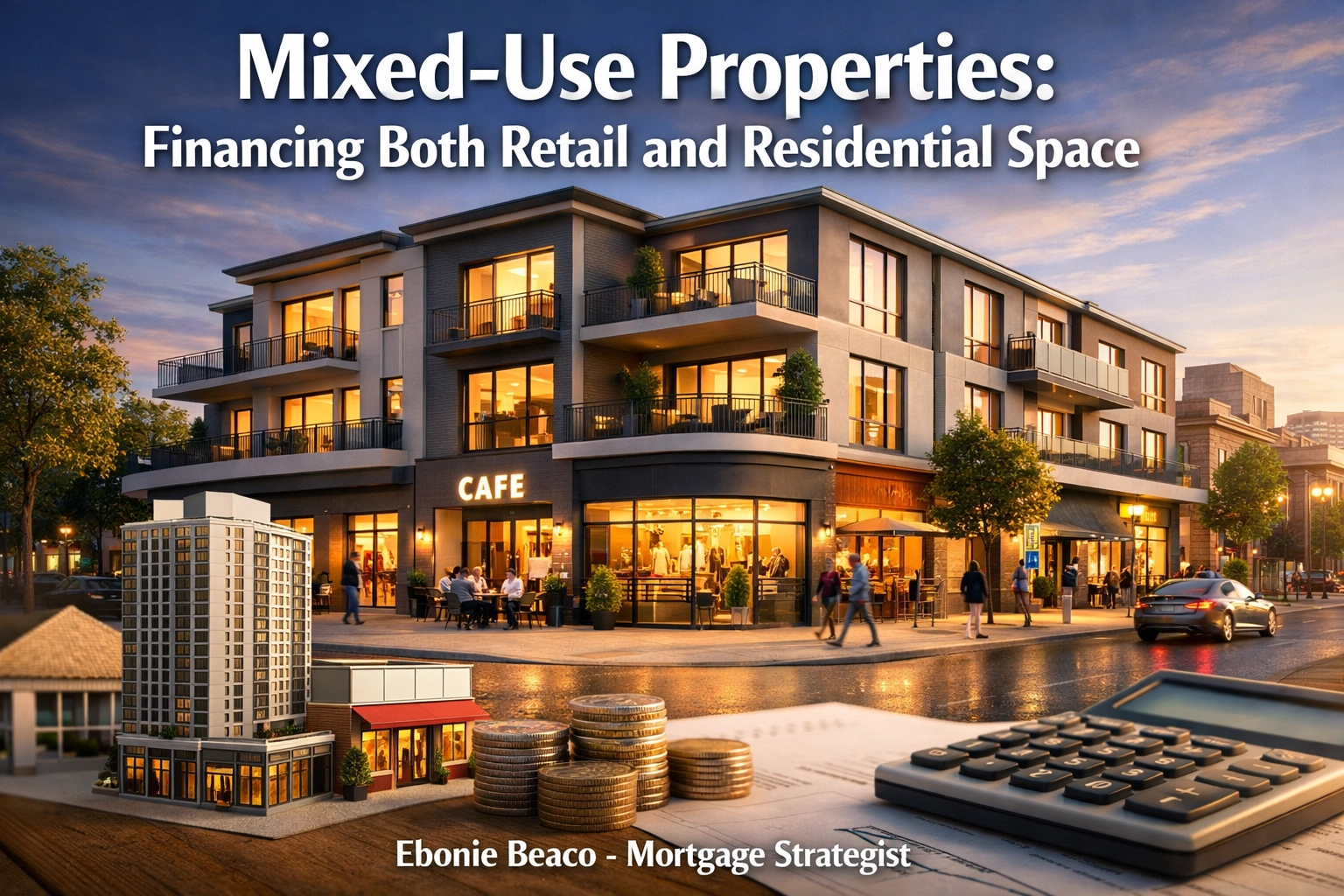
Walking through neighborhoods in Chicago, Illinois, or the historic districts of Alexandria, Virginia, you often see a specific type of building that defines the urban landscape: the mixed-use property. These buildings usually feature a retail storefront on the ground level with residential apartments tucked away upstairs. For a commercial investor, these properties represent a unique opportunity to diversify income streams within a single asset.
However, financing these hybrid buildings isn’t quite the same as getting a loan for a single-family home or a standard strip mall. Because the property serves two different purposes, lenders look at them through a specialized lens. If you are looking to expand your portfolio in states like Florida, Georgia, or Michigan, understanding how to navigate these financing waters is essential.
Why Mixed-Use Is the "Swiss Army Knife" of Real Estate
Investors often gravitate toward mixed-use properties because they offer a hedge against market volatility. If the retail market takes a dip, the residential units often remain occupied. If residential demand shifts, a long-term commercial lease can provide the stability your portfolio needs. This diversification is a huge draw for landlords looking to scale their operations.
In markets like California or Indiana, the demand for "walkable" living: where residents can live, work, and shop in the same vicinity: continues to grow. This trend makes mixed-use properties highly attractive for both acquisition and long-term hold strategies. You can learn more about the various types of investment properties on our Mortgage Basics page.
Understanding the Financing Options
When you decide to pull the trigger on a mixed-use building, you have several paths to explore. The "right" path depends on how much of the building you plan to occupy yourself versus how much you plan to lease out to others.
Traditional Commercial Bank Loans
Standard commercial loans are a go-to for many investors. Banks typically look at the property's overall income, the creditworthiness of the borrower, and the Loan-to-Value (LTV) ratio. In these scenarios, lenders often require a down payment ranging from 20% to 30%. They want to see that the property can comfortably cover its own expenses and the mortgage payment.
SBA 7(a) and 504 Loans
The Small Business Administration (SBA) offers programs that are incredibly beneficial if you are an owner-occupant. If your own business will occupy at least 51% of the total square footage, you might qualify for an SBA 504 loan. This program allows for lower down payments: sometimes as low as 10%: and long-term fixed rates. This is a common strategy for business owners in Arkansas or Alabama who want to own their storefront while also benefiting from the rental income of the apartments upstairs. You can check the SBA website for detailed eligibility requirements.
DSCR Loans: The Investor’s Secret Weapon
For those who don’t want to provide tax returns or personal income verification, the Debt Service Coverage Ratio (DSCR) loan is often the best fit. This loan type focuses almost entirely on the cash flow of the property itself. As long as the combined rent from the retail and residential units covers the mortgage and expenses, the loan can move forward. This is particularly popular for investors in high-growth areas of Florida and Georgia who want to close quickly without the red tape of traditional bank underwriting.
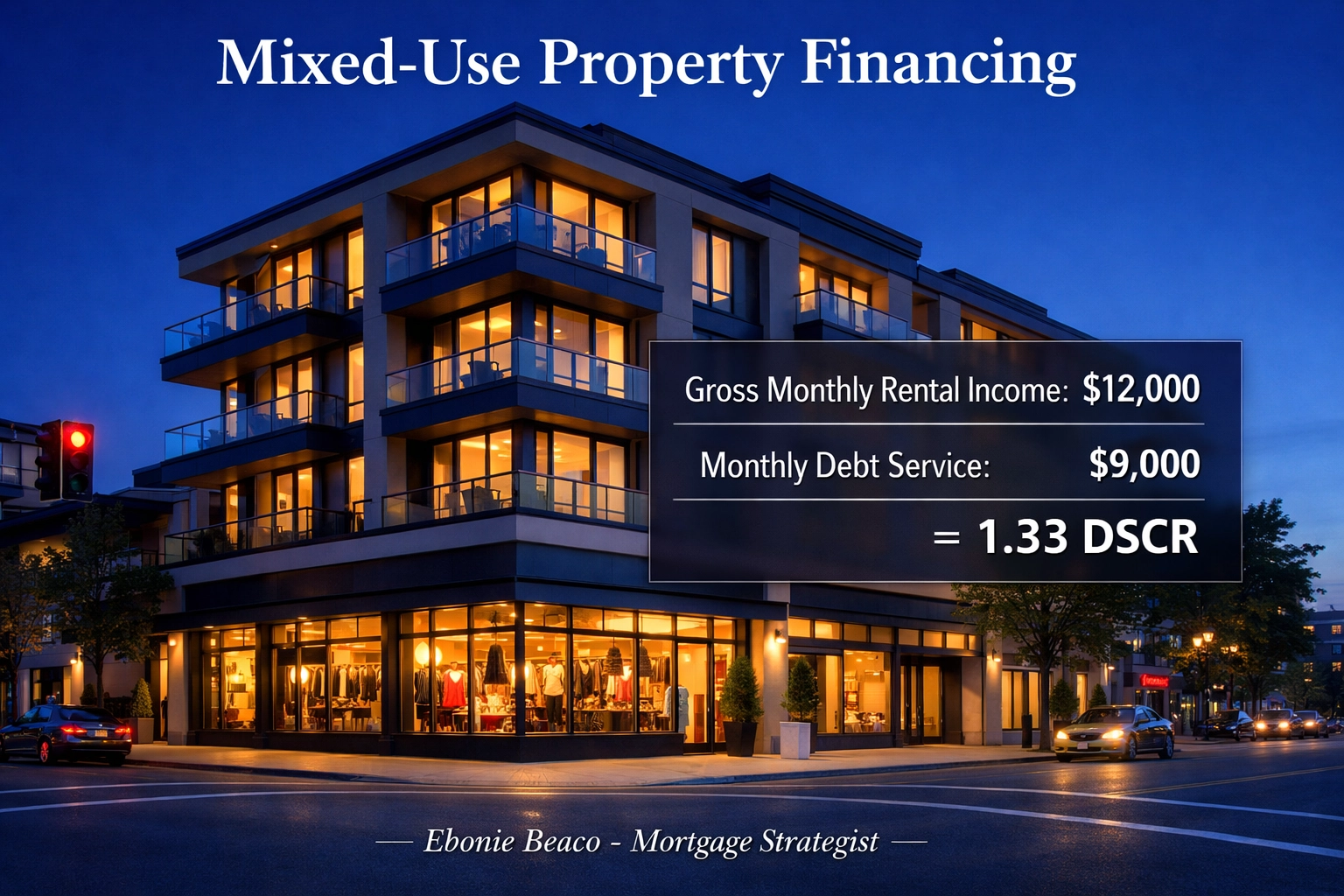 (Image Note: Title "Mixed-Use Property Financing" at the top. The image displays a calculation box: Gross Monthly Rental Income ($12,000) / Monthly Debt Service ($9,000) = 1.33 DSCR. At the bottom, it reads "Ebonie Beaco - Mortgage Loan Officer".)
Mastering the Math: The DSCR Calculation
Lenders use the DSCR to determine if the property generates enough income to pay the mortgage. It is a simple but powerful formula. To calculate it, you take the Net Operating Income (NOI) and divide it by the total debt service (the annual or monthly mortgage payment).
Let’s look at a real-world example of a mixed-use building in Michigan:
- Retail Rent (Ground Floor): $4,000/month
- Residential Rent (4 units): $6,000/month
- Total Monthly Income: $10,000
- Total Monthly Mortgage (PITIA): $7,500
The Calculation: $10,000 (Income) / $7,500 (Debt Service) = 1.33 DSCR
Most lenders look for a DSCR of at least 1.20 or 1.25. A ratio of 1.33 shows the lender that the property has a healthy "cushion," making it a lower-risk investment. If you want to run your own numbers on potential deals, our Mortgage Calculators are a great place to start.
The Role of Bridge Loans
Sometimes, a mixed-use property has a lot of potential but isn't quite "ready" for long-term financing. Maybe the retail space is vacant, or the residential units need significant renovations. In these cases, a bridge loan can provide the short-term capital needed to acquire and stabilize the asset.
Once the renovations are complete and the building is fully leased, you can transition into a long-term permanent loan or a Home Refinance structure if the property was initially held in a different entity. This "buy, rehab, rent, refinance" strategy (often called BRRRR) is a staple for investors in markets like Kentucky and Missouri.
Navigating Local Market Nuances
Every state and city has its own vibe when it comes to mixed-use. In Chicago, the focus is often on multi-unit buildings with historic storefronts. In parts of California, you might see modern "live-work" lofts that fall under this category.
When searching for properties, it is important to check local zoning laws. A building might look mixed-use, but if the zoning isn't officially designated for both commercial and residential, you could hit a brick wall during the Loan Process. Working with a strategist who understands these regional differences across the Southeast and Midwest is a major advantage.
Key Factors Lenders Evaluate
When you apply for mixed-use financing, be prepared to discuss the following:
- The Tenant Mix: Lenders like to see a balance. If the retail tenant is a high-risk startup, they may view the deal differently than if it’s a long-standing local pharmacy.
- Lease Terms: How long is left on the commercial lease? A five-year lease provides more security to the lender than a month-to-month agreement.
- Property Management: Who is going to manage the building? Handling a retail lease is very different from managing residential tenants. Showing you have a solid plan or a professional manager in place helps build confidence.
If you have questions about your specific scenario, we have a detailed FAQ section that covers many common investor concerns.
Final Thoughts for the Commercial Investor
Mixed-use properties are a sophisticated way to build wealth. They require a bit more legwork in the beginning: more due diligence, more complex math, and a clear understanding of zoning: but the rewards are often worth the effort. By utilizing strategies like DSCR loans or SBA programs, you can acquire these assets with terms that fit your long-term goals.
Whether you are looking at a small duplex with a corner store in Indiana or a large complex in Florida, having a clear financing strategy is the first step toward a successful closing.
Buying a mixed-use building? Contact Ebonie Beaco at Home Loans Network for financing.
Scedule a 1 on 1 at https://calendly.com/homeloansnetwork
Ebonie Beaco Mortgage Strategist | Senior Loan Officer Home Loans Network powered by Loan Factory Inc. NMLS #2389954 HomeLoansNetwork.com 312-392-0664