Michigan’s Industrial Growth and the Housing Demand It’s Creating
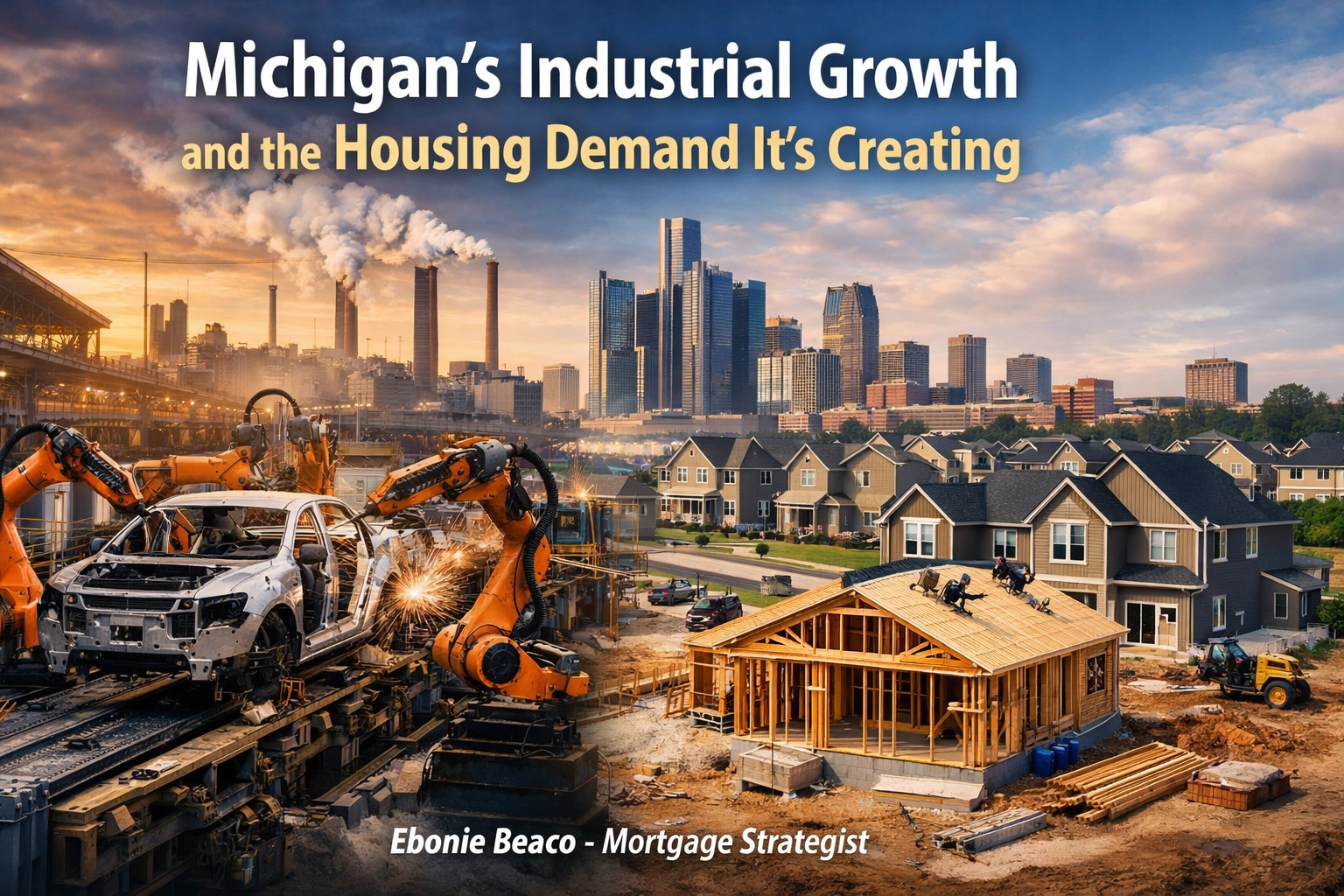
As we move through the first quarter of 2026, the Michigan real estate landscape presents a unique paradox for investors and homeowners. While national headlines focus on mortgage rates hitting a 2026 high of 6.4%: a trend documented by Real Estate News: the ground-level reality in the Great Lakes State is driven by a different engine: industrial modernization.
As a mortgage strategist, I view the market through the lens of sustainability. While the broader economy navigates a "soft patch" in traditional manufacturing, the targeted growth in high-tech industrial sectors in Detroit and Grand Rapids is creating a foundational "floor" for housing demand. This structural shift makes residential investment a strategic play, even in a higher-rate environment.
The Industrial Anchor: Creating a Housing Floor
In the world of real estate finance, we often look for an anchor. An anchor is a local economic driver that ensures a property will remain occupied and appreciate regardless of national volatility. In Michigan, that anchor is the evolving industrial sector.
Industrial Modernization: The transition from traditional assembly lines to advanced manufacturing hubs for electric vehicles, battery technology, and automated logistics. This shift attracts a specialized workforce that requires stable, mid-to-high-tier housing.
Job Density: The concentration of high-paying technical roles in specific corridors creates localized housing shortages. When a new facility opens in a region like Grand Rapids, the demand for surrounding residential units increases almost instantly.
For investors, this industrial growth translates to reduced vacancy risk. When you have a steady stream of skilled workers entering a market, your DSCR (Debt Service Coverage Ratio) becomes much more predictable. Even with 6.4% interest rates, the yield on a well-located rental property can outperform traditional equity markets because the tenant base is tied to long-term industrial contracts.
Analyzing the Detroit and Grand Rapids Corridors
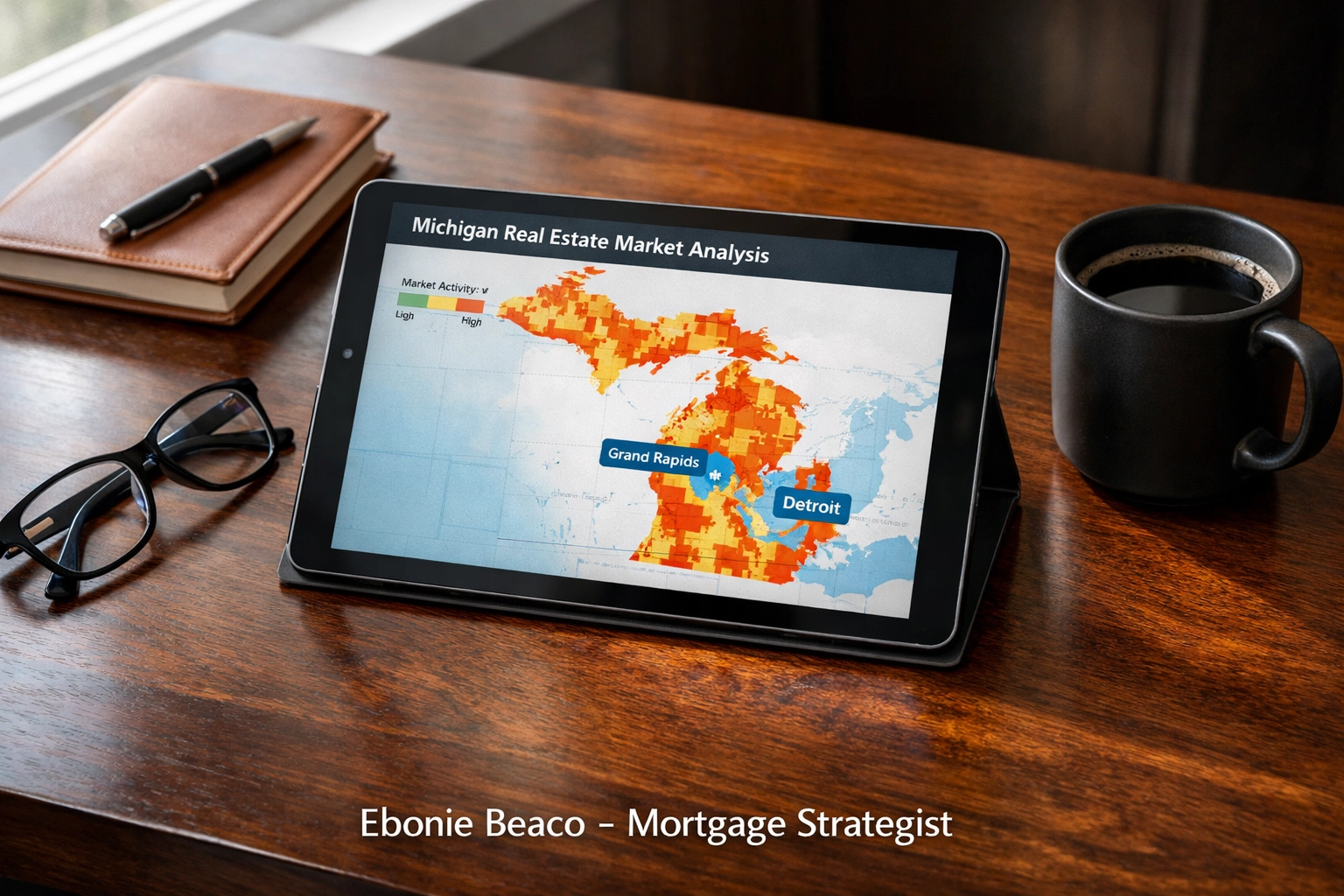
Detroit and Grand Rapids are currently the primary beneficiaries of this industrial resurgence. While the nature of the jobs is changing, the need for rooflines remains constant.
In Detroit, the revitalized corktown and outlying industrial zones are seeing a transition from vacant lots to tech-centric logistics hubs. This creates a ripple effect. Wholesalers are finding opportunities in distressed properties that can be converted into workforce housing, while long-term investors are utilizing Landlord Loans to secure multi-unit buildings near these employment centers.
Grand Rapids continues to show resilience as a medical and manufacturing powerhouse. The diverse economic base here provides a safety net for residential real estate. If you are a real estate investor looking for stability, these markets offer a compelling case for Buy-and-Hold strategies.
Financing Strategies for the 2026 Market
With rates hovering in the mid-6% range, the "cheap money" era of 2021 is a distant memory. However, a professional mortgage strategist understands that the interest rate is only one variable in the wealth-building equation.
DSCR Investor Loans: These loans focus on the income generated by the property rather than the borrower’s personal income. In high-demand industrial areas, rental rates are often high enough to comfortably cover the mortgage, making DSCR loans a primary tool for scaling portfolios in Michigan.
Cash-Out Refinance: For homeowners in Michigan who have seen their property values rise over the last three years, a Cash-Out Refinance can provide the capital needed to pivot into investment properties. Accessing equity now allows you to acquire assets before the next projected upswing in 2027.
Non-QM Mortgage Loans: Many contractors and business owners involved in the industrial build-out are self-employed. Non-QM loans, such as bank statement programs, allow these professionals to qualify for home purchases without the rigid requirements of traditional tax return verification.
Case Study: Industrial Proximity and Rental Yield
Let’s look at a practical example of how an investor might structure a deal near a growing industrial hub in Michigan.
Imagine an investor purchasing a duplex near a newly expanded manufacturing facility in Grand Rapids for $350,000.
- Purchase Price: $350,000
- Down Payment (20%): $70,000
- Loan Amount: $280,000
- Interest Rate: 6.4%
- Monthly Principal & Interest: $1,751
- Projected Monthly Rent (Total): $2,800
- Operating Expenses (Taxes, Insurance, Maint): $650
- Net Operating Income (NOI): $2,150
- Monthly Cash Flow: $399
- DSCR Calculation: 1.22 ($2,150 / $1,751)
A DSCR of 1.22 is generally considered strong by most lenders, especially in a market where the vacancy rate is suppressed by industrial job growth. This property not only pays for itself but builds equity and provides a hedge against inflation.
Managing the "Demographic Speed Limit"
One challenge Michigan faces in 2026 is the labor force participation rate. Some economists refer to this as a "demographic speed limit." While this might seem like a negative for the overall economy, for a real estate investor, it represents a supply-and-demand imbalance that favors the property owner.
When the labor force is tight and new construction is moderating (projected to only add about 2,000 jobs in 2026), the existing housing inventory becomes more valuable. Fix and Flip investors can capitalize on this by modernizing older homes in established neighborhoods, meeting the needs of the incoming workforce that cannot find new builds.
Jump in and explore the inventory in sub-markets like Lansing or Kalamazoo, where the industrial "floor" is just as firm but the entry price point is lower.
Beyond Michigan: A Regional Perspective
While our focus today is on the Michigan industrial surge, the strategies applied here are relevant across our entire coverage area. Whether you are looking at the tech hubs in Virginia, the logistics centers in Illinois and Indiana, or the booming rental markets in Florida and Georgia, the principle remains the same: follow the jobs.
In states like Alabama, Arkansas, and Missouri, we are seeing a similar trend where industrial investment is stabilizing local housing markets. Investors in Kentucky are also finding value in areas where manufacturing is seeing a 2026 rebound.
As a mortgage strategist, I help clients navigate these regional nuances to find the right financing vehicle: be it a Bridge Loan for a quick acquisition or an Interest-Only Mortgage to maximize monthly cash flow during the initial years of an investment.
Strategic Takeaways for Real Estate Professionals
For Realtors and Wholesalers, the 2026 market requires a shift in messaging. It is no longer about the "lowest rate"; it is about the "best strategy."
- Realtors: Focus on properties within a 20-minute commute of major industrial employers. These are the "safe zones" for your clients' capital.
- Wholesalers: Look for "value-add" opportunities in blue-collar neighborhoods that are seeing a revitalization.
- Investors: Use the current rate environment to negotiate better purchase prices, knowing that the industrial demand provides a long-term exit strategy.
Compare your options carefully. Are you better off with a traditional conventional loan, or does the flexibility of a Hard Money Loan allow you to secure a deal that others might miss?
Conclusion: Positioning for the 2027 Recovery
Current data suggests that while 2026 is a year of moderation, 2027 is poised for a stronger recovery in both employment and construction. By acquiring assets now in Michigan’s industrial corridors, you are positioning yourself ahead of that curve.
Access the equity you have built in your current properties or explore new acquisition strategies. The "floor" is set, the demand is real, and the financing tools are available to help you scale.
Scedule a 1 on 1 at https://calendly.com/homeloansnetwork
Ebonie Beaco
Mortgage Strategist | Senior Loan Officer
Home Loans Network powered by Loan Factory Inc.
NMLS #2389954
HomeLoansNetwork.com
312-392-0664