Licensing Secrets: Do You Really Need One to Wholesale Real Estate?

Meta Title: Do You Need a License to Wholesale Real Estate? | Licensing Secrets
Meta Description: Learn the legal requirements for wholesale real estate in 2026. Discover how to wholesale houses without a license while staying compliant and profitable.
The question of whether you need a professional license to navigate the world of wholesale real estate is one of the most debated topics among new investors in 2026. Many people enter the industry believing they can simply start flipping contracts without any oversight, while others are paralyzed by the fear of legal repercussions from state regulators. In reality, the answer lies in understanding the specific legal definitions of what constitutes a real estate brokerage versus a private investment transaction. You generally do not need a license to buy and sell property for your own benefit, but the lines become thin when you are perceived to be representing others for a fee. Navigating this landscape requires a firm grasp of local statutes in markets like Chicago, Atlanta, or Virginia Beach, where rules are continuously updated to protect consumers. By positioning yourself correctly as a principal in the transaction rather than an agent, you can build a thriving business without the traditional overhead of a brokerage firm.
To remain compliant while wholesaling houses, you must understand the concept of "equitable interest," which is the legal cornerstone of this entire investment strategy. When you sign a purchase agreement with a motivated seller, you are not immediately becoming the owner of the physical dirt and bricks, but you are acquiring a legal interest in the contract itself. As a real estate investing professional, you are then selling that interest: your right to buy the property: to a third-party cash buyer for an assignment fee. This distinction is critical because you are marketing your contractual rights rather than marketing the property on behalf of the seller, which would require a license. If you start acting like an agent by listing the property on the MLS or taking a commission, you are crossing into territory that requires professional licensing in almost every state, including Michigan and Indiana. Successful wholesalers make it clear in every document that they are the buyer in the transaction and intend to assign their interest for a profit.

Ebonie Beaco - Mortgage Strategist
In certain jurisdictions like Illinois, the legal environment for wholesalers has become significantly more regulated to ensure transparency and prevent predatory practices. For instance, in the Chicago market, state law has previously specified that anyone engaging in more than one wholesale transaction within a twelve-month period must hold a valid real estate license. This shift was designed to distinguish between casual investors and those operating a full-scale business that mirrors the functions of a traditional brokerage. If you are operating in states like Florida or Georgia, you must stay updated on these legislative changes to avoid heavy fines or cease-and-desist orders from the Department of Professional Regulation. It is vital to consult with a local attorney who specializes in real estate investing to ensure your contracts contain the necessary language to keep you safe. Maintaining a high level of transparency with both your sellers and your cash buyers is the best way to avoid being accused of unlicensed brokerage activity.
While you can technically operate without one, obtaining a real estate license can offer significant advantages to a serious wholesaler looking to scale their operations. Having a license gives you direct access to the Multiple Listing Service (MLS), which is an invaluable tool for running accurate comparables and finding high-quality off-market deals. However, being a licensed agent means you are held to a higher fiduciary standard, and you must disclose your licensed status to every seller you interact with. This transparency often builds trust, but it also means you cannot hide your intentions; you must be clear that you are an investor looking to make a profit. Many investors in Virginia and Alabama find that the credibility of a license helps them close more deals with sophisticated sellers who are wary of "we buy houses" flyers. Balancing the benefits of data access with the responsibilities of a licensee is a strategic choice every investor must eventually make.
Comparing the Numbers: Wholesale Fee vs. Agent Commission
To understand the financial motivation behind wholesaling without a license, it helps to look at a typical deal breakdown compared to what a traditional agent might earn. If you are wholesaling a distressed property in a market like Indianapolis, your assignment fee is often much higher than a standard 3% commission because you are solving a complex problem for the seller.
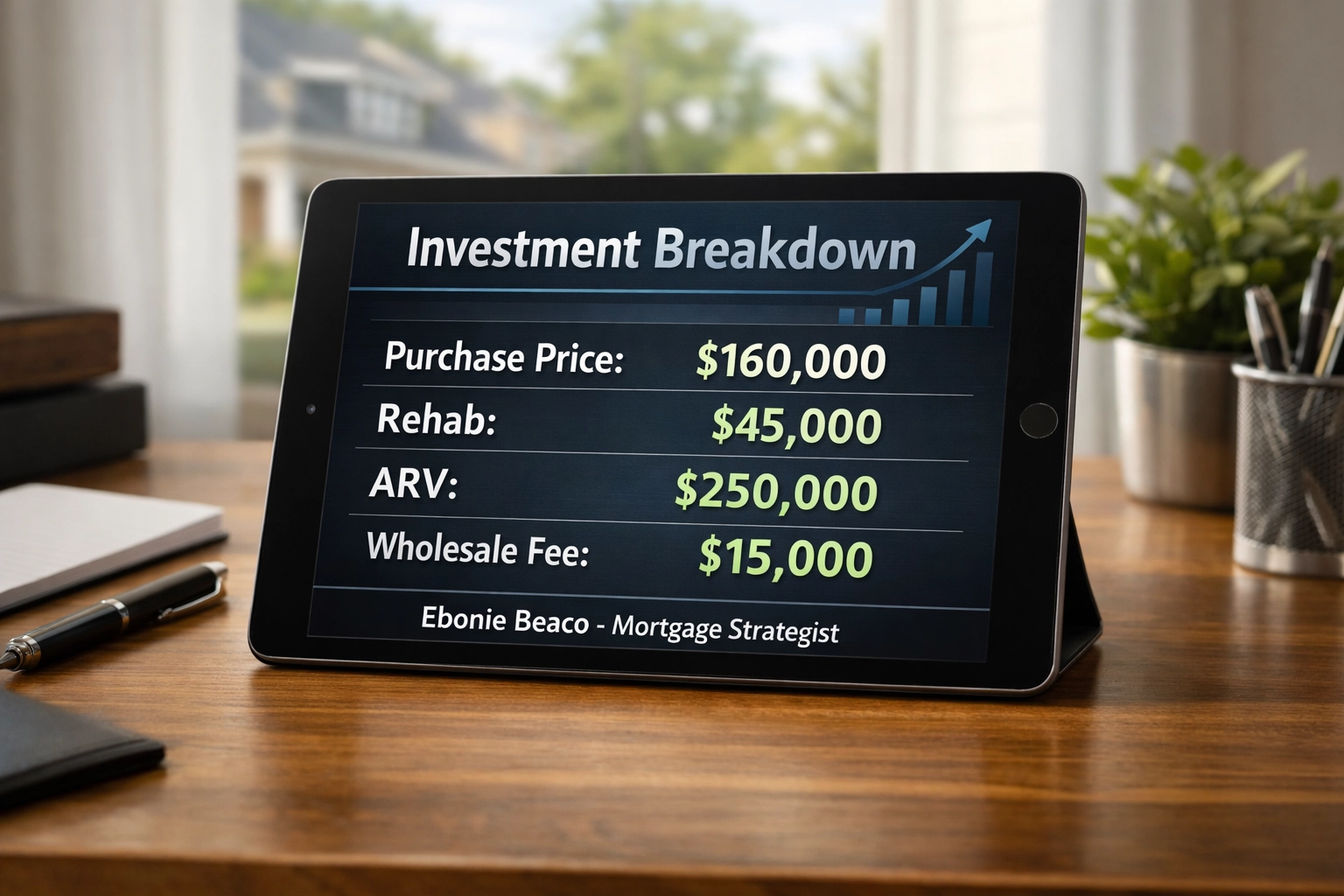
Example Deal Analysis:
- Property Value (ARV): $250,000
- Contract Purchase Price: $160,000
- Estimated Repairs: $45,000
- Cash Buyer Purchase Price: $175,000
- Wholesale Assignment Fee: $15,000
In this scenario, a licensed agent representing the seller at a 3% commission would only earn $4,800, and they would likely have to split that with their broker. By contrast, the wholesaler earns a $15,000 assignment fee for sourcing the deal and matching it with a buyer, reflecting the value of the "equitable interest" they created. This higher profit potential is exactly why real estate investing remains so popular, but it also highlights why regulators are paying closer attention to the industry. You must ensure your fee is justified by the equity you've uncovered and the risk you've mitigated for the end investor.
Ebonie Beaco - Mortgage Strategist
As you grow your wholesaling business, you may find that simply flipping contracts is no longer enough and you want to start holding properties for long-term wealth. This is where the transition from wholesaler to a "buy and hold" investor occurs, often utilizing specialized financing like DSCR (Debt Service Coverage Ratio) loans. Transitioning into owner-occupied or rental property ownership requires a different set of skills and a deep understanding of the mortgage landscape. Working with a mortgage strategist allows you to leverage the profits from your wholesale deals as down payments for rental portfolios in high-growth areas like Florida or Virginia. We see many wholesalers in Chicago use their assignment fees to fund fix-and-flip projects, eventually moving into the commercial space. Understanding how to structure these deals from a lending perspective is just as important as knowing the legalities of the initial wholesale contract.
Ultimately, the choice to get licensed or stay as a private investor depends on your long-term goals and your specific geographic market. If you plan to build a massive marketing machine that handles dozens of deals a month, the protections and access provided by a license might be worth the extra paperwork and fees. If you prefer to stay small and agile, focusing on a few high-spread deals a year, you can effectively operate without a license by sticking to strict disclosure rules. Regardless of your path, you should always operate with the highest level of integrity to protect the reputation of the real estate investing community. Clear communication with your sellers about your intent to assign the contract will prevent misunderstandings and legal headaches down the road. The most successful investors are those who view compliance not as a hurdle, but as a foundation for a sustainable and professional business.
📞 Work With Ebonie Beaco
If you are a wholesaler looking to:
- Close more deals
- Connect your buyers with financing
- Structure deals that actually get approved
- Learn how to grow into a real estate investor
I can help you every step of the way.
Ebonie Beaco
Mortgage Strategist | Senior Loan Officer
Home Loans Network powered by Loan Factory Inc.
NMLS #2389954
📱 Phone: 312-392-0664
📧 Schedule a 1 on 1: https://calendly.com/homeloansnetwork
🌐 Website: HomeLoansNetwork.com/contact-us
👉 Whether you need lending, deal structuring, or mentorship, reach out today.