Illinois Wholesaling 2026: Is the One-Deal Rule Still the Law?

Friday, March 27, 2026
If you are active in the Chicago real estate scene or scouting distressed properties in Peoria, you already know that Illinois does not play around when it comes to regulation. Back in 2019, the state sent shockwaves through the investment community by effectively redefining what it means to be a real estate broker.
Fast forward to 2026, and the landscape has settled, but the rules are tighter than ever. Many new investors ask if the "One-Deal Rule" was just a temporary phase or if it remains the law of the land.
The short answer: Yes, it is still very much the law.
If you are looking to wholesale real estate in Illinois without a license, you are playing in a very narrow sandbox. Let’s dive deep into what the 2026 regulatory environment looks like for wholesalers and how you can navigate these waters without getting flagged by the Illinois Department of Financial and Professional Regulation (IDFPR).
Defining the "One-Deal Rule" in 2026
In Illinois, the Real Estate License Act governs how properties are bought and sold. The 2019 amendment specifically targeted wholesaling by expanding the definition of a "broker."
Wholesaling Definition: The act of entering into a purchase contract for real property and subsequently assigning that contract to another buyer for a fee.
The One-Deal Threshold: An unlicensed individual is permitted to conduct exactly one wholesale transaction within any rolling 12-month period.
Practice of Real Estate: Engaging in more than one wholesale transaction per year is legally classified as "practicing real estate." In Illinois, practicing real estate requires a professional broker’s license.
Jump in and explore the loan process if you are thinking about transitioning from wholesaling to actually taking title on these properties.
Why the One-Deal Rule Exists
The state's primary concern is consumer protection. When a wholesaler enters the picture, they often deal with distressed homeowners who may not fully understand the value of their asset. By requiring a license for anyone doing more than one deal, the state ensures that "repeat players" are held to a fiduciary standard.
Transparency and Disclosure
Transparency is the foundation of the 2026 real estate market. If you are wholesaling your one permitted deal, you must be 100% clear about your role.
- Equitable Interest: You are not selling a house; you are selling your interest in a contract.
- Status Disclosure: You must disclose to both the seller and the end buyer that you do not hold legal title to the property.
- Fee Transparency: In many cases, the assignment fee must be clearly documented.
Failure to follow these transparency protocols can lead to heavy fines, even if it is your only deal of the year.
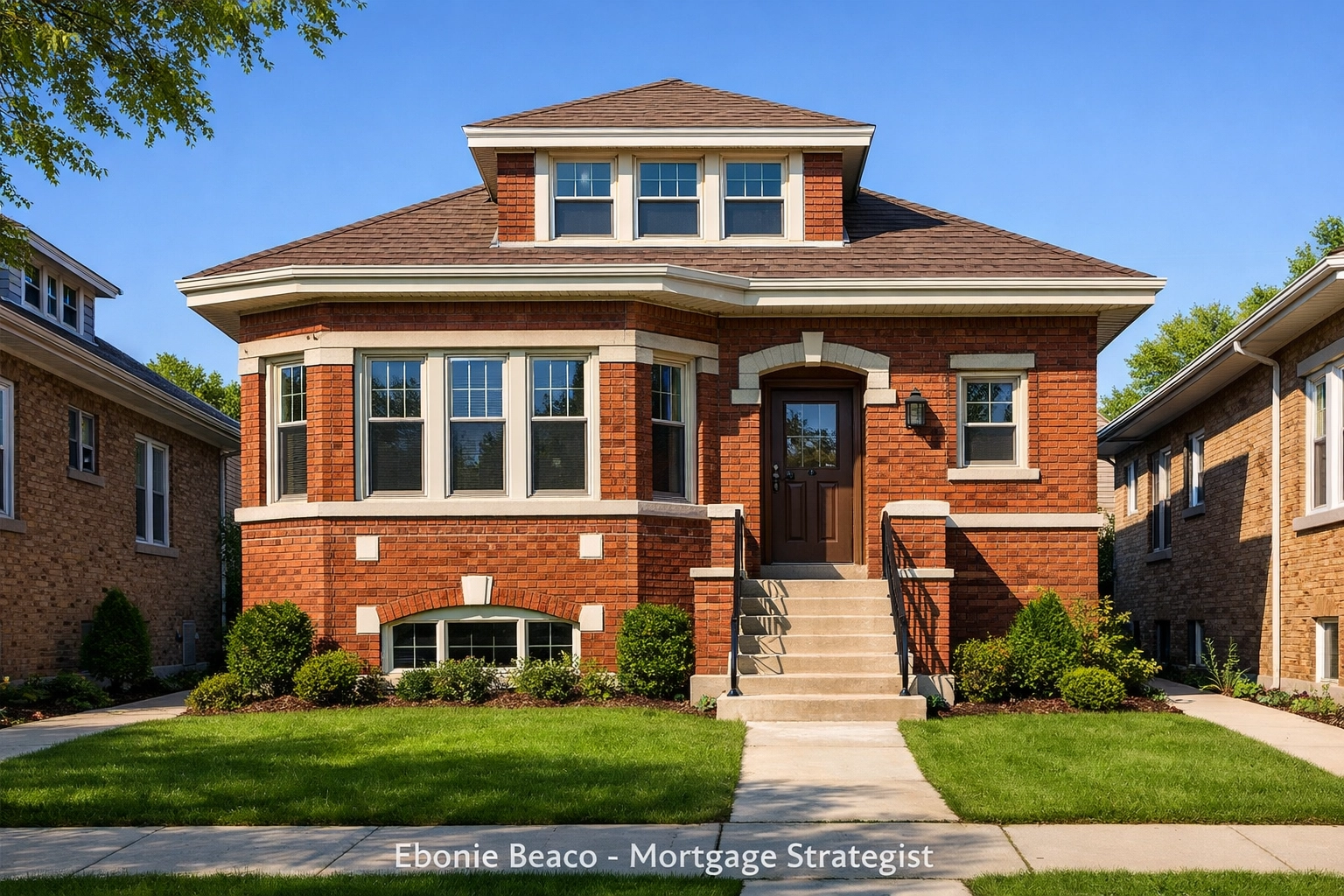 Visual: A classic Chicago-style brick bungalow representing the typical inventory targeted by local wholesalers. Watermark: Ebonie Beaco - Mortgage Strategist.
The Tighter Definition of a "Broker"
The IDFPR has spent the last few years clarifying what it means to "promote" a deal. In 2026, even the way you market your contract is scrutinized.
Brokerage Activity: Any person who, for compensation, offers to sell, list, buy, or negotiate the purchase or sale of real estate.
If you are posting "Off-Market Deal" flyers at a REIA meeting in Rosemont or blasting emails to a buyers list, the state views that as brokerage activity. If you don't have a license and it’s your second deal of the year, you are technically in violation of the law.
The state is looking for individuals who "hold themselves out" as being in the business of real estate. If your social media profile says "Wholesaler" and you have multiple properties listed in your "Available Inventory" highlights, you are providing the evidence the state needs to issue a cease-and-desist.
Navigating the Legal Path in 2026
So, how do you scale an investment business in Illinois when you are capped at one deal? You have three primary paths.
1. Get Your Illinois Real Estate License
This is the most common path for serious investors. Once you are licensed, the "one-deal" restriction vanishes. You can wholesale as many deals as you want, provided you disclose your licensed status and follow your managing broker's guidelines.
2. Double Closing
A double close involves you actually buying the property (A-to-B transaction) and then immediately selling it to your end buyer (B-to-C transaction). Since you are taking title, you are a property owner, not a broker. This requires short-term bridge loans or transactional funding.
3. Virtual Wholesaling
Many Illinois-based investors now wholesale virtually in states like Indiana, Michigan, or Florida, where the regulations might be different. However, you must still be careful about how you operate your business entity within Illinois.
From Wholesaling to Holding: The 2026 Strategy
Many of the most successful investors I work with in Chicago and the surrounding suburbs started in wholesaling but quickly realized that the real wealth is in the "hold."
Instead of taking a $10,000 assignment fee and being done, they are using DSCR rental property loans to buy the properties themselves.
DSCR Loan: A Debt Service Coverage Ratio loan that qualifies a borrower based on the property’s rental income rather than personal income or DTI.
Compare your options and see if it makes more sense to build a portfolio than to flip contracts. For example, if you find a duplex in Blue Island for $150,000 that needs $20,000 in work, you could wholesale it for a small fee, or you could use fix and flip financing to renovate it, refinance it, and keep the cash flow.
Financial Example: The "Wholesale vs. Buy" Breakdown
Let's look at a real-world scenario for a property in a neighborhood like Rogers Park.
| Category | Wholesale Strategy | Buy and Hold Strategy (DSCR) |
|---|---|---|
| Purchase Price | $200,000 (Contract Price) | $200,000 |
| Renovation Cost | $0 | $40,000 |
| Closing Costs | $0 | $6,000 |
| Assignment Fee | $15,000 | $0 |
| New Value (ARV) | N/A | $310,000 |
| Equity Gained | $0 | $64,000 |
| Monthly Cash Flow | $0 | $450 |
 Visual: A deal breakdown chart comparing a one-time assignment fee to long-term equity and cash flow gain. Watermark: Ebonie Beaco - Mortgage Strategist.
In the wholesale scenario, you make $15,000 once. In the buy-and-hold scenario, you create $64,000 in equity and a recurring monthly income. If you use a cash-out refinance, you can often pull your original investment back out to do the next deal.
Illinois Market Specifics: Chicago and Beyond
The enforcement of the Real Estate License Act is particularly active in Cook County. The local authorities are very aware of the "We Buy Houses" signs and the digital footprints left by wholesalers.
If you are operating in cities like Aurora, Rockford, or Joliet, the same rules apply. The "one deal per year" rule is a state-wide mandate.
If you find yourself with more than one great deal on your desk, your best bet is to partner with a licensed broker or use a portfolio refinance strategy to take down the deals yourself.
Access our mortgage calculators to see how the numbers look when you transition from wholesaling to owning.
Common Pitfalls to Avoid in 2026
- Using the Wrong Contracts: Ensure your contracts specifically mention the intent to assign if that is your plan for your one annual deal.
- Marketing Without Title: Never claim to "own" the home in your marketing if you only have a contract.
- Ignoring the 12-Month Clock: It is a rolling 12-month period, not a calendar year. If you did a deal in October 2025, you cannot do another until October 2026.
- Unlicensed Assistant Issues: If you have a team helping you find deals, their actions can also be attributed to you.
Explore the FAQ section for more insights on how real estate transactions are structured in today's market.
The Push for Total Transparency
The trend in 2026 is moving toward even more disclosure. Some local municipalities in Illinois are considering their own registries for wholesalers to track the frequency of transactions.
Being transparent isn't just a legal requirement; it's a way to build a sustainable brand. The "cowboy" days of wholesaling where everything was hidden in the shadows are over. Successful investors in 2026 are those who act as experts and consultants, guiding sellers through difficult situations with honesty.
If you are ready to stop leaving money on the table through assignment fees and start building a real estate empire, it's time to look at professional financing. Whether you are looking at jumbo loans for high-end flips or non-QM loans for unique investment scenarios, the right strategy makes all the difference.
Financing 124 units in Rogers Park? Ebonie Beaco can help with your portfolio refinance.
Scedule a 1 on 1 at https://calendly.com/homeloansnetwork
Ebonie Beaco Mortgage Strategist | Senior Loan Officer Home Loans Network powered by Loan Factory Inc. NMLS #2389954 HomeLoansNetwork.com 312-392-0664