How to Tap Into Your Home's Growth: Why Working With an Illinois HELOC Lender Is the Move This Week

It is Saturday, March 21, 2026, and the real estate landscape in Illinois is shifting rapidly. If you have owned your home for more than two years, you are likely sitting on a substantial amount of untapped wealth. As home values in Chicago and the surrounding suburbs continue to hold steady or climb, your equity is not just a number on a statement: it is a tool.
Choosing the right Illinois HELOC lender this week could be the difference between a stagnant portfolio and a breakthrough investment. Whether you want to renovate your primary residence, consolidate high-interest debt, or secure a down payment for a rental property, understanding how to leverage your home’s growth is essential.
Defining the Home Equity Line of Credit (HELOC)
HELOC: A revolving line of credit that uses the equity in your home as collateral.
This financing tool allows you to access funds as needed, similar to a credit card, but with significantly lower interest rates because it is secured by real estate.
Equity: The difference between the current market value of your property and the amount you owe on your mortgage.
Increasing equity serves as a financial cushion and a source of capital for future investments or expenses.
LTV (Loan-to-Value): A ratio used by lenders to determine the maximum amount you can borrow against your home.
Most lenders in Illinois and Arkansas allow you to borrow up to 80% or 85% of your home's total value.
Why the Current Week Is Pivotal for Illinois Homeowners
The market in March 2026 shows a unique intersection of stabilizing interest rates and peak equity levels. While national banks often move slowly with their rate adjustments, working with a specialized Illinois HELOC lender allows you to access more localized, competitive terms.
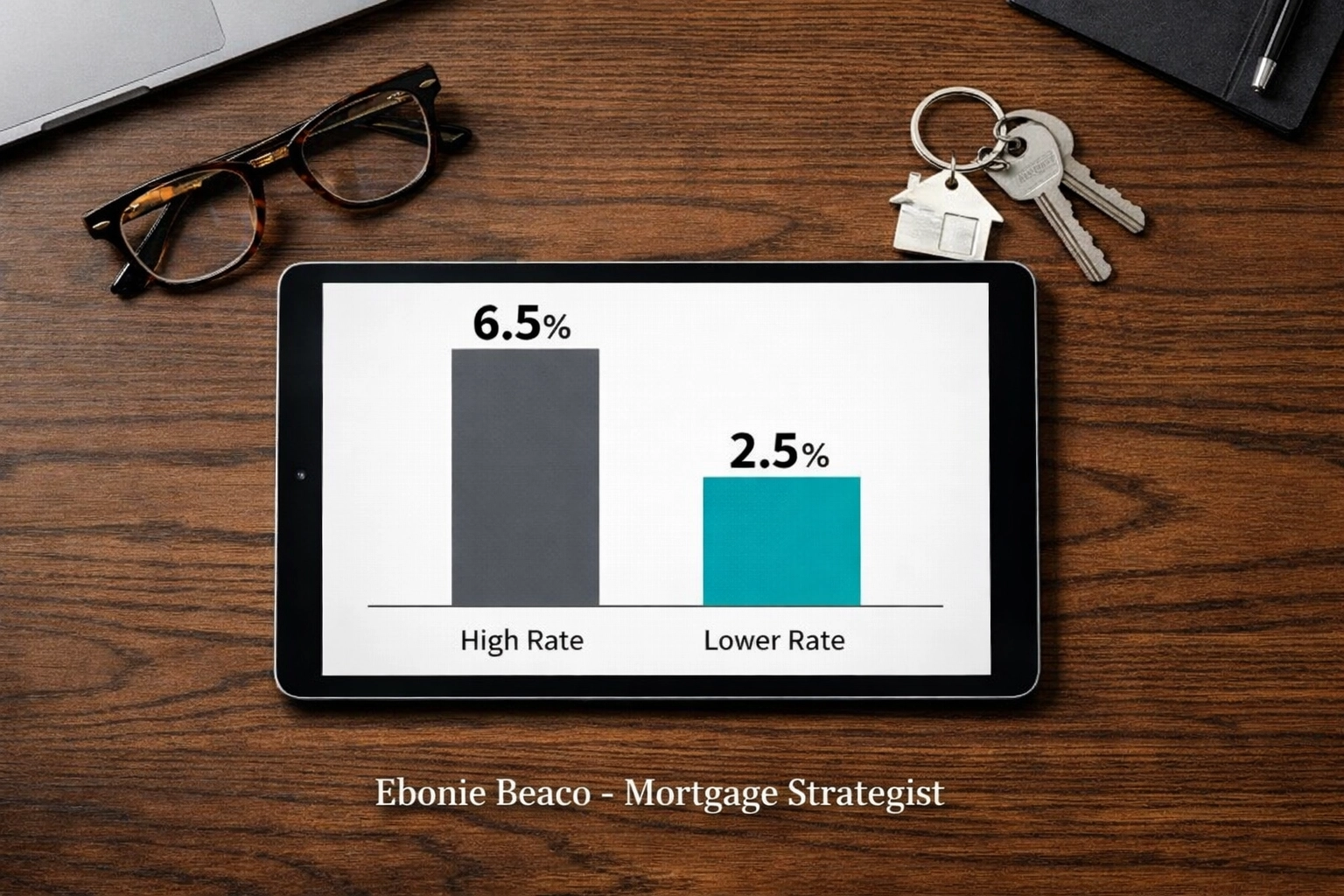
In Illinois, credit unions and specialized mortgage firms are currently offering rates as low as 5.125% for qualified borrowers. Compared to traditional variable rates that can hover around 8.150%, the savings are massive. Accessing these rates now allows you to lock in a lower cost of capital before any potential spring market volatility.
The Math Behind Your Equity: A Real World Example
To understand how a HELOC functions in the real world, let’s look at a typical scenario for a homeowner in a market like Chicago or Naperville.
Suppose your home is currently valued at $500,000.
You have a remaining mortgage balance of $300,000.
Your current equity is $200,000.
If an Illinois HELOC lender approves you for an 85% combined loan-to-value (CLTV):
- $500,000 (Value) x 0.85 = $425,000 (Maximum Total Debt)
- $425,000 - $300,000 (Existing Mortgage) = $125,000 (Available HELOC Line)
In this scenario, you have access to $125,000 that you can use for any purpose. You only pay interest on the amount you actually draw from the line. If you only use $20,000 to update your kitchen, you only pay interest on that $20,000.
Explore your own numbers using our mortgage calculators to see how much equity you can realistically tap.
Expanding Your Reach: The Arkansas HELOC Lender Advantage
While Illinois homeowners are seeing great gains, we are also seeing significant activity in the South. If you own property in Little Rock, Fayetteville, or Bentonville, finding a knowledgeable Arkansas HELOC lender is just as critical.
Arkansas has seen a surge in "lifestyle migration," which has bolstered property values across the state. Investors are increasingly using HELOCs on their primary residences in Illinois or Michigan to fund the acquisition of rental properties in Arkansas. This "equity bridging" strategy is a powerful way to scale a real estate portfolio without liquidating existing assets.
Strategic Uses for Your HELOC in 2026
1. The BRRRR Strategy (Buy, Rehab, Rent, Refinance, Repeat)
Investors often use a HELOC to fund the "Buy" and "Rehab" phases of a project. Because the HELOC is already in place, you can move quickly on a distressed property, pay for repairs in cash, and then refinance into a long-term DSCR investor loan once the property is stabilized.
2. Gap Funding for Fix and Flip Projects
If you are a fix-and-flip investor in Georgia or Virginia, you might use a hard money loan for the bulk of your purchase. However, a HELOC can provide the "gap" funding needed for the down payment or unexpected renovation costs, keeping your out-of-pocket expenses to a minimum.
3. Short-Term Rental Acquisitions
With the growth of Airbnb and short-term rentals in Florida and California, many homeowners are using their equity to buy vacation rentals. A HELOC provides the flexibility to jump on a deal the moment it hits the market.
Compare your different loan-process options to see how a line of credit fits into your broader financial strategy.
Qualification Requirements for Illinois and Beyond
To secure the best terms from an Illinois HELOC lender or an Arkansas HELOC lender, you should aim to meet the following criteria:
- Credit Score: Aim for a score of 720 or higher. While some programs allow for scores as low as 620, the most attractive rates are reserved for those with top-tier credit.
- Debt-to-Income (DTI): Most lenders prefer a DTI ratio under 43%. This calculation includes your existing mortgage, the potential HELOC payment, and other monthly obligations.
- Equity Position: You generally need to retain at least 15% to 20% equity in your home after the HELOC is added.
Jump in and review our mortgage basics to ensure your financial profile is ready for an application.

Transparency: The Pros and Cons of a HELOC
At Home Loans Network, we believe in full transparency. A HELOC is a powerful tool, but it is not without risks.
The Pros:
- Flexibility: You only borrow what you need when you need it.
- Lower Rates: Usually much cheaper than personal loans or credit cards.
- Interest-Only Options: Many HELOCs allow for interest-only payments during the initial "draw period" (typically 10 years).
- Tax Deductibility: In some cases, interest may be tax-deductible if the funds are used to buy, build, or substantially improve the home that secures the loan (consult a tax professional).
The Cons:
- Variable Rates: Most HELOCs have variable interest rates, meaning your payment could increase if market rates rise.
- Your Home is Collateral: If you fail to make payments, you risk losing your property.
- Potential Fees: Some lenders charge annual fees or inactivity fees.
Access our FAQ page to see more common questions regarding equity-based lending.
Navigating Different Markets: AL, FL, GA, and VA
While the focus today is on the Illinois HELOC lender landscape, the strategies remain similar across our other service areas.
- Florida and California: These markets often have higher property values, meaning a small percentage of growth translates to a massive amount of available equity.
- Alabama and Kentucky: These states offer lower entry points for investors, making a HELOC from a primary residence a perfect "seed" for a multi-unit investment.
- Virginia and Michigan: Strong employment hubs continue to drive demand for housing, ensuring that equity remains stable for the foreseeable future.
If you are unsure where you stand, you can select a loan officer who specializes in your specific state to get a clear picture of your options.
How to Get Started This Week
The process of tapping into your home’s growth does not have to be complicated. Here is a clear path forward:
- Check Your Value: Use online tools or local comparables to estimate your home's current worth.
- Review Your Balance: Find your most recent mortgage statement to see exactly what you owe.
- Consult a Strategist: Speak with a mortgage professional who understands both homeowner needs and investor goals.
- Gather Documentation: Prepare your tax returns, pay stubs, and property information.
Compare the benefits of a HELOC versus a home refinance to determine which path serves your long-term goals.
Final Thoughts on Home Equity
Your home is more than just a place to live; it is a dynamic financial asset. In March 2026, the opportunity to work with an Illinois HELOC lender or an Arkansas HELOC lender to unlock that value is significant. By taking a proactive approach to your equity, you can fund your next big project, secure your financial future, and move with confidence in any market.
Schedule a 1 on 1 at https://calendly.com/homeloansnetwork
Ebonie Beaco
Mortgage Strategist | Senior Loan Officer
Home Loans Network powered by Loan Factory Inc.
NMLS #2389954
HomeLoansNetwork.com
312-392-0664