How to Find the Best Interest Rate for Investment Property
Securing a competitive interest rate for an investment property is a different game than financing a primary residence. When you buy a home to live in, lenders view the loan as lower risk because you are unlikely to default on the roof over your head. When you buy a rental property in markets like Chicago or Miami, lenders see a higher level of risk. If times get tough, an investor is more likely to walk away from a rental than their own home.
Because of this risk profile, interest rates for investment properties are typically 0.5% to 1% higher than those for primary residences. However, your strategy can significantly influence the final number you see on your closing disclosures. Understanding the mechanics of mortgage pricing allows you to position yourself for the most favorable terms available.
Explore the primary factors that dictate your rate and learn how to navigate the lending landscape as a savvy real estate investor.
The Foundation: Understanding Risk and Reward
Lenders use a "risk-based pricing" model. This means they look at your financial profile and the property details to determine the likelihood of the loan being repaid. Every "hit" to your profile: like a lower credit score or a small down payment: results in a higher interest rate or higher closing costs, often referred to as loan level price adjustments (LLPAs).
To find the best rate, you must minimize these perceived risks. This involves a combination of cleaning up your personal finances and selecting the right property and loan product. You can access more information about these fundamental concepts on our mortgage basics page.
Key Drivers of Your Investment Interest Rate
Credit Score Optimization
Credit Score: A numerical expression based on a level analysis of a person's credit files, to represent the creditworthiness of an individual. A higher credit score suggests you have a history of managing debt responsibly. For investment properties, the "sweet spot" for the best pricing usually starts at a FICO score of 740 or 760. If your score is in the 600s, you can still get financing, but you will pay a premium for it.
Loan-to-Value (LTV) Ratio
LTV Ratio: A financial term used by lenders to express the ratio of a loan to the value of an asset purchased. The more "skin in the game" you have, the more comfortable a lender feels. Putting 25% down (75% LTV) is often the threshold for securing the most competitive rates. While some programs allow for 15% or 20% down, those lower down payments often trigger higher rates and private mortgage insurance (PMI) requirements, which eat into your monthly cash flow.
Debt-to-Income (DTI) vs. DSCR
DTI Ratio: The percentage of a consumer's monthly gross income that goes toward paying debts. DSCR (Debt Service Coverage Ratio): A measurement of the cash flow available to pay current debt obligations, specifically used in commercial and investment lending.
Traditional loans focus on your personal DTI. If you have a high income and low personal debt, this might get you a lower rate. However, many professional investors in states like Florida or California prefer DSCR loans. These loans qualify you based on the rental income of the property rather than your personal income. While DSCR rates can be slightly higher than traditional "full-doc" loans, they offer more flexibility for scaling a portfolio.
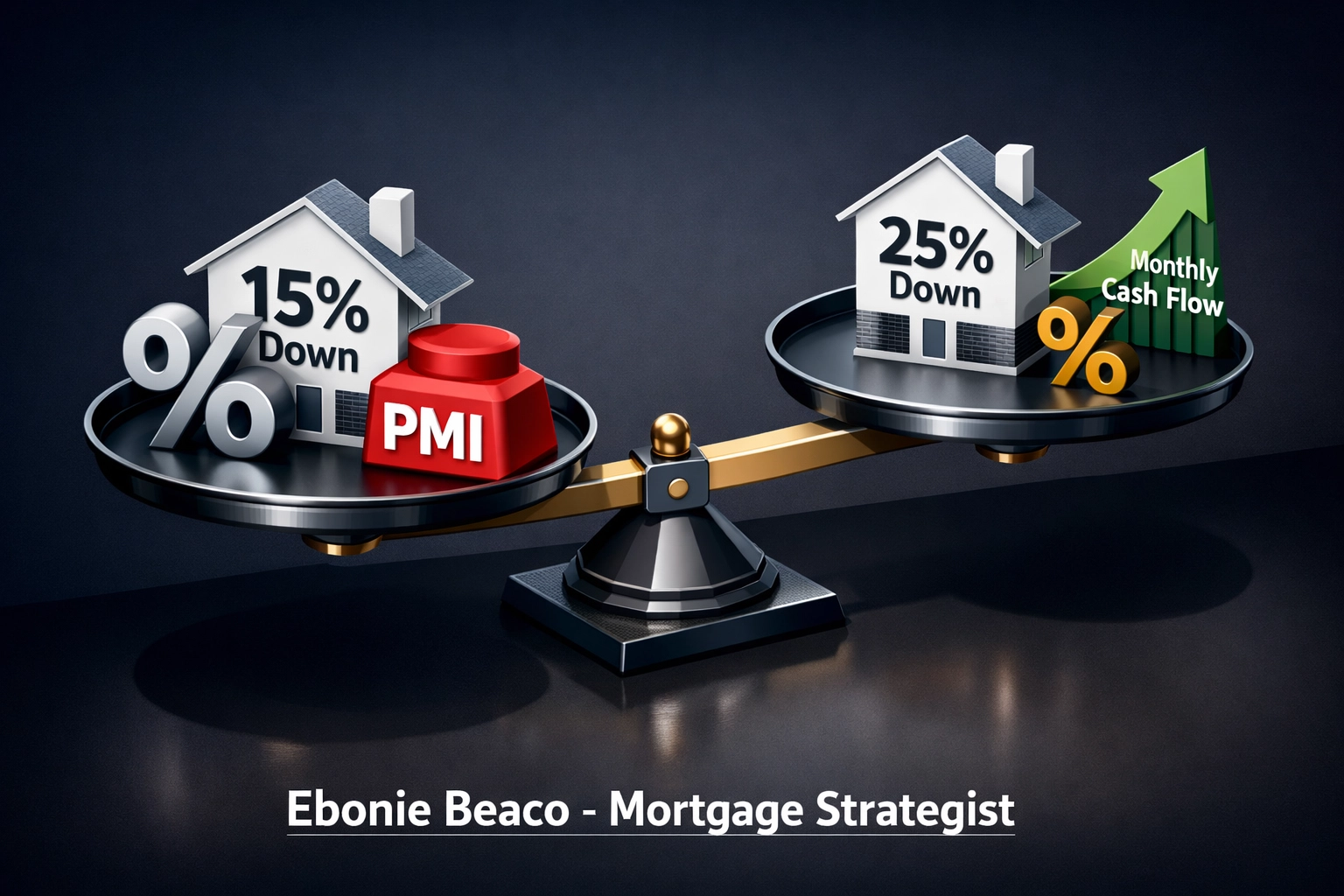 Description: A comparison table showing how a higher down payment (25% vs 15%) reduces the interest rate and eliminates PMI, significantly increasing monthly net cash flow.
Property Type and Its Influence on Pricing
The physical structure you are buying influences the rate. Single-unit properties (single-family homes) generally receive the best pricing. Once you move into 2-unit, 3-unit, or 4-unit properties, lenders add a premium to the rate.
- Single-Family Residence (SFR): Baseline investment rate.
- 2-4 Unit Multi-Family: Often carries a 0.125% to 0.25% rate premium.
- Condos: Can also carry a premium depending on the "warrantability" of the condo association.
If you are looking at properties in high-density areas like Chicago, Illinois, or Virginia, understanding these property-type adjustments is vital before you make an offer.
Strategic Financing Options for Investors
DSCR Rental Property Loans
These are the gold standard for landlords who don't want to provide tax returns or pay stubs. If the property's rent covers the mortgage payment (a DSCR of 1.0 or higher), you are often cleared for takeoff. For investors with multiple properties in Michigan or Georgia, this is how you scale without your personal DTI stopping you.
Cash-Out Refinance
If you already own a property with significant equity, a cash-out refinance can provide the funds for your next down payment. While rates for cash-out refinances are slightly higher than "rate-and-term" refinances, they allow you to access capital to grow your portfolio. Jump in and see your options on our home refinance page.
Fix and Flip and Bridge Loans
If you are buying a distressed property in Alabama or Arkansas that needs work, a traditional mortgage might not be an option because the property isn't "habitable." In this case, you would look at Bridge Loans or Fix and Flip Financing. These have higher interest rates (often 8% to 12%) but are designed for short-term use (6 to 18 months) until the property is renovated and stabilized.
Real-World Example: The Power of the Down Payment
Let's look at how a down payment influences your rate and monthly costs for a rental property in a market like Indianapolis, Indiana.
Scenario: Purchasing a $300,000 Investment Property
Option A (20% Down):
- Down Payment: $60,000
- Loan Amount: $240,000
- Estimated Rate: 7.75%
- Monthly Principal & Interest: $1,719
Option B (25% Down):
- Down Payment: $75,000
- Loan Amount: $225,000
- Estimated Rate: 7.25% (Better pricing tier)
- Monthly Principal & Interest: $1,535
By putting an extra $15,000 down, the investor saves $184 per month. Over a year, that is $2,208 in extra cash flow. This highlights why searching for the "best rate" often involves looking at your own capital reserves. You can run your own numbers using our mortgage calculators.
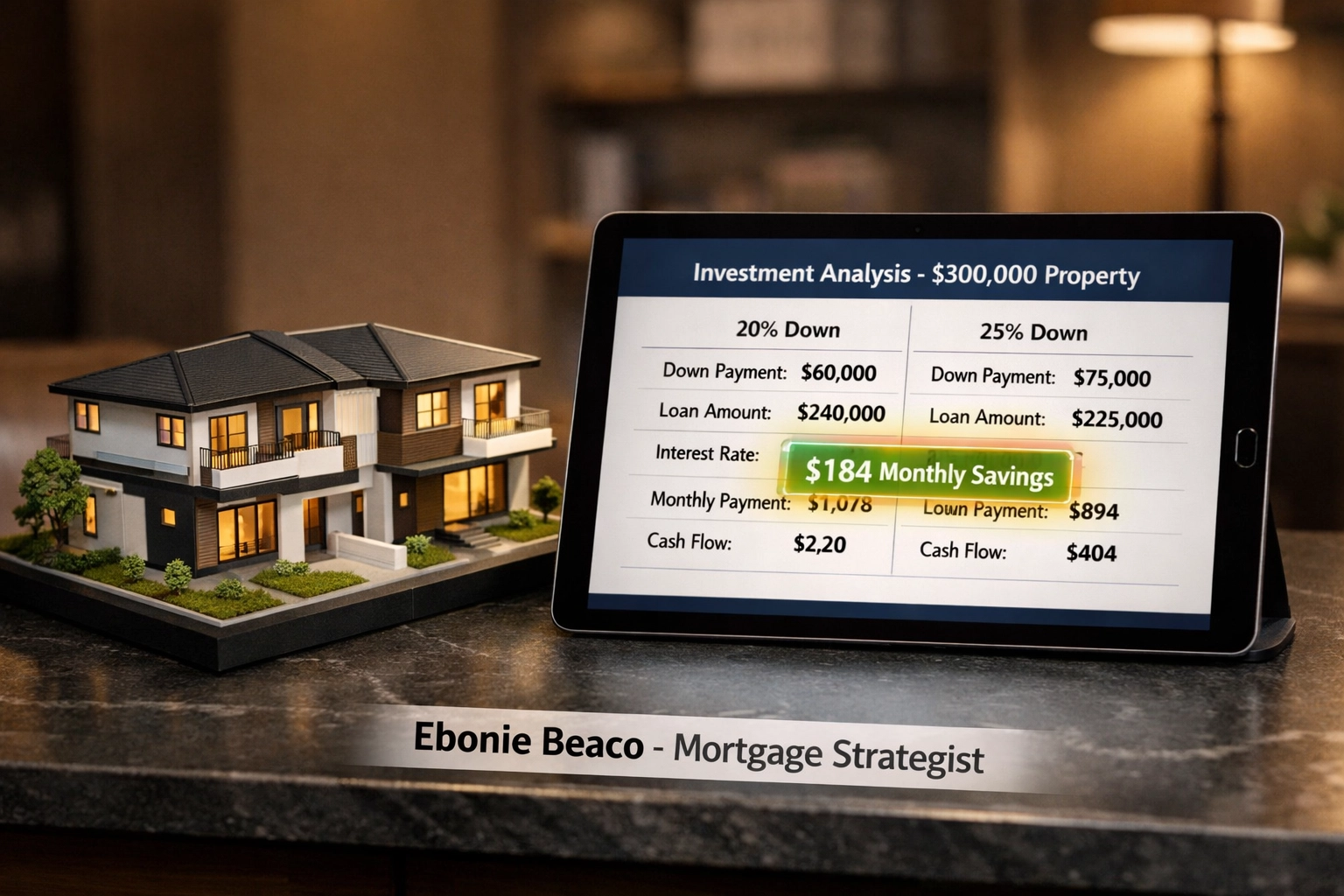 Description: A visual breakdown of the $300,000 purchase scenario, highlighting the $184 monthly savings achieved by moving from a 20% to a 25% down payment.
Steps to Secure the Best Possible Rate
- Shop Multiple Lenders: Rates vary significantly between big banks, credit unions, and non-QM mortgage lenders. A mortgage strategist can compare these for you.
- Consider Paying Points: You can "buy down" your interest rate by paying a one-time fee at closing. If you plan to hold the property for 10+ years, this often pays for itself quickly.
- Check the "Lock" Period: Rates fluctuate daily. Once you find a rate you like, ensure you understand how long that rate is "locked" for and what happens if your closing is delayed.
- Review the Appraisal: Lenders base the LTV on the lower of the purchase price or the appraised value. If an appraisal comes in low, your LTV might shift, potentially increasing your rate.
Why Local Market Knowledge is Significant
Housing market activity varies by region. An investor looking at short-term rental (Airbnb) financing in Florida faces different insurance and tax hurdles than someone buying a long-term rental in Missouri. When you work with a strategist who understands these regional nuances, you can structure your deal to be more attractive to lenders.
Whether you are a wholesaler looking to transition into holding properties, or a seasoned landlord managing a 20-unit portfolio, the goal remains the same: maximize cash flow by minimizing the cost of debt.
Access Expert Guidance
Finding the best rate isn't just about a Google search; it's about a personalized strategy that aligns with your portfolio goals. If you have questions about how to structure your next deal or which loan product fits your specific scenario, reaching out for a professional review is the best next step.
Compare your options and gain clarity on your investment journey.
Schedule a 1 on 1 at https://calendly.com/homeloansnetwork
Ebonie Beaco Mortgage Strategist | Senior Loan Officer Home Loans Network powered by Loan Factory Inc. NMLS #2389954 HomeLoansNetwork.com 312-392-0664
For more information about our mission and how we help investors, visit our about us page or read our testimonials to see how we have assisted others in their real estate journey.