How to Find Off-Market Properties in California and Atlanta Without Wasting Your Budget

Finding a great deal in today’s real estate market feels a lot like finding a needle in a haystack, especially in high-demand hubs like Atlanta, Los Angeles, or Miami.
When you rely solely on the Multiple Listing Service (MLS), you are competing with every other buyer, investor, and institutional fund out there.
This competition drives prices up and margins down.
If you want to scale your real estate wholesaling business or build a rental portfolio, you have to go where the crowds aren’t.
That means finding off-market properties.
What Are Off-Market Properties?
Off-Market Properties: Real estate assets that are available for sale but are not listed on public platforms like the Multiple Listing Service (MLS).
Practical Benefit: You deal directly with the seller, which often leads to lower purchase prices and more flexible contract terms.
Wholesaling: The process of a middleman (the wholesaler) finding a distressed property, putting it under contract, and then "assigning" that contract to an end-buyer for a fee.
Practical Benefit: It allows you to generate capital in real estate without necessarily taking title to the property or using your own credit.
The Reality of the Atlanta Market
Atlanta is a primary target for real estate investing because of its diverse economy and consistent population growth.
However, the "boots on the ground" reality is that the market is incredibly fast-paced.
In Atlanta, off-market deals typically involve distressed properties, pre-foreclosures, or estate sales where the family needs a quick exit.
According to recent data, these deals often close in as little as 7 to 14 days when handled with cash.
If you are looking in neighborhoods like West End or South Atlanta, you need to be prepared for "as-is" conditions.

Sourcing Deals in California Cities
California presents a different challenge compared to the Southeast.
While Atlanta might offer lower entry points, California cities like San Diego, Sacramento, or Riverside offer massive equity opportunities.
Finding off-market deals here requires a more surgical approach.
You aren't just looking for "houses," you are looking for "situations."
Common situations include owners who inherited a property and don't want the tax burden, or landlords who are tired of navigating local tenant laws.
Because property values are higher, your marketing budget needs to be used efficiently to ensure you are targeting the right demographics.
Lead Generation Strategies That Don't Break the Bank
Many people start finding off-market properties by throwing money at generic Facebook ads.
This is often a quick way to waste your budget.
Instead, consider these high-intent strategies:
Driving for Dollars
This involves physically driving through neighborhoods in cities like Chicago, Atlanta, or Tampa to look for signs of neglect.
Look for boarded-up windows, overgrown lawns, or piles of mail.
These are physical indicators of a distressed situation.
It costs nothing but your time and gas money.
Direct Mail with a Personal Touch
Direct Mail: Sending physical postcards or letters to property owners who meet specific criteria, such as high equity or out-of-state ownership.
Practical Benefit: It puts your contact information directly into the hands of a potential seller before they even think about calling a realtor.
In Florida real estate investing, especially in areas like Orlando or Jacksonville, out-of-state owners are a goldmine.
Many of these owners are tired of managing a property from afar and are often open to a fair cash offer.
Leveraging Public Records
You can access probate leads, tax delinquent lists, and divorce filings at the local county courthouse.
These lists represent people who likely have a high motivation to sell quickly.

Understanding the Financials: A Real-World Example
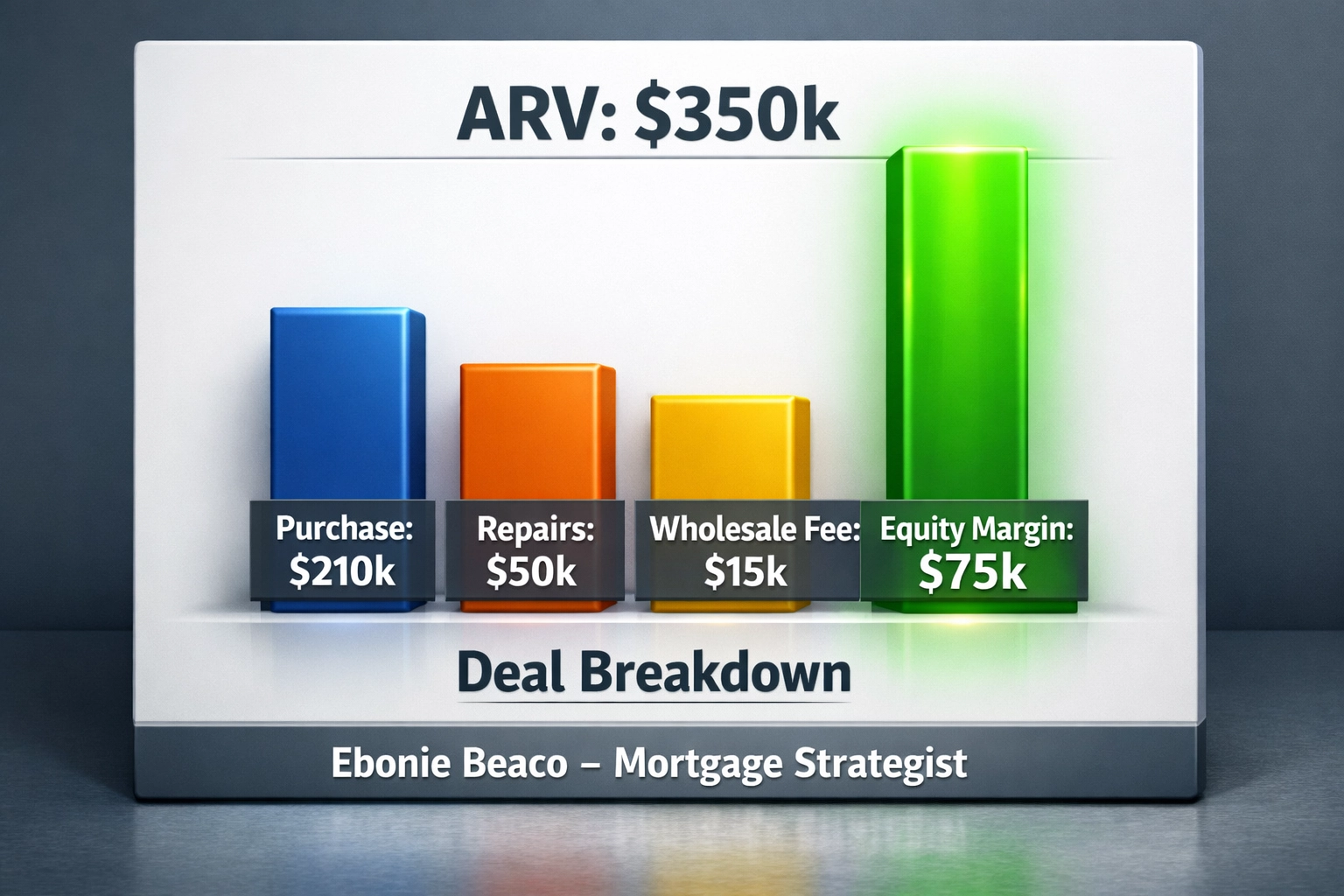
Let’s look at how an off-market deal in Atlanta might pencil out for a wholesaler or a fix-and-flip investor.
Imagine you find a distressed ranch-style home in a transitioning neighborhood.
Property Value (After Repair Value - ARV): $350,000
Estimated Rehab Costs: $50,000
Wholesale Purchase Price: $210,000
Wholesale Fee: $15,000
End Investor Buy Price: $225,000
In this scenario, the end investor is buying the property at roughly 64% of the ARV (minus repairs).
This leaves plenty of room for a fix and flip loan or a bridge loan to cover the acquisition and renovation.
| Item | Amount |
|---|---|
| After Repair Value (ARV) | $350,000 |
| Purchase Price | $210,000 |
| Estimated Repairs | $50,000 |
| Wholesale Fee | $15,000 |
| Investor Equity Margin | $75,000 |
To understand more about how these numbers impact your borrowing power, you can explore our mortgage calculators.
Financing Your Off-Market Acquisitions
Once you find the deal, the next hurdle is funding it.
Traditional banks often won't touch a property that is in "distressed" condition.
This is where specialized real estate financing comes into play.
DSCR Investor Loans
DSCR (Debt Service Coverage Ratio) Loans: A mortgage program for investment properties that qualifies the borrower based on the property’s rental income rather than their personal debt-to-income ratio.
Practical Benefit: It allows you to scale your portfolio quickly without your personal income acting as a ceiling.
If the property is already tenant-occupied or ready to rent, a DSCR loan is often the most efficient way to secure long-term financing.
Fix and Flip Loans
Fix and Flip Loans: Short-term financing used to purchase and renovate a property with the intent to sell it for a profit.
Practical Benefit: These loans often cover a portion of the renovation costs, which keeps more cash in your pocket during the project.
For those focusing on markets in Virginia or Michigan, where older inventory is common, these loans are essential for reviving distressed homes.
Bridge Loans
Bridge Loans: A short-term loan used to "bridge" the gap between the purchase of a property and the securing of permanent financing or the sale of the asset.
Practical Benefit: They offer the speed necessary to compete with cash buyers in hot markets like Florida or California.
You can learn more about how we help investors navigate these options on our loan process page.
Networking: The "Free" Way to Find Deals
Transparency is key in this business.
One of the best ways to find off-market deals in Chicago or Atlanta is to simply talk to people.
Reach out to:
- Property Managers: They know which landlords are tired and ready to sell.
- Eviction Attorneys: They deal with owners who are currently having a bad experience with their investment.
- Estate Attorneys: They represent heirs who may want to liquidate property quickly.
Building these relationships takes time, but the leads they produce are often the highest quality and lowest competition.
Common Pitfalls to Avoid
When you are chasing off-market deals, it’s easy to get "deal fever."
Always remember:
- Don't skip due diligence. Even if the closing is fast, ensure you have a clear title and a solid understanding of repair costs.
- Don't over-leverage. Just because you can get a hard money loan doesn't mean the numbers work.
- Verify the ARV. Don't rely on the seller's estimate. Check recent sales of similar homes in the immediate area.
If you are new to the process, checking out our mortgage basics can help you get a handle on the terminology and expectations.

Final Thoughts on Lead Generation
Finding off-market properties in California, Georgia, and Florida requires a mix of persistence and strategy.
Whether you are a wholesaler looking for your next assignment fee or an investor looking for a high-yield rental, the "hidden" market is where the real wealth is built.
By focusing on direct-to-seller marketing and building a network of local professionals, you can find deals that others simply don't know exist.
Once you have a deal in sight, the next step is structuring the right financing to make it happen.
Whether you need a landlord loan, a cash-out refinance to fund your next move, or a DSCR loan for a new rental, we can help you analyze the numbers.
For more information about who we are and how we support investors, feel free to visit our about us page or see what others are saying on our testimonials page.
Ready to discuss your next investment scenario?
Scedule a 1 on 1 at https://calendly.com/homeloansnetwork
Ebonie Beaco
Mortgage Strategist | Senior Loan Officer
Home Loans Network powered by Loan Factory Inc.
NMLS #2389954
HomeLoansNetwork.com
312-392-0664