How to Create Your Dream Home in 2026 Using Your Equity (The Fast Way)

It is mid-afternoon on Monday, March 23, 2026. You are sitting in your kitchen in Indianapolis, Little Rock, or perhaps a suburb of Chicago. You look around and realize the layout that worked in 2020 no longer supports your lifestyle. You want a chef's kitchen, a dedicated home office that actually has soundproofing, or maybe that outdoor living space you have been dreaming of since last summer.
The good news? Your home has been busy growing its value while you were living in it. Home prices across Alabama, Florida, Georgia, and Virginia have remained resilient. If you bought your home even a few years ago, you are likely sitting on a gold mine of equity.
The challenge is accessing that wealth without jumping through the hoops of a traditional construction loan that could take months to fund. In 2026, speed is the currency of choice. You need a strategy that puts cash in your hand fast so you can hire contractors before their schedules fill up for the season.
The Secret Your Neighbors Aren't Telling You About Renovations
Most people assume that a massive renovation requires a complex construction loan or a total cash-out refinance of their existing mortgage. That is a common misconception that often leads to higher interest rates on the entire balance of your home.
If you secured a low mortgage rate years ago, you do not want to touch that primary loan. Instead, homeowners are looking toward a Home Equity Line of Credit (HELOC) or a Home Equity Loan to bridge the gap. As a premier Indiana HELOC lender, we see homeowners using these tools to transform their properties in weeks, not months.
Equity: The difference between the current market value of your property and the amount you owe on your mortgage. This represents the actual portion of the asset that you own outright.
HELOC: A revolving line of credit secured by your home equity. It allows you to draw funds as needed, much like a credit card, which provides flexibility for ongoing renovation phases.

Why Traditional Construction Loans Might Be Your Biggest Mistake
When you want to build a dream home from the ground up, a construction loan is necessary. But for a renovation? It is often overkill. Traditional construction loans involve phased disbursements and frequent inspections. This means your contractor has to wait for a bank inspector to sign off on the framing before they get the money for the electrical work.
This creates friction. Friction leads to delays. Delays lead to higher costs.
A Home Equity Loan, on the other hand, provides a lump sum at closing. You receive the funds in one go, usually within two to four weeks. This puts you in a position of power. You can negotiate better rates with contractors because you have the cash ready to go.
CLTV: Combined Loan-to-Value ratio. This is the total of all loans on a property divided by the property's appraised value.
Lump Sum: A single payment made at one time. This gives you immediate access to your total renovation budget without waiting for milestone approvals.
Explore your options by visiting our mortgage basics page to understand how these different structures impact your monthly budget.
The $145,000 Question: Can Your Home Pay for Its Own Upgrade?
Let's look at a real-world scenario. Imagine you own a home in a growing market like Louisville or Lexington. As a trusted Kentucky HELOC lender, we often walk clients through this exact math.
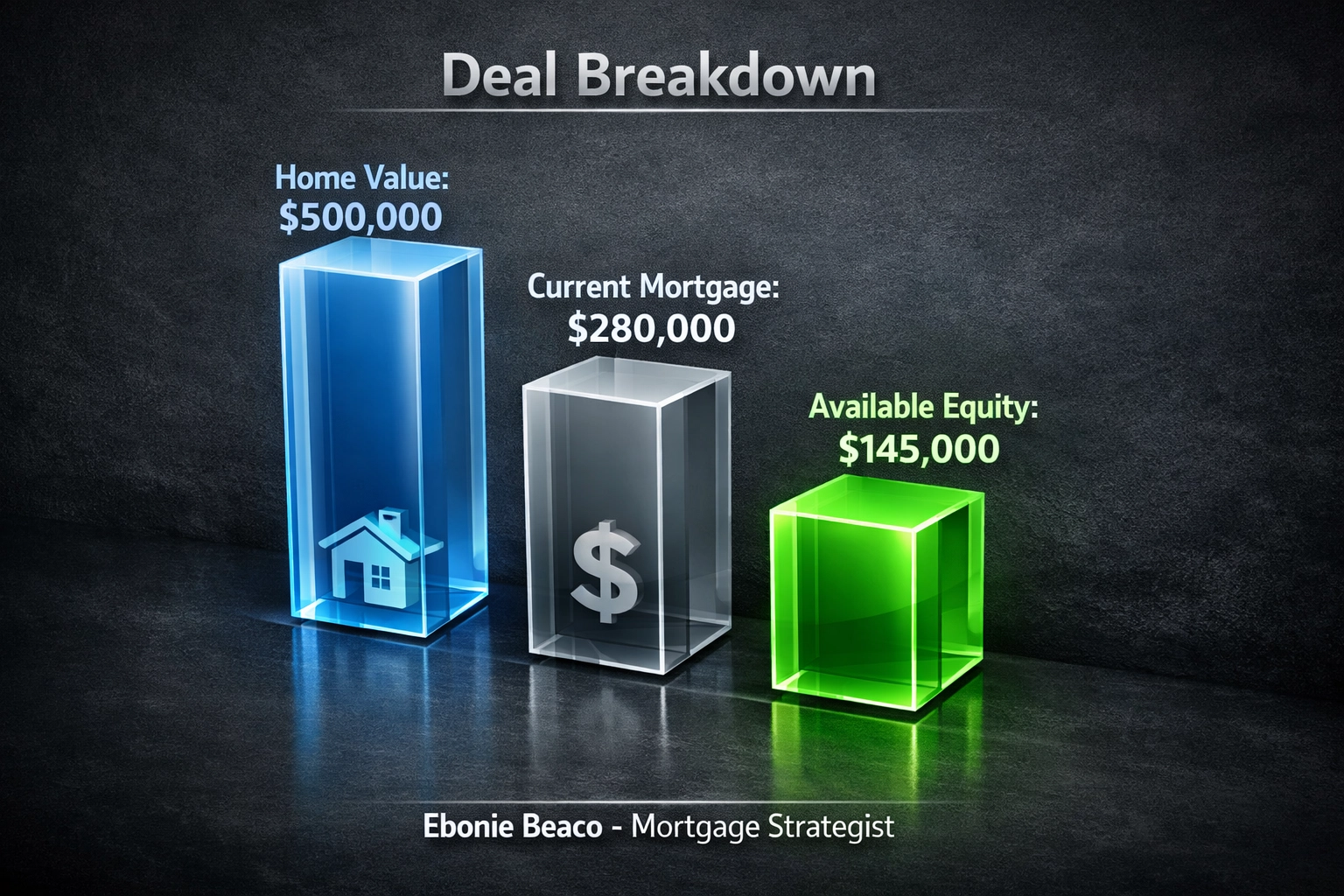
Suppose your home is currently valued at $500,000. You have worked hard to pay down your primary mortgage, which now sits at a balance of $280,000. Most lenders in 2026 will allow you to access up to 85% of your home's total value.
The Calculation Breakdown:
- Current Home Value: $500,000
- Maximum Combined Loan-to-Value (85%): $425,000
- Minus Existing Mortgage: $280,000
- Available Equity for Renovation: $145,000
With $145,000 in available cash, you can execute a high-end kitchen remodel and still have funds left over for a primary suite upgrade. Accessing this through a Home Equity Loan means you keep your 2021-era mortgage rate on that $280,000 and only pay the current market rate on the new $145,000.
Speed is the Ultimate Amenity in 2026
The national average home equity loan interest rate is currently sitting around 7.85% as of mid-March 2026. While this is higher than the historical lows of the early 2020s, the speed of execution provides a different kind of value.
When you choose the fast-track equity path, you avoid:
- Future-Value Appraisals: Construction loans require an appraisal based on what the home will be worth. This is speculative and slow.
- Contractor Approvals: Many lenders require your contractor to be "vetted" by their internal systems, which can take weeks.
- Draw Schedules: You don't have to submit receipts and wait for "draws" to pay your plumber or carpenter.
Jump in and start the process by reviewing our loan process so you know exactly what to expect from application to funding.
Why Homeowners in Florida and Illinois are Moving Faster
In competitive markets like Tampa, Orlando, or the Chicago metro area, contractors are in high demand. If you tell a contractor you are using a HELOC or a Home Equity Loan, they know they will be paid on time. This often puts your project at the top of their list.
For those managing rental portfolios in Missouri or Michigan, this same logic applies to the BRRRR strategy (Buy, Rehab, Rent, Refinance, Repeat). Using a HELOC on a primary residence to fund the "Rehab" portion of an investment property is a sophisticated move that many of our top investors utilize.
DSCR: Debt Service Coverage Ratio. A calculation used by investors to determine if a property's income covers its debt obligations. While used for investment properties, it is part of the broader strategy for those using home equity to scale their portfolios.
Non-QM: Non-Qualified Mortgage. These are loan programs that do not follow standard government-backed guidelines, often used by self-employed borrowers or investors using bank statement programs.
Compare different scenarios using our mortgage calculators to see how a new equity loan fits into your debt-to-income profile.
The 2026 Qualification Checklist
To move quickly, you need your documentation in order. Even though the "Fast Way" requires fewer steps than a construction loan, you still need to demonstrate financial stability.
- Equity Position: You generally need to leave at least 15% to 20% equity in the home.
- Credit Score: A higher score unlocks the best rates on the 7.85% national average.
- Income Verification: Whether you use W-2s or are a self-employed professional in California or Georgia using bank statements, you must show the ability to repay.
- Appraisal: A standard appraisal or an Automated Valuation Model (AVM) will be used to confirm your home's current market value.
Access our online forms to get a head start on your application and see where you stand.
Don't Let Your Equity Sit Idle
Your home is likely your largest financial asset. Letting equity sit idle while you live in a space that doesn't inspire you is a missed opportunity. Whether you are in Virginia looking to add a sunroom or in Arkansas planning a full basement finish, the "Fast Way" through equity is your best path forward in 2026.
We help homeowners and investors navigate these waters every day. From Jumbo Loans to simple equity lines, the goal is to find the structure that serves your long-term financial health.
If your project exceeds $200,000, we may need to discuss a construction-to-permanent loan, but for most dream home renovations, your existing equity is the key that unlocks the door.
Schedule a 1 on 1 at https://calendly.com/homeloansnetwork
Ebonie Beaco Mortgage Strategist | Senior Loan Officer Home Loans Network powered by Loan Factory Inc. NMLS #2389954 HomeLoansNetwork.com 312-392-0664