How Do I Finance a Mixed-Use Property with a Residential Mortgage?
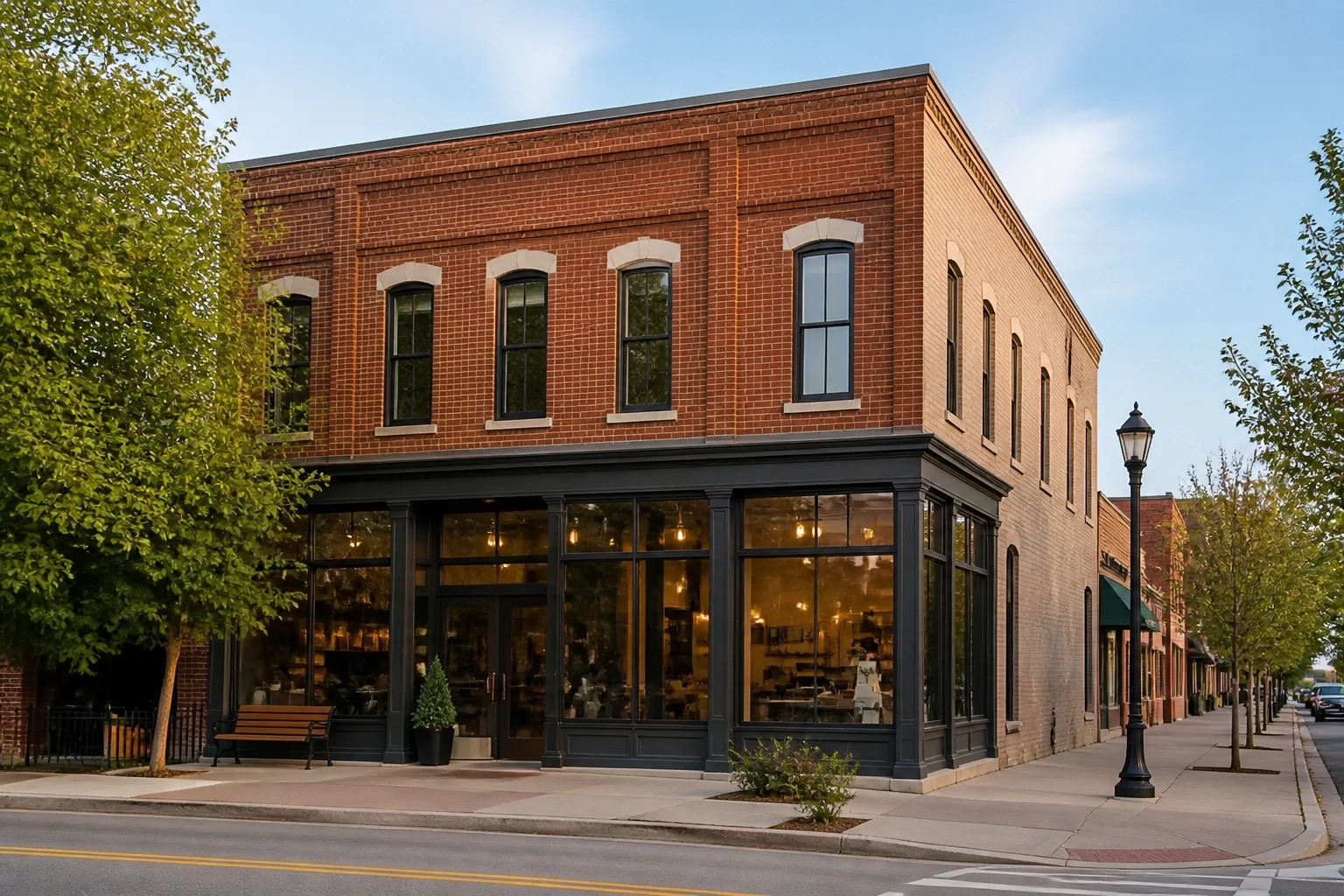
For many investors in Springfield, Missouri, the "holy grail" of real estate is the mixed-use property. There is a unique strategic advantage to owning a building where a reliable commercial tenant on the ground floor pays the bulk of the mortgage while residential units above provide consistent cash flow or a place for the owner to live. However, the path to financing these hybrid assets is often cluttered with misinformation.
Most borrowers assume that as soon as a property contains a "Open" sign or a storefront, it automatically falls into the rigid, high-cost world of commercial lending. This is a common misconception that can cost you thousands in higher interest rates and massive down payments. In fact, if you understand the specific parameters of residential underwriting, you can secure these properties with the same favorable terms usually reserved for single-family homes.
The Binary Contrast: Rigid Commercial Terms vs. Flexible Residential Funding
Before diving into the "how," you must understand the "why." Traditional commercial loans often require 25% to 35% down, have shorter amortization periods (typically 15 to 20 years), and often feature "balloons" where the entire balance is due in five to seven years. This creates a high-pressure environment that can stifle long-term portfolio health.
Conversely, a residential mortgage, specifically an FHA or certain Conventional products, offers 30-year fixed rates and down payments as low as 3.5%. Therefore, the strategy is not just about getting a loan; it is about choosing the financing vehicle that ensures the highest possible Return on Equity (ROE) and long-term sustainability.
The Golden Gatekeeper: The 51% Residential Rule
The most critical factor in determining if your mixed-use property qualifies for a residential mortgage is the square footage allocation. To be eligible for FHA or Conventional financing, the property must be "primarily residential."
What does "primarily residential" actually mean?
- The 51% Threshold: At least 51% of the total square footage of the building must be dedicated to residential living space.
- Commercial Limitations: The commercial portion cannot exceed 49% of the total floor area.
- Usage Constraints: The commercial use must be "light" (e.g., a retail shop, office space, or a quiet studio). Heavy industrial or high-risk commercial uses (like dry cleaners or gas stations) will almost always trigger a commercial-only requirement due to environmental risks.
Moreover, the commercial space must not negatively impact the residential viability of the units above. If you are looking at a property on Commercial Street (C-Street) in Springfield, for example, a ground-floor boutique with two lofts above is a prime candidate for this strategy.
Case Study: The Springfield "C-Street" Scenario
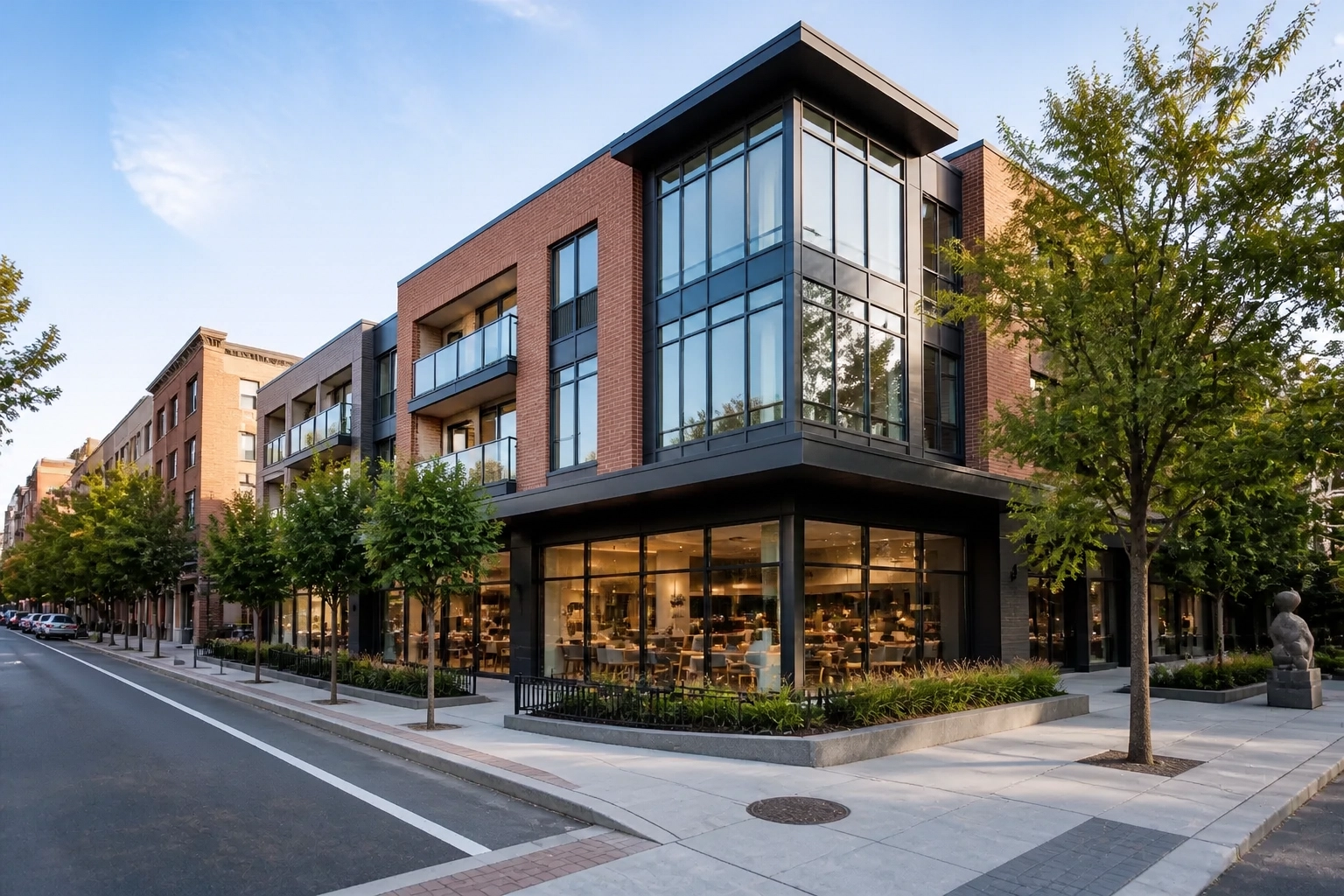
Let’s look at a practical example of a real estate investor, we’ll call him James, who found a beautiful brick building in Downtown Springfield.
The Property:
- Purchase Price: $400,000
- Layout: A 1,200 sq. ft. ground-floor art gallery and two 800 sq. ft. apartments on the second floor.
- Total Sq. Ft.: 2,800
- Residential Percentage: 1,600 / 2,800 = 57% (Passes the 51% rule).
The Financing Math:
If James used a Commercial Loan:
- Down Payment (25%): $100,000
- Closing Costs: ~$15,000
- Total Cash Out of Pocket: $115,000
If James used an FHA Mixed-Use Loan:
- Down Payment (3.5%): $14,000
- Closing Costs: ~$10,000
- Total Cash Out of Pocket: $24,000
As a result, by utilizing a residential mortgage, James preserved over $90,000 in liquidity. That is capital he can now use to renovate the units, increase rents, or acquire his next property. This is what we mean by "thinking like an owner" rather than a spectator.
Navigating the "Self-Sufficiency" Trap
While the 51% rule is the first hurdle, FHA loans for 3-4 unit properties (which many mixed-use buildings are classified as) have a second, more difficult gatekeeper: the Self-Sufficiency Test.
The rule states that 75% of the total estimated rental income from all units (including the commercial space and the unit the owner occupies) must be greater than or equal to the total monthly mortgage payment (PITI).
The Calculation:
- Total Gross Rents: $4,000/month
- 75% Rule: $4,000 x 0.75 = $3,000
- Mortgage Payment (PITI): If the payment is $2,800, the property passes.
- Mortgage Payment (PITI): If the payment is $3,100, the property fails for FHA financing.
Thus, when analyzing Springfield properties, you must be realistic about market rents. Overestimating your potential income in a "Transaction Mindset" will lead to a declined loan at the appraisal stage. A "Mentor-Advisor" approach requires you to stress-test these numbers before you even sign a contract.
Strategic Advantages for Springfield Investors
Springfield’s unique geography offers specific opportunities for mixed-use residential financing. Areas near Missouri State University or the pockets of revitalization in the North Side are ripe for "house hacking" a mixed-use building.
- Residual Reality: By living in one of the residential units, you not only qualify for the lowest down payment but also effectively eliminate your own housing expense using the commercial tenant’s rent.
- Asset Protection: Residential mortgages are generally easier to refinance or modify than commercial ones. If market rates drop, you can execute a Rate & Term refinance with far fewer hurdles.
Step-by-Step Execution Plan
To successfully finance a mixed-use property with a residential mortgage, follow this sequence:
- Verify Zoning: Ensure the property is legally zoned for mixed-use in the City of Springfield.
- Measure the Space: Obtain a floor plan or use a tape measure to confirm the residential portion is >51%.
- Analyze the Commercial Lease: If there is an existing tenant, the lender will need to review the lease. Residential lenders prefer "Modified Gross" or "Full Service" leases over "Triple Net (NNN)" leases for these programs.
- Confirm Occupancy: For FHA or Conventional primary residence loans, you must move into one of the units. If you are a pure investor not living there, you will likely need to pivot to a DSCR (Debt Service Coverage Ratio) Loan, which we also specialize in.
Frequently Asked Questions
Can I use a residential mortgage if I don't plan to live there?
If you are a non-occupant investor, you cannot use an FHA loan. However, you can use a DSCR loan. While DSCR loans are technically for "business purposes," they often mirror residential terms and do not require personal income verification, focusing instead on the property’s cash flow.
What if the ground floor is vacant?
Lenders generally want to see the commercial space either occupied or in "rent-ready" condition. If the commercial space requires a full build-out (CAPEX), you might need a Renovation Loan or a Bridge Loan first to stabilize the asset before moving into permanent residential financing.
Is the interest rate higher for mixed-use?
Typically, yes. Most lenders apply a small "pricing adjustment" because mixed-use properties are considered slightly higher risk than a standard duplex. However, that rate is still usually lower than a pure commercial bank rate.
Do I need a special appraisal?
Yes. The appraiser must be qualified to value both the residential units and the commercial component. They will use both a "Sales Comparison" approach and an "Income" approach to determine the value.
The Bottom Line
Financing a mixed-use property in Springfield requires a blend of creative strategy and rigid adherence to guidelines. Do not let a traditional bank tell you "it's commercial" without first checking the square footage. By leveraging the 51% rule, you can enter the mixed-use market with significantly less capital, allowing for faster portfolio scaling and superior long-term stability.
Contact: Ebonie Beaco, Loan Officer (NMLS #2389954)
Phone: 312-392-0664
Website: www.HomeLoansNetwork.com
Powered by Loan Factory, Inc. (NMLS #320841)
Disclaimer: This content is for educational purposes only and does not constitute a loan approval or commitment. Loan programs, terms, and eligibility requirements are subject to change and vary by borrower and property.