Housing Supply Update: How This Week’s Inventory Data Impacts Buyers from Chicago to Atlanta

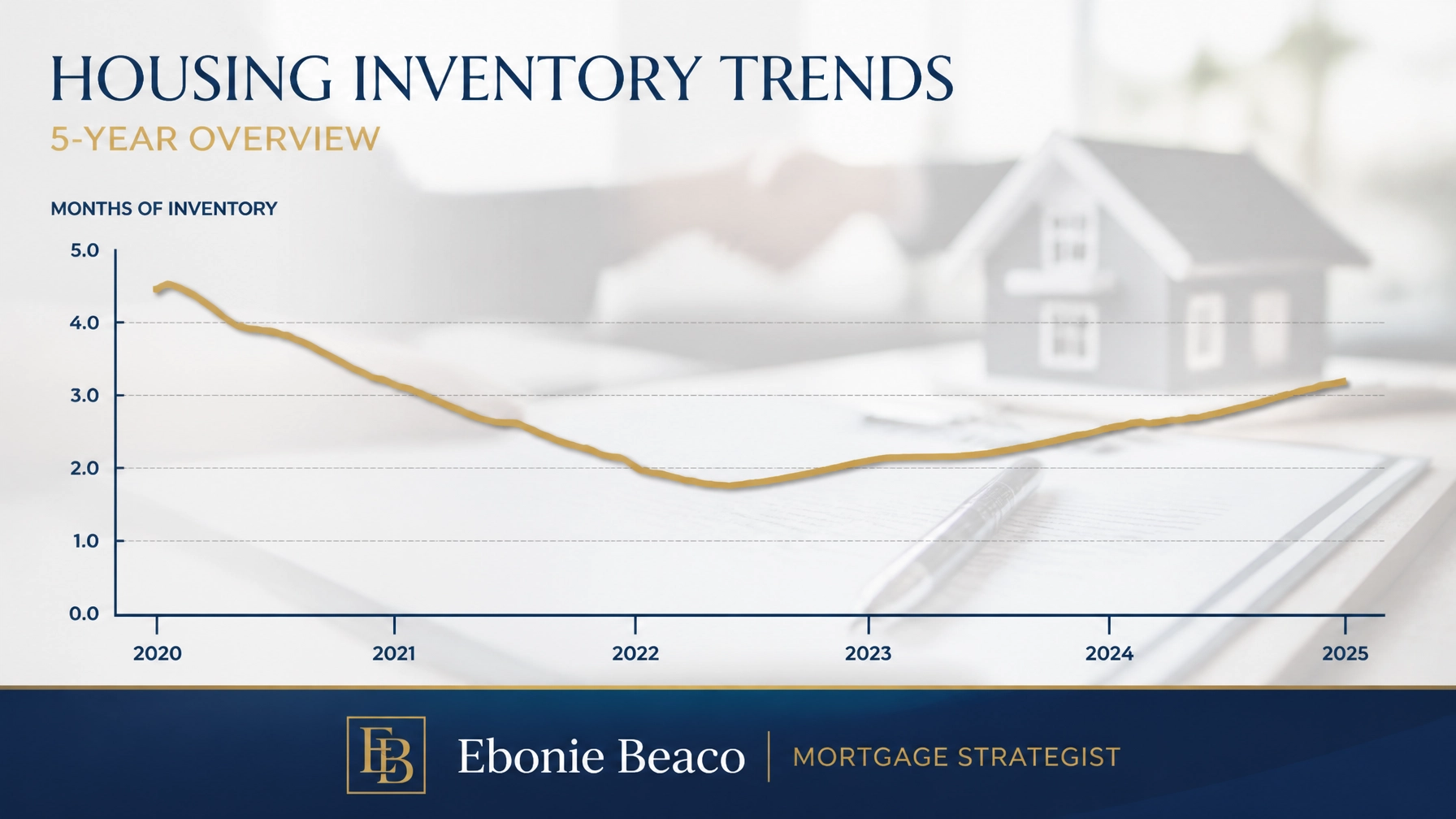
The landscape of the American housing market continues to shift as we move through the middle of 2026. Understanding the current volume of available homes is essential for anyone looking to purchase a primary residence or expand a real estate investment portfolio. Recent data indicates that while national inventory has seen a modest uptick, the local reality in markets like Chicago, Illinois, and Atlanta, Georgia, remains highly competitive due to persistent supply constraints.
Exploring the latest reports reveals a complex picture of regional variance. In the Chicago metro area, active listings have remained relatively flat compared to last year, which continues to drive median prices upward for both single-family homes and condos. Conversely, in Atlanta and surrounding Georgia suburbs, a slight increase in new construction has provided a bit more breathing room for buyers, though total supply still sits well below historical norms. This discrepancy between regions highlights why a localized mortgage strategy is vital for navigating today’s market.
Whether you are a first-time homebuyer in Michigan or a seasoned fix-and-flip investor in Florida, the available inventory levels directly influence your negotiation leverage and financing options. High demand coupled with low supply often necessitates quick action and robust pre-approvals to secure a property. By staying informed on these weekly shifts, you can better align your home-buying or investment goals with the current economic climate across the 11 states we serve, including Alabama, Arkansas, California, Indiana, Kentucky, Missouri, and Virginia.
Analyzing Regional Supply Data: From the Midwest to the Southeast
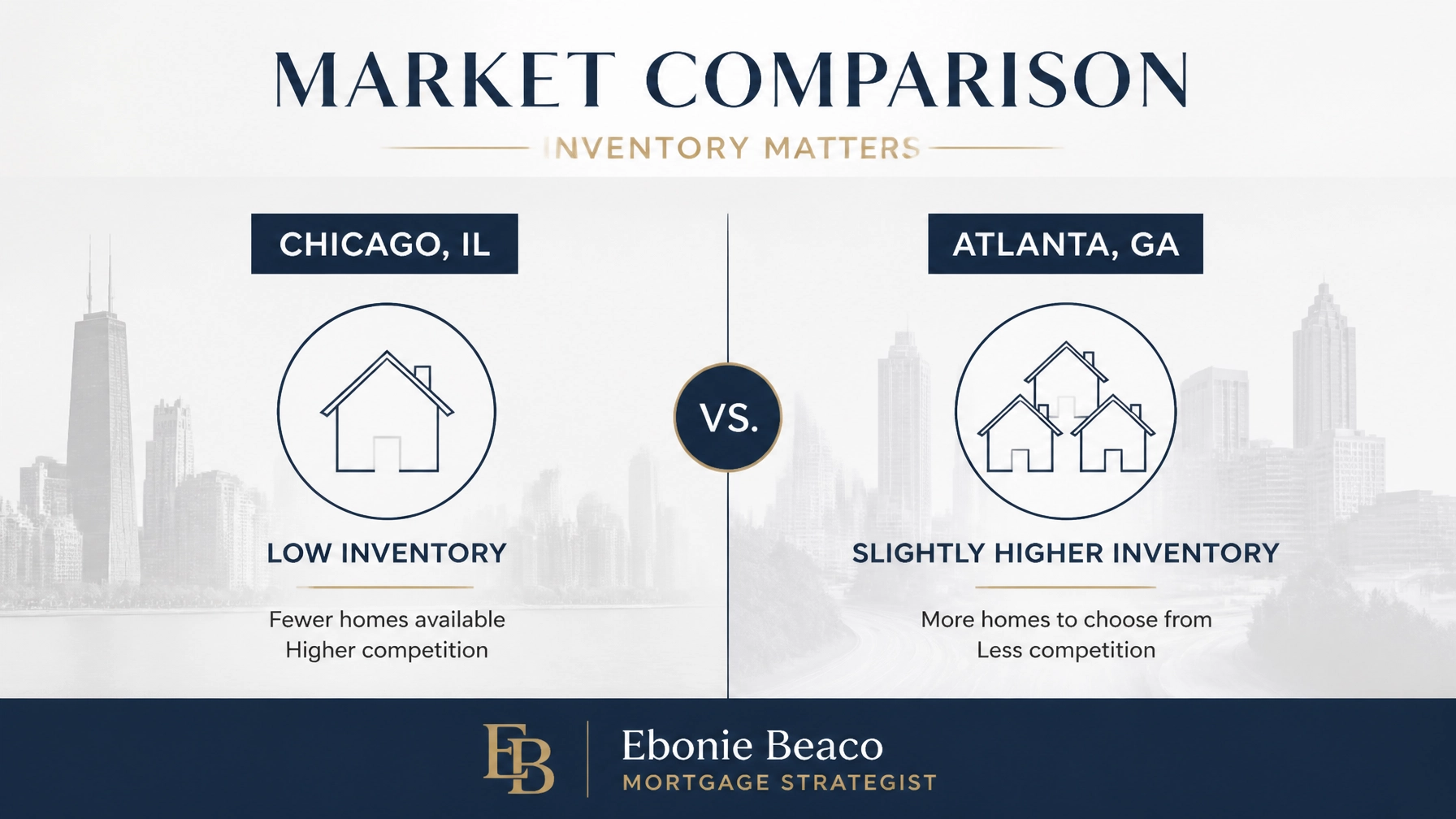
In the City of Chicago, the most recent market snapshot from the Chicago Association of REALTORS shows that homes for sale decreased by over 8% year-over-year in certain districts. This scarcity has led to a median price increase of approximately 6.3%, reaching roughly $380,000. For buyers in these neighborhoods, the lack of options means that properties are moving quickly, and multiple-offer scenarios are still a common occurrence despite higher interest rates.
Moving toward the Southeast, the Atlanta market presents a slightly different narrative. While still technically in a seller-leaning environment, the presence of new-build communities in the Georgia suburbs has offered investors and families more opportunities to find available stock. However, even with these additions, the "lock-in effect": where current homeowners are hesitant to trade their existing 3% mortgage for a 7% rate: continues to cap the number of resale homes hitting the market. This phenomenon is also being observed in states like Virginia and Michigan, where inventory remains tight in high-demand school districts.
For real estate investors, these inventory levels are a critical metric for determining the viability of a deal. In California and Florida, where property values are historically higher, low inventory can lead to lower capitalization rates but higher long-term appreciation. Investors in Missouri and Arkansas might find more inventory availability, but they must still navigate the nuances of local demand to ensure their rental properties remain occupied. Accessing localized market reports can help you identify which specific zip codes offer the best balance of supply and growth potential.
Essential Real Estate Terms and Definitions
Understanding the terminology used in weekly housing reports is the first step toward making an informed decision. Below are key concepts that define the current state of housing supply.
Housing Inventory
Definition: The total number of residential properties currently listed for sale on the market at a specific point in time.
Application: Monitoring this number helps you determine if you are entering a buyer's market or a seller's market in your specific region.
Months of Supply
Definition: A metric that estimates how long it would take for all current listings to sell if no new homes were added to the market, based on the current sales pace.
Application: This figure allows you to gauge the level of competition, as anything under five months generally favors the seller.
Absorption Rate
Definition: The rate at which available homes are sold in a specific real estate market during a given time period.
Application: You can use this rate to predict how quickly you need to move on a property before another buyer secures it.
Days on Market (DOM)
Definition: The average number of days a property remains listed before a purchase contract is signed.
Application: A lower DOM indicates a high-velocity market where buyers have less time for prolonged negotiations.
Strategic Financing in a Low-Inventory Market
When inventory is scarce, the type of financing you choose can make or break your offer. For self-employed borrowers or entrepreneurs in states like Indiana and Kentucky, traditional W-2 verification can sometimes be a hurdle. Jump in and explore bank statement loans, which allow you to qualify based on your business's cash flow rather than tax returns. This flexibility can be the key to securing a home in a market where you must compete with cash buyers.
Real estate investors often turn to specialized programs like DSCR Investor Loans to scale their portfolios quickly. These loans focus on the income generated by the property itself rather than the borrower's personal income. In markets like Florida or California, where short-term rentals and Airbnb properties are popular, using a DSCR loan can help you acquire multiple units without hitting the debt-to-income (DTI) limits found in conventional financing.
- DSCR Investor Loans: A financing solution that qualifies borrowers based on the property's rental income relative to the mortgage payment.
- Fix and Flip Loans: Short-term funding designed for investors who purchase distressed properties, renovate them, and sell them for a profit.
- Bridge Loans: Temporary financing that allows a buyer to bridge the gap between the purchase of a new home and the sale of an existing one.
- ITIN Mortgage Loans: Specialized loan programs for borrowers who do not have a Social Security Number but possess an Individual Taxpayer Identification Number.
- Non-QM Loans: Mortgage products that do not fit the strict criteria of government-backed entities, offering more flexible underwriting.
Leveraging Home Equity: HELOC and Cash-Out Refinance Strategies

If you currently own a home in a state like Alabama or Missouri, the low-inventory environment has likely contributed to a significant increase in your property's value. You can tap into this "hidden" wealth through a HELOC (Home Equity Line of Credit) or a Cash-Out Refinance. These strategies are particularly effective for homeowners looking to fund a renovation, consolidate high-interest debt, or provide a down payment for a second investment property.
Compare your options carefully. A HELOC functions like a credit card tied to your home's equity, allowing you to withdraw funds as needed. On the other hand, a cash-out refinance replaces your existing mortgage with a new, larger loan, giving you a lump sum of cash at closing. In a market where purchase inventory is low, many homeowners find that improving their current property or using equity to buy a rental property is a more efficient way to build wealth than moving.
Practical Example: Using a DSCR Loan for a Multi-Unit Property

To understand how these concepts apply in a real-world scenario, consider an investor looking to purchase a four-unit residential building in Chicago. With the current inventory levels, the property is priced at $600,000. Instead of using a traditional loan that requires personal income verification, the investor chooses a DSCR (Debt Service Coverage Ratio) loan.
In this scenario, the lender looks at the gross monthly rental income. If the four units combined generate $7,200 per month and the total monthly mortgage payment (including Principal, Interest, Taxes, and Insurance: PITI) is $5,500, the calculation is as follows:
DSCR = Gross Rental Income / PITI
DSCR = $7,200 / $5,500 = 1.31
Because the ratio is above 1.0, the property "covers" its own debt. Most lenders prefer a DSCR of 1.20 or higher, making this a strong candidate for financing. This strategy allows the investor to secure the property in a competitive Illinois market without the need for extensive personal financial documentation. You can use mortgage calculators to run similar numbers for properties you are currently eyeing in Atlanta, GA, or cities throughout Virginia.
Navigating the Path Forward
The importance of housing supply data cannot be overstated. As inventory levels fluctuate weekly, the ability to adapt your financing strategy is what will set you apart from other buyers and investors. Whether you are navigating the high-density markets of Chicago or the expanding suburbs of Atlanta, having a clear understanding of conventional loans and alternative lending products is vital.
We are committed to providing the education and guidance necessary to help you achieve homeownership and build lasting wealth through real estate. If you have questions about how current inventory trends affect your specific loan scenario, we are here to provide clear and confident answers tailored to your financial profile.
Schedule a 1 on 1 at https://calendly.com/homeloansnetwork
Ebonie Beaco
Mortgage Strategist | Senior Loan Officer
Home Loans Network powered by Loan Factory Inc.
NMLS #2389954
HomeLoansNetwork.com
312-392-0664