Home Equity Secrets Revealed: What Experts Don’t Want You to Know About HELOCs in FL and GA

The Truth About the Second Mortgage Label
You often hear a Home Equity Line of Credit (HELOC) described as a flexible way to tap into your home's value.
The secret that many lenders gloss over is that a HELOC is technically a second mortgage.
HELOC: A revolving line of credit secured by the equity in your home.
Practical application: It allows you to borrow against your home value as needed, similar to a credit card but with lower interest rates.
Because your home serves as collateral, the stakes are much higher than a standard credit card.
If you live in Florida or Georgia and experience a financial setback, failing to repay a HELOC can lead directly to foreclosure.
Explore your current equity levels at Home Loans Network before deciding if this path aligns with your long-term safety.
Why 95% LTV Might Be Your Worst Move
Some lenders in states like Virginia and Michigan might offer you a HELOC that brings your total loan-to-value (LTV) ratio up to 95%.
LTV (Loan-to-Value): The ratio of all loans on a property compared to its appraised value.
Practical application: Higher LTV ratios mean you have less "skin in the game" and are more vulnerable to market shifts.
While accessing nearly all your equity sounds like a win, it creates a massive risk if home prices dip.
If you are a homeowner in a fast-moving market like Atlanta or Tampa, a 5% drop in property value could leave you "underwater."
Being underwater means you owe more than the home is worth, making it nearly impossible to sell or refinance without bringing cash to the table.
Staying under 80% combined LTV is usually the safer boundary for maintaining financial flexibility.

Variable Rates and the Reality of Payment Shock
Most HELOC programs in Florida and Georgia feature variable interest rates.
These rates are typically tied to the Prime Rate plus a margin determined by the lender.
When the economy shifts and the Federal Reserve adjusts rates, your monthly payment can jump significantly without warning.
Draw Period: The initial phase of a HELOC (often 10 years) where you can take out money and usually pay only interest.
Benefit: Provides low initial payments while you complete renovations or investments.
Repayment Period: The phase following the draw period where you must pay back both principal and interest.
Benefit: This phase ensures the debt is eventually retired, but it causes a sharp increase in monthly costs.
Many borrowers enjoy the low, interest-only payments during the draw period but are blindsided when the repayment period kicks in.
If you are working with a Michigan HELOC lender, ask for a "stress test" calculation to see what your payment would look like if rates rose by 2% or 3%.
Why Your Safety Net Might Disappear When You Need It Most
Lenders often market HELOCs as an "emergency fund" for homeowners in Alabama, Arkansas, and Kentucky.
The hidden reality is that banks have the right to freeze or reduce your credit line at their discretion.
If the housing market in your specific Florida zip code softens, or if your credit score takes a hit, the bank can cut off your access to those funds instantly.
This usually happens during economic downturns: the exact time you might actually need an emergency fund.
A HELOC should supplement your financial strategy, but it should never replace a liquid cash savings account.
Access more details on how these programs work by visiting our mortgage basics page.
Florida vs. Georgia: The Foreclosure Speed Trap
The legal process for losing a home differs significantly between these two states, and it is a detail many experts fail to emphasize.
Judicial Foreclosure: A legal process where the lender must go through the court system to take back a property.
Practical application: This is the standard in Florida, often giving homeowners more time to negotiate a resolution.
Non-Judicial Foreclosure: A process where the lender can foreclose without a court order, usually via a "power of sale" clause.
Practical application: Georgia primarily uses this method, meaning the timeline from a missed payment to a foreclosure sale can be incredibly fast.
If you are a homeowner in Georgia, the "speed" of the non-judicial process means you have a much smaller margin for error when managing a HELOC balance.
Florida residents have the benefit of a slower judicial process, but they face higher risks regarding insurance costs and hurricane-related value fluctuations.
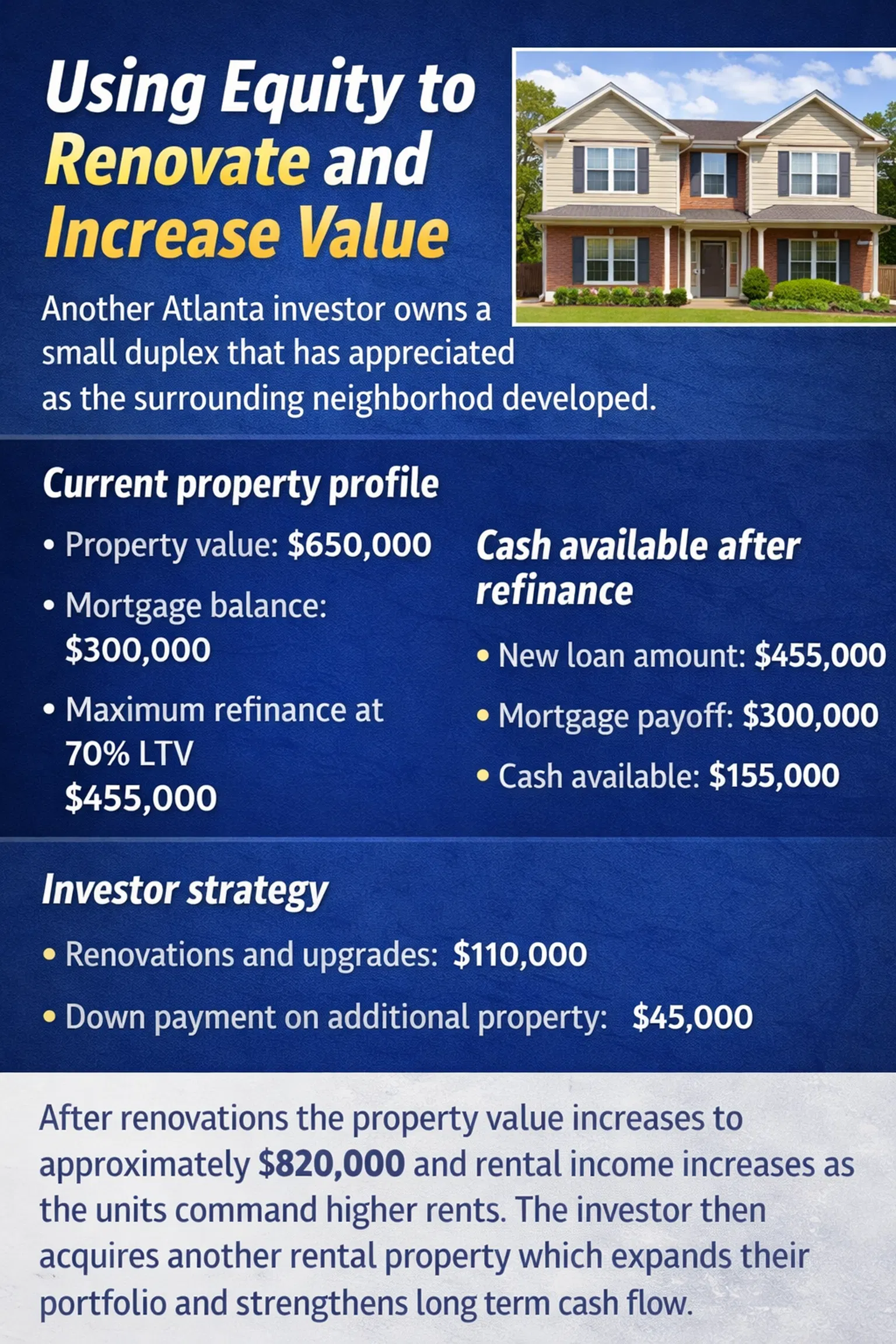
The Best and Worst Ways to Use Your Equity
Smart investors and homeowners use HELOCs as a surgical tool, not a lifestyle subsidy.
Smart Uses:
- Home Improvements: Replacing a roof or upgrading a kitchen in a Virginia suburb can increase the property's market value.
- Storm Hardening: Florida homeowners often use HELOCs for impact windows or roof reinforcements to lower insurance premiums.
- Real Estate Investing: Using equity from a primary residence to fund a down payment on a rental property in Illinois or Missouri.
Dangerous Uses:
- Vacations and Luxury Goods: Using your home as an ATM for depreciating assets is a path to financial instability.
- Daily Expenses: If you are using home equity to pay for groceries or utilities, the underlying issue is a cash flow problem that a loan won't fix.
If you are considering using equity to grow your portfolio, a Virginia HELOC lender can help you compare a HELOC against a cash-out refinance to see which makes more sense for your specific goal.
The Tax Man’s Secret Rule for HELOC Interest
A common misconception is that all HELOC interest is tax-deductible.
Under current federal guidelines, interest on home equity debt is only deductible if the funds are used to buy, build, or substantially improve the home that secures the loan.
If you use your Georgia HELOC to consolidate credit card debt or pay for a child's tuition in California, that interest is generally not deductible.
Always consult with a tax professional to understand how these rules apply to your specific situation before you sign the closing papers.
Jump in and learn more about our loan programs to see how different options impact your tax strategy.

Strategic Equity Use Across the Map: From Virginia to Michigan
Whether you are looking at properties in Indiana or managing a portfolio in Virginia, equity is your most powerful tool.
In Michigan, many homeowners utilize a HELOC to bridge the gap between selling their current home and buying a new one without needing a contingency offer.
In Virginia, investors often use the "Fix and Flip" strategy by tapping into their primary home's equity to fund the renovation of a distressed property.
DSCR (Debt Service Coverage Ratio): A ratio used by lenders to qualify a rental property based on its ability to cover mortgage payments through rental income.
Benefit: Allows investors to scale their portfolios without relying solely on personal income.
If your goal is to move from a single-family home into multifamily investing, using a HELOC for the initial capital can be a game-changer.
Compare your options and see how different scenarios play out using our mortgage calculators.
How to Qualify for the Best Rates and Terms
Getting a HELOC is often easier than a full refinance, but the requirements are still strict.
Most lenders in Florida and Georgia look for a credit score of 680 or higher to offer the most competitive margins.
They also evaluate your Debt-to-Income (DTI) ratio.
DTI (Debt-to-Income): The percentage of your gross monthly income that goes toward paying debts.
Practical application: Keeping this under 43% is generally the threshold for traditional lending programs.
To put yourself in the best position:
- Check Your Appraisal: Ensure your home value hasn't been suppressed by local market trends in cities like Chicago or Indianapolis.
- Clean Up Your Credit: Pay down small balances to lower your credit utilization before applying.
- Document Your Income: Have your tax returns and pay stubs ready, especially if you are a self-employed borrower in California or Virginia.

Taking the Next Step in Your Equity Journey
Understanding the "secrets" of the HELOC market allows you to use these financial tools with confidence.
Whether you are storm-proofing a home in Florida, renovating a duplex in Georgia, or looking for a Michigan HELOC lender to help you expand your investment portfolio, knowledge is your best defense against unexpected costs.
Don't let the technical jargon or hidden clauses hold you back from building wealth.
If you have questions about which equity strategy fits your current financial profile, we are here to provide clarity and guidance.
Schedule a 1 on 1 at https://calendly.com/homeloansnetwork
Ebonie Beaco
Mortgage Strategist | Senior Loan Officer
Home Loans Network powered by Loan Factory Inc.
NMLS #2389954
HomeLoansNetwork.com
312-392-0664
