HELOC Secrets Revealed: What Most Contractors Won’t Tell You About Financing Your Remodel

You have big dreams for that outdated kitchen or the unfinished basement in your Indiana or Kentucky home.
You call a contractor, and they give you a quote that makes your eyes water.
Then comes the "helpful" suggestion: "Just put it on a credit card or use our in-house financing!"
Wait right there.
Most contractors are experts at laying tile or framing walls, but they are rarely experts in mortgage strategy.
They want to get paid today, and they often push high-interest personal loans or credit lines because it ensures their invoice gets cleared immediately.
What they won't tell you is that your home is likely sitting on a goldmine of equity that could fund your project at a fraction of the cost.
If you live in Alabama, Florida, or Illinois, you have seen property values climb significantly over the last few years.
Tapping into that growth through a Home Equity Line of Credit (HELOC) is a move that sophisticated homeowners and real estate investors use to build wealth.
Explore the hidden mechanics of HELOCs and learn how to fund your remodel without falling into a high-interest debt trap.
The Secret Language of Home Equity
Before you sign any financing agreement with a construction company, you need to understand the tools available to you.
A HELOC is not just a loan; it is a flexible financial instrument.
HELOC (Home Equity Line of Credit)
Definition: A revolving line of credit secured by the equity in your primary residence or investment property.
Practical Application: You can borrow, repay, and borrow again during the "draw period," only paying interest on the amount you actually use.
LTV (Loan-to-Value)
Definition: The percentage of the home's value that is encumbered by debt.
Practical Application: Lenders use this to determine how much you can borrow; for example, many Indiana HELOC lender guidelines allow up to 85% or 90% combined LTV.
Draw Period
Definition: The initial phase of a HELOC (usually 10 years) where you can access funds and often make interest-only payments.
Practical Application: This allows you to keep your monthly costs low while the renovation is actively under construction.
Repayment Period
Definition: The phase following the draw period where you can no longer borrow money and must pay back both principal and interest.
Practical Application: You must prepare for a significant jump in monthly payments once this phase begins.

Financial Chart: A breakdown of a $100,000 HELOC showing the difference between interest-only payments during the draw period versus principal and interest payments during the repayment period.
Why Contractors Push High-Interest Financing
Contractors often partner with third-party lending companies that offer "quick approval" loans.
These loans are usually unsecured, meaning they aren't tied to your house.
While that sounds "safer," it usually means the interest rate is 12%, 15%, or even 20%.
A contractor loves these because the money hits their bank account instantly.
They don't have to wait for an appraisal or a mortgage underwriter to verify the project's viability.
However, you are the one left holding a high-interest bill that could have been handled much more efficiently.
As a transparent Kentucky HELOC lender, we see homeowners in Louisville and Lexington realize too late that they could have saved thousands in interest by using their equity instead of a personal loan.
Jump in and compare your options before you commit to the contractor's "preferred" lender.
The Hidden Danger of the Draw Period
Here is a secret most lenders won't lead with: HELOCs usually come with variable interest rates.
This means your payment can change every month based on the prime rate.
If you are renovating a home in a high-appreciation market like Florida or California, a variable rate might not seem scary when your home value is skyrocketing.
But if the Federal Reserve raises rates while your kitchen is torn apart, your "affordable" remodel just got more expensive.
To mitigate this, some sophisticated borrowers look for HELOC products that allow them to "lock in" a fixed rate on specific draws.
This gives you the flexibility of a line of credit with the stability of a fixed-rate mortgage.

Visual Illustration: A graph comparing a steady fixed-rate payment versus a fluctuating variable-rate HELOC payment over a 24-month period of rising interest rates.
Real-World HELOC Math: The Renovation Calculation
Let's look at how a homeowner in Gary, Indiana, or Virginia Beach, Virginia, might structure a remodel using equity.
Imagine you own a home worth $400,000.
Your current mortgage balance is $220,000.
You want to do a major renovation costing $80,000.
Most lenders will allow a Combined Loan-to-Value (CLTV) of 85%.
$400,000 x 0.85 = $340,000 (Total allowable debt).
$340,000 - $220,000 (Current Mortgage) = $120,000 (Available HELOC limit).
By opening a $120,000 HELOC, you have the $80,000 needed for the contractor plus a $40,000 safety net for those "unexpected" issues that always pop up once the walls are opened.
If your interest rate is 8% and you have an interest-only draw period, your monthly payment on that $80,000 would be approximately $533.
Compare that to a high-interest personal loan at 15% over 5 years, where the payment would be over $1,900 per month.
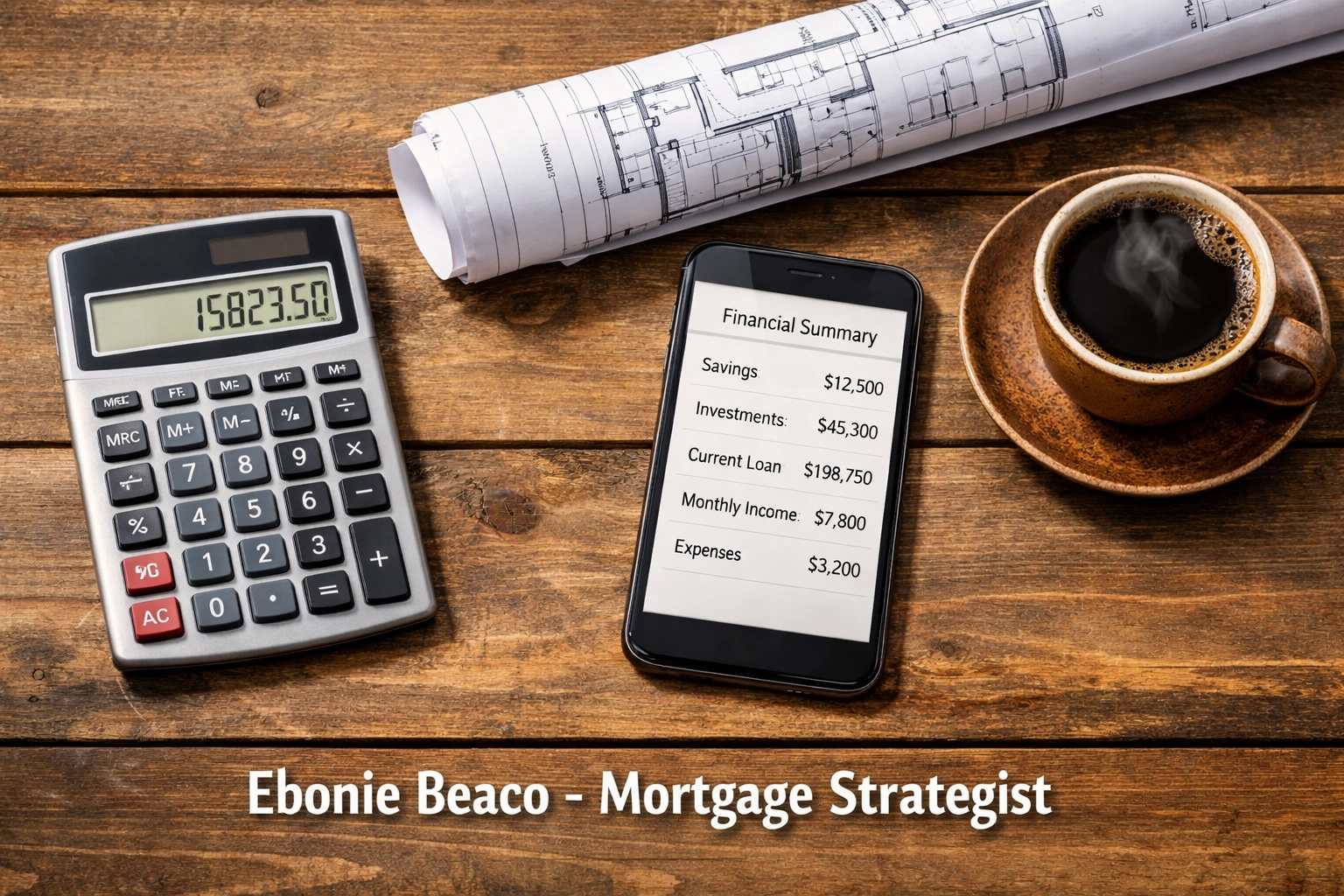
Deal Breakdown Graphic: Property Value $400k | Existing Mortgage $220k | HELOC Limit $120k | Renovation Cost $80k | Monthly Interest-Only Payment $533.
Navigating the Risks Your Contractor Ignores
A contractor wants to finish the job and move on to the next one.
They aren't concerned with whether your home becomes "underwater."
Underwater
Definition: Owning more on your mortgages than the home is currently worth on the open market.
Practical Application: If you live in a market where values fluctuate, like parts of Missouri or Arkansas, over-leveraging your home for a renovation could prevent you from selling if you need to move quickly.
You must also consider the risk of foreclosure.
Because a HELOC is a second mortgage, your home is the collateral.
If you fail to make payments, the lender has the legal right to take the property.
This is why transparency is our top priority at Home Loans Network.
We want you to understand that while equity is a powerful tool, it requires a disciplined repayment strategy.
Access our mortgage calculators to run different scenarios and see how a new credit line fits into your monthly budget.
Using HELOCs Like a Real Estate Investor
Seasoned investors in Chicago or Atlanta don't just use HELOCs for pretty backsplashes.
They use them for the BRRRR strategy (Buy, Rehab, Rent, Refinance, Repeat).
They might use a HELOC from their primary residence to fund the down payment and renovation of a rental property.
Once the rental is fixed up and appraised at a higher value, they do a cash-out refinance or a DSCR loan to pay off the HELOC.
This "velocity of money" strategy allows you to use the same $100,000 of equity over and over again to build a massive portfolio.
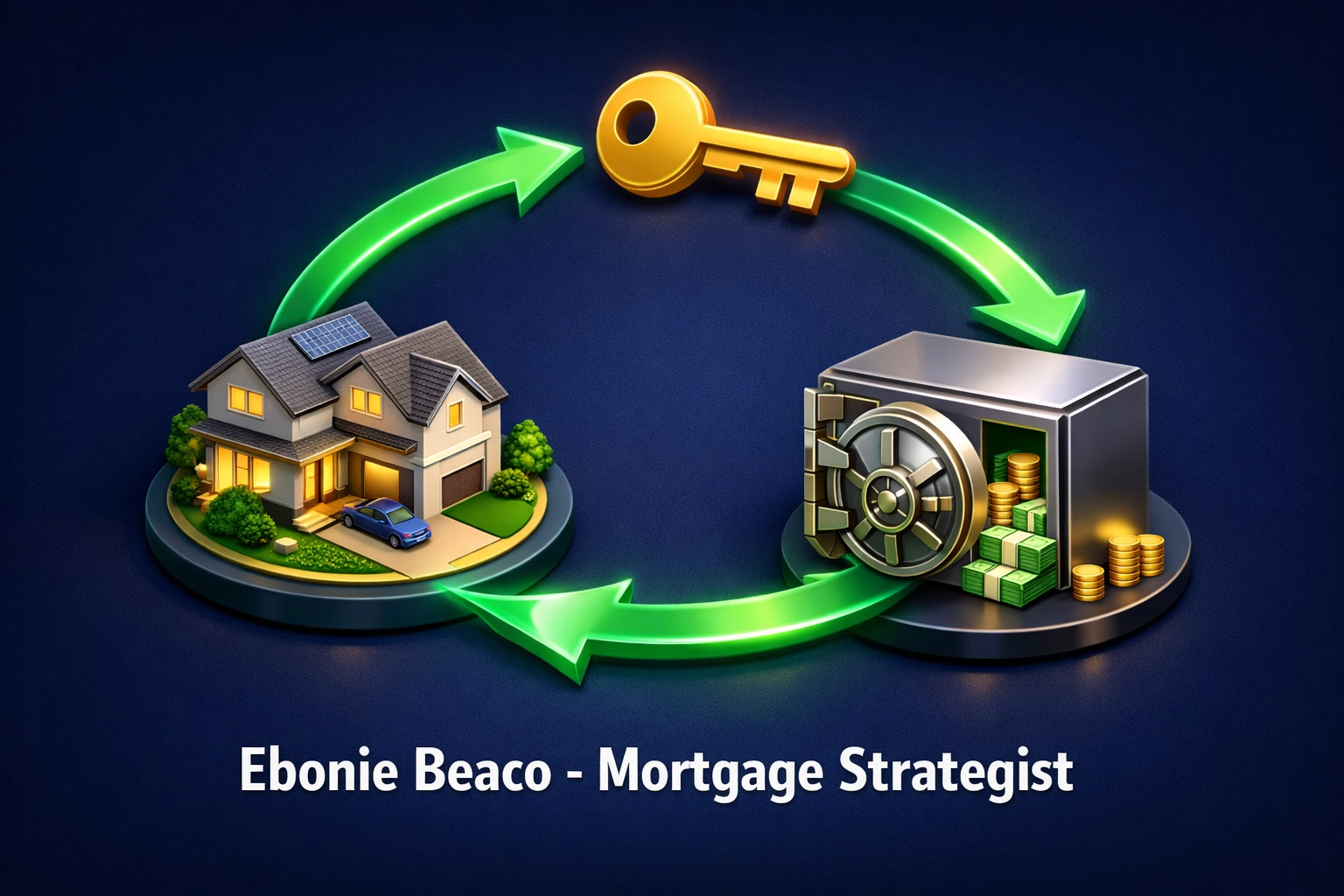
Flowchart: The BRRRR Method using a HELOC to fund the "Rehab" phase and then using a Refinance to replenish the HELOC for the next deal.
Regional Market Trends: Where to Tap Equity Now
If you are in Michigan or Georgia, you might be sitting on more equity than you realize.
The housing supply remains tight in cities like Grand Rapids and Savannah, which keeps prices firm.
In California, where home values are significantly higher, a HELOC can often reach six figures, providing enough capital to build an Accessory Dwelling Unit (ADU).
An ADU doesn't just add space; it adds rental income that can help pay off the HELOC itself.
Before you start swinging a sledgehammer, check the local permit requirements in your specific city, whether you are in Alabama or Virginia.
A renovation that isn't permitted might not add the value you expect when the appraiser comes by.
The Exit Strategy: What Happens After the Renovation?
The biggest secret contractors won't mention is what happens when the work is done.
A HELOC is a great "bridge" to get the work finished.
However, once the renovation is complete and your home value has (hopefully) increased, you should evaluate your long-term debt.
Many homeowners choose to roll their HELOC and their primary mortgage into a single conventional loan once the project is complete.
This locks in a fixed rate for 30 years and eliminates the risk of those variable HELOC payments jumping in the future.
Compare your current mortgage terms with a total refinance option to see which path saves you the most money over the next decade.
Final Thoughts for the Smart Homeowner
Your home is your largest asset.
Don't let a contractor dictate how you finance your improvements.
Whether you are looking for an Indiana HELOC lender to fix up a historic home in Indianapolis or a Kentucky HELOC lender for a ranch in Bowling Green, your goal should be the same:
Maximize your home's value while minimizing your interest expense.
Explore your options, run the numbers, and always have an exit strategy.
Transparency in lending means knowing exactly what you are signing and why it serves your long-term financial health.
Schedule a 1 on 1 at https://calendly.com/homeloansnetwork
Ebonie Beaco
Mortgage Strategist | Senior Loan Officer
Home Loans Network powered by Loan Factory Inc.
NMLS #2389954
HomeLoansNetwork.com
312-392-0664