HELOC Secrets Revealed: What Experts Don't Want You to Know About Funding a Home Remodel

You have probably seen the commercials. A smiling couple stands in a gleaming new kitchen, credit card in hand, talking about how "easy" it was to tap into their home equity. But behind the glossy marketing lies a complex financial tool that can either be your greatest asset or a significant liability.
If you are a homeowner in Alabama, Florida, or Michigan looking to fund a major renovation, you need to understand the mechanics of a Home Equity Line of Credit (HELOC) before you sign on the dotted line. It is not just about getting the cash; it is about knowing how the bank views your home and your debt.
What Is a HELOC?
HELOC (Home Equity Line of Credit): A revolving credit line secured by the equity in your primary residence or investment property.
Practical Application: Think of a HELOC like a credit card with a high limit and a lower interest rate, where your house serves as the collateral to guarantee repayment.
Jump in and explore why this specific type of financing has become the go-to for investors in Chicago and homeowners in Virginia alike.
The Secret of the "Frozen" Credit Line
One thing many lenders won't lead with is the bank's ability to freeze your credit line. Even if you have been approved for a $100,000 HELOC to renovate your home in Georgia, that money is not guaranteed to stay available forever.
Lenders retain the right to slash or revoke your available credit if your credit score drops significantly or if the local housing market takes a dip. If property values in your specific neighborhood in California or Missouri decrease, the bank can decide that their risk is too high and lock your account. This leaves you responsible for the payments on the money you already spent, but with zero access to the remaining funds you planned to use for the second half of your renovation.
The Risk of the Variable Rate Trap
Most HELOCs come with variable interest rates. These rates are typically tied to the Prime Rate, which means your monthly payment can fluctuate based on broader economic conditions.
While the initial "teaser" rate might look incredibly attractive compared to a personal loan, it is not fixed. If the Federal Reserve raises rates, your monthly interest payment goes up. For a homeowner in Kentucky or Indiana, this can turn a manageable monthly bill into a financial strain very quickly.
Compare this to a Cash-Out Refinance, where you replace your entire mortgage with a new one at a fixed rate. While a refinance might have higher closing costs, the stability of a fixed payment is often worth the trade-off for those on a strict budget.

Real-World Equity Calculation: How Much Can You Actually Get?
To understand how a HELOC works in practice, let's look at a scenario for a homeowner in a growing market like Indianapolis or Louisville.
Imagine you own a home valued at $500,000.
Your current mortgage balance is $280,000.
Most lenders will allow you to borrow up to an 85% Combined Loan-to-Value (CLTV) ratio.
- Calculate the Max Borrowing Limit: $500,000 x 0.85 = $425,000.
- Subtract Your Current Debt: $425,000 - $280,000 = $145,000.
- Available HELOC Limit: $145,000.
In this scenario, you could access up to $145,000 to fund a major kitchen overhaul, add a bedroom, or even use the funds as a down payment on a rental property in Florida or Arkansas. You only pay interest on the amount you actually draw from the line.

Why Location Impacts Your HELOC Strategy
Whether you are looking for an Indiana HELOC lender or a Kentucky HELOC lender, geography plays a role in your approval. Lenders look closely at regional market stability.
In high-growth areas like Northern Virginia or parts of California, equity builds faster, making it easier to qualify for larger lines of credit. However, in markets with more volatility, lenders might tighten their DTI (Debt-to-Income) requirements.
DTI (Debt-to-Income Ratio): A personal financial measure that compares an individual's monthly debt payments to their monthly gross income.
Practical Application: Lenders use this to ensure that even if your HELOC interest rate increases, you still have enough income to cover your total monthly obligations.
The "Interest-Only" Draw Period Illusion
Most HELOCs have a Draw Period, usually lasting 5 to 10 years. During this time, many lenders only require you to pay the interest on the money you borrow.
This sounds great for your cash flow while you are mid-renovation in Alabama or Illinois. However, once the draw period ends, the Repayment Period begins. This is when you must start paying back both the principal and the interest.
If you have borrowed $100,000 and only paid interest for ten years, your monthly payment will skyrocket when the principal repayment kicks in. Many homeowners are caught off guard by this "payment shock," leading to a scramble to refinance or, in worst-case scenarios, foreclosure.
Using HELOCs for Real Estate Investment
Experienced real estate investors in Florida and Georgia often use HELOCs as a tool for the BRRRR method (Buy, Rehab, Rent, Refinance, Repeat).
Instead of taking out a high-interest Hard Money Loan, an investor might use the equity in their primary residence via a HELOC to purchase a distressed property in cash. They renovate the property, place a tenant, and then perform a DSCR (Debt Service Coverage Ratio) loan refinance to pay back the HELOC and move on to the next deal.
DSCR Loan: A mortgage loan for investment properties where qualification is based on the property’s rental income rather than the borrower’s personal income.
Practical Application: This allows investors to scale their portfolio without being limited by their personal DTI, as long as the property generates enough cash flow.

HELOC vs. Cash-Out Refinance: Which is Better?
Accessing your equity requires choosing the right vehicle.
- Choose a HELOC if: You need funds sporadically, you want to pay off the balance quickly, and you already have a very low interest rate on your primary mortgage that you don't want to lose.
- Choose a Cash-Out Refinance if: You need a large lump sum upfront, you prefer the safety of a fixed interest rate, and you want to consolidate other high-interest debts into one monthly payment.
For many homeowners in Michigan or Virginia, keeping a 3% primary mortgage and adding a HELOC for a $50,000 basement finish is often more cost-effective than refinancing the entire $300,000 loan balance at today's higher market rates. You can use our mortgage calculators to run these numbers for your specific situation.
Key Risks You Cannot Ignore
Before you move forward, you must be transparent with yourself about the risks:
- Collateral: Your home is the guarantee. If life throws a curveball and you cannot make the payments, the lender can take the house.
- Negative Equity: If you tap into 85% of your equity and the housing market in your city drops by 20%, you could end up "underwater," owing more than the home is worth. This makes it impossible to sell or refinance without bringing cash to the table.
- Closing Costs: While often lower than a standard mortgage, HELOCs still come with appraisal fees, title searches, and annual maintenance fees.
How to Prepare for a HELOC Application
If you are ready to explore your options, start by getting your financial house in order.
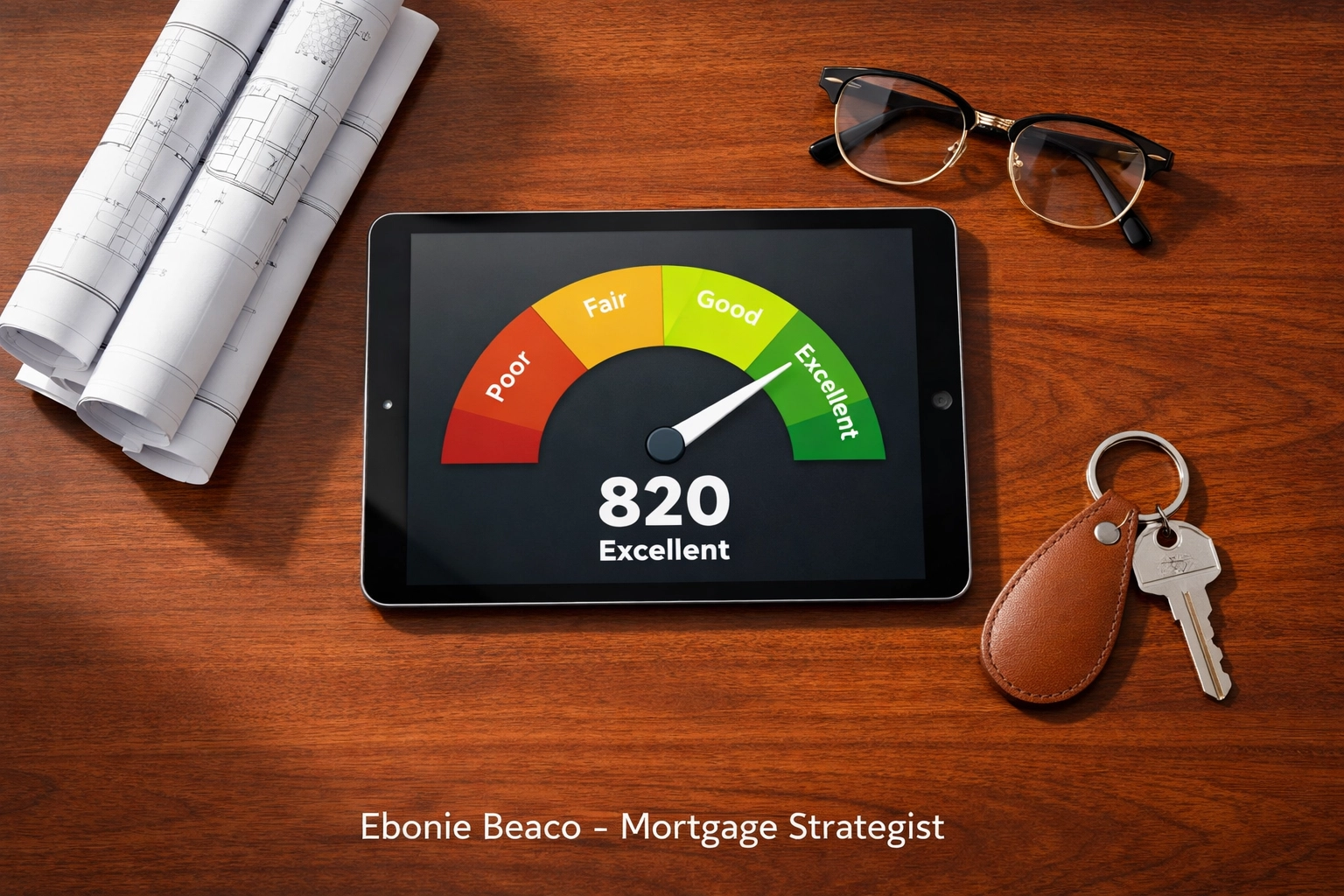
- Check Your Credit Score: Higher scores unlock lower margins on the variable rate.
- Document Your Income: Even though the loan is equity-based, your ability to repay is still a primary factor for any reputable Indiana HELOC lender.
- Determine Your Project Scope: Don't just pull out money because it's there. Have a clear plan for your renovation to avoid overborrowing.
Access our loan process guide to see exactly what documentation you will need to provide.
Conclusion: Taking the Next Step
Funding a home remodel through a HELOC is a strategic move that requires a balance of market knowledge and personal financial discipline. Whether you are looking to increase the value of your home in California or building a rental empire in Georgia, understanding the "secrets" of how these loans work ensures you remain in control of your financial future.
Transparency is our priority at Home Loans Network. We want you to feel confident in your financing decisions, knowing the benefits and the risks involved.
Schedule a 1 on 1 at https://calendly.com/homeloansnetwork
Ebonie Beaco
Mortgage Strategist | Senior Loan Officer
Home Loans Network powered by Loan Factory Inc.
NMLS #2389954
HomeLoansNetwork.com
312-392-0664