Hedge Funds vs. Local Investors: Who Should You Sell Your Wholesale Real Estate Deals To?

Choosing the right exit strategy for your wholesale real estate deals often feels like standing at a major crossroads in your investing career. You have spent weeks marketing, door knocking in neighborhoods from Chicago to Miami, and negotiating with motivated sellers to get a property under contract. Now that you have the equitable interest, the big question is whether you should pitch the deal to a massive institutional hedge fund or a local "mom and pop" investor. Both buyer types offer distinct advantages and drawbacks that can significantly impact your assignment fee and the speed of your closing. Understanding these nuances is critical for any wholesaler looking to build a sustainable and scalable business in the current 2026 market. We will explore how these two groups operate, what they look for in a property, and how you can position your deals to attract the highest possible payout.
Institutional buyers, commonly referred to as hedge funds, have become a powerhouse presence in the real estate investing landscape over the last several years. These entities operate with massive pools of capital and specific "buy boxes" that dictate exactly what type of inventory they will acquire. When you sell to a hedge fund, you are often dealing with a streamlined corporate process that values speed and certainty above all else. They typically pay in cash, which eliminates the common headaches associated with traditional mortgage approvals or appraisals. Because they are looking to deploy millions of dollars quickly, they might accept a lower profit margin than a local flipper would. This corporate efficiency can be a massive benefit for a wholesaler who needs a guaranteed, fast closing to move on to the next deal.
However, the rigidity of hedge funds can also be a significant hurdle for many wholesale real estate transactions. Their buy boxes are often extremely narrow, meaning they might only want single-family homes built after 1990 with at least three bedrooms and two bathrooms in specific zip codes. If your property is a "distressed gem" in an older part of Detroit or a unique fixer-upper in rural Arkansas, a hedge fund will likely pass on it immediately. They also tend to have very strict inspection periods and won't hesitate to walk away if the title isn't perfectly clean or if the repairs exceed their internal estimates. Dealing with a corporate entity also means you lose the personal touch and the ability to negotiate based on a relationship. You are often just a number in their massive acquisition funnel, which can feel cold and transactional compared to working with local peers.
Comparing the Institutional Model to Local Cash Buyers
Local investors represent the heart and soul of the real estate investing community in markets like Atlanta, Indianapolis, and Virginia Beach. These are the individuals or small teams who are actively flipping houses, building BRRRR portfolios, and managing local rentals. Unlike hedge funds, local cash buyers are often much more flexible regarding the condition and location of the property. They are willing to take on the "messy" deals that institutional buyers avoid, such as homes with major structural issues, hoarding situations, or title complications. Building a solid list of local buyers allows you to develop long-term professional relationships that can lead to repeat business and referrals. These investors often rely on their own market knowledge rather than just a computer algorithm to determine the value of a deal.
While local investors offer flexibility, they may also face more challenges when it comes to liquidity and financing. Many local flippers use hard money loans or private capital to fund their acquisitions, which introduces a layer of third-party approval into your wholesale deal. If their lender decides the project is too risky, your buyer might back out at the last minute, leaving you scrambling to find a replacement. Local buyers are also typically looking for a much higher return on investment because they are the ones managing the construction and the eventual resale. This means they will often squeeze your wholesale fee harder than a hedge fund might. You have to weigh the benefit of a flexible, local partner against the potential for financing delays and tighter profit spreads.
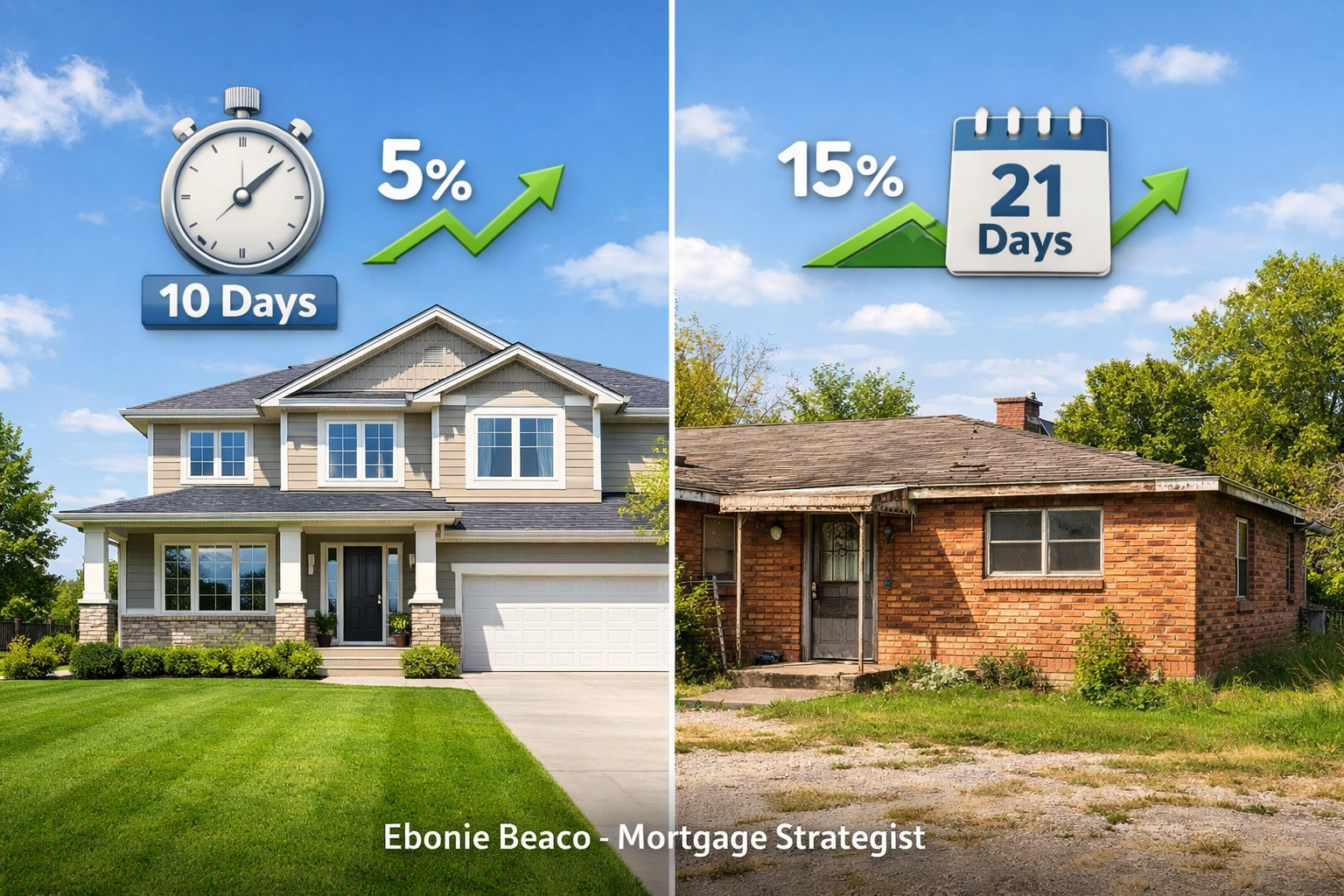 Visual: A side-by-side comparison chart showing a hedge fund deal vs. a local investor deal. Left side: Hedge Fund (Clean 2005 build, 5% yield, 10-day close). Right side: Local Investor (1950s Fixer-upper, 15% ROI goal, 21-day close). Footer: Ebonie Beaco - Mortgage Strategist.
The Financial Breakdown: A Real-World Example
To truly understand which buyer is best for your specific wholesale real estate deal, we need to look at the math behind the offer. Let’s imagine you have found a distressed property in a suburb of Chicago, Illinois, with an After Repair Value (ARV) of $400,000. The home needs approximately $60,000 in renovations to bring it up to top market standards for the neighborhood. Using the standard 70% rule, a local investor would typically want to buy this property for $220,000 (which is 70% of the $400,000 ARV, minus the $60,000 rehab). If you have the property under contract for $200,000, your assignment fee would be $20,000 when selling to that local flipper. This calculation accounts for the local investor's need to cover holding costs, closing costs, and a healthy profit margin for their effort.
Now, consider a hedge fund that might be looking for a long-term rental in that same Chicago zip code. Because they have a lower cost of capital and are looking for a 5-year or 10-year yield rather than a quick flip profit, they might be willing to pay more. They might use a different formula, perhaps offering $240,000 for that same property because they plan to hold it as a rental. In this scenario, your wholesale fee jumps from $20,000 to $40,000 simply by choosing the institutional exit strategy. However, remember that the hedge fund will likely require the property to meet their strict age and utility requirements. If the roof is over 15 years old or the HVAC system is outdated, they might demand a price reduction or cancel the contract entirely during their inspection.
Technical Definitions for the Modern Wholesaler
- ARV (After Repair Value): The estimated market value of a property after all necessary renovations and improvements have been completed. This figure is the foundation for almost every wholesale deal calculation.
- Assignment Contract: A legal document that transfers the rights and obligations of a purchase agreement from the original buyer (the wholesaler) to an end buyer. This allows the wholesaler to collect a fee without ever taking title to the property.
- DSCR (Debt Service Coverage Ratio): A financing metric used by lenders to qualify a property based on its ability to produce enough rental income to cover the mortgage payments. Wholesalers can use this to help their buyers find DSCR rental property loans to close deals.
- Double Closing: A transaction where the wholesaler actually purchases the property and immediately sells it to the end buyer in a separate closing. This is often used to keep large assignment fees private from both the seller and the buyer.
- Buy Box: The specific set of criteria (location, price, year built, square footage) that an institutional investor uses to filter and select properties for acquisition.
How Financing Affects Your Choice of Buyer
As a mortgage strategist, I often see wholesalers overlook how their buyer’s financing impact their own paycheck. If you are selling to a local investor who plans to keep the property as a long-term rental, they will likely need a DSCR loan or a portfolio loan to close. Understanding the loan process and having a lender partner like Home Loans Network can help you vet your buyers before you sign an assignment. If your buyer is unorganized or doesn't have a reliable funding source, your wholesale deal is at risk of falling apart. When you work with buyers who have pre-approved financing or a proven track record, you increase your closing rate significantly. I help investors navigate these financing hurdles every day, ensuring that the deals you source actually make it to the closing table.
Scaling your business from a solo wholesaler to a high-volume operation requires a mix of both buyer types. You should aim to have a "Goldilocks" buyers list that includes local fix-and-flip experts for the heavy renovation projects and institutional funds for the cleaner, newer inventory. In competitive markets like Florida or California, having a diverse list of cash buyers allows you to move properties regardless of the market cycle. You might even find that some of your local buyers eventually want to grow into larger apartment buildings or commercial spaces. When that happens, you can guide them toward commercial real estate loans or multi-unit financing options. Being a resource for your buyers, rather than just a deal provider, makes you an indispensable part of their investment team.
In the end, the choice between a hedge fund and a local investor depends on the specific property and your long-term business goals. If you want the highest possible fee on a property that fits a perfect corporate mold, the hedge fund is often the way to go. If you have a property with character, problems, or unique potential, a local investor will be your best friend. My goal is to help you structure these deals so that they are attractive to any type of buyer and to provide the financing back-end that keeps the gears turning. Whether you are wholesaling in Michigan, Virginia, or Kentucky, the principles of deal analysis and buyer relations remain the same. Jump in, start building those lists, and let's get your next deal funded and closed.
📞 Work With Ebonie Beaco
If you are a wholesaler looking to:
- Close more deals
- Connect your buyers with financing
- Structure deals that actually get approved
- Learn how to grow into a real estate investor
I can help you every step of the way.
Ebonie Beaco Mortgage Strategist | Senior Loan Officer Home Loans Network powered by Loan Factory Inc. NMLS #2389954
📱 Phone: 312-392-0664 📧 Schedule a 1 on 1: https://calendly.com/homeloansnetwork 🌐 Website: HomeLoansNetwork.com/contact-us
👉 Whether you need lending, deal structuring, or mentorship, reach out today.