Getting Paid: How to Calculate Your Wholesale Real Estate Assignment Fee

Entering the world of wholesale real estate is one of the fastest ways to build capital and learn the mechanics of the housing market without needing a massive down payment. At its core, wholesaling is about finding a distressed property, securing it under contract, and then "assigning" that contract to a cash buyer for a higher price. The difference between what you agreed to pay the seller and what the buyer pays you is your assignment fee. Understanding how to calculate this fee correctly is the difference between a thriving business and a deal that falls apart at the closing table. Many beginners struggle with the math, often overestimating their potential profit while underestimating the costs that a savvy investor will consider.
To master the calculation of an assignment fee, you first have to understand the perspective of your end buyer, who is typically a fix-and-flip investor or a long-term landlord. These buyers are looking for a specific return on investment, and your fee is essentially an acquisition cost for them. If your fee is too high, the deal no longer makes sense for their bottom line, and they will simply walk away. Most successful wholesalers use a formulaic approach to ensure there is enough "meat on the bone" for everyone involved in the transaction. By focusing on the numbers rather than emotions, you position yourself as a professional partner who understands the local markets in areas like Chicago, Atlanta, or Miami.
The Foundation of the Wholesale Formula
The starting point for any wholesale deal is the After Repair Value, or ARV, which represents what the house will be worth once it is fully renovated and back on the retail market. You can determine this by looking at comparable sales: often called "comps": of similar homes in the immediate area that have sold within the last six months. Once you have a solid ARV, the industry standard is to apply the 70% rule, though this percentage can fluctuate depending on the specific market conditions in states like Virginia or California. You multiply the ARV by 0.70 (or 0.75 in hotter markets) and then subtract the estimated repair costs to find your Maximum Allowable Offer, also known as the MAO. Your assignment fee is then factored into that MAO to ensure you aren't overpaying the seller.
Calculating repairs is often where new wholesalers make their biggest mistakes, so it is vital to get a realistic estimate before you finalize your contract price. If you estimate $30,000 in repairs but the actual cost is $50,000, your cash buyer will see that discrepancy immediately during their walkthrough. This error usually forces the wholesaler to either renegotiate the fee downward or lose the buyer entirely, which can damage your reputation in the investor community. A professional wholesaler spends time walking through properties with contractors to learn the costs of roofing, flooring, and HVAC systems. When you provide a buyer with a deal backed by accurate repair numbers, they are much more likely to accept your requested assignment fee without pushback.
A Practical Deal Breakdown
Let’s look at a real-world scenario to see exactly how these numbers play out in a standard wholesaling houses transaction. Imagine you find a property in a suburb of Indianapolis that needs significant cosmetic work but is located in a high-demand school district. After doing your research on Home Loans Network, you determine the ARV is $300,000 and the necessary repairs will cost roughly $40,000. Using a slightly more aggressive 75% rule for this competitive area, the investor’s total all-in price should be around $195,000 to account for their profit margin and closing costs. You then work backward from that number to decide how much you want to earn on the assignment.
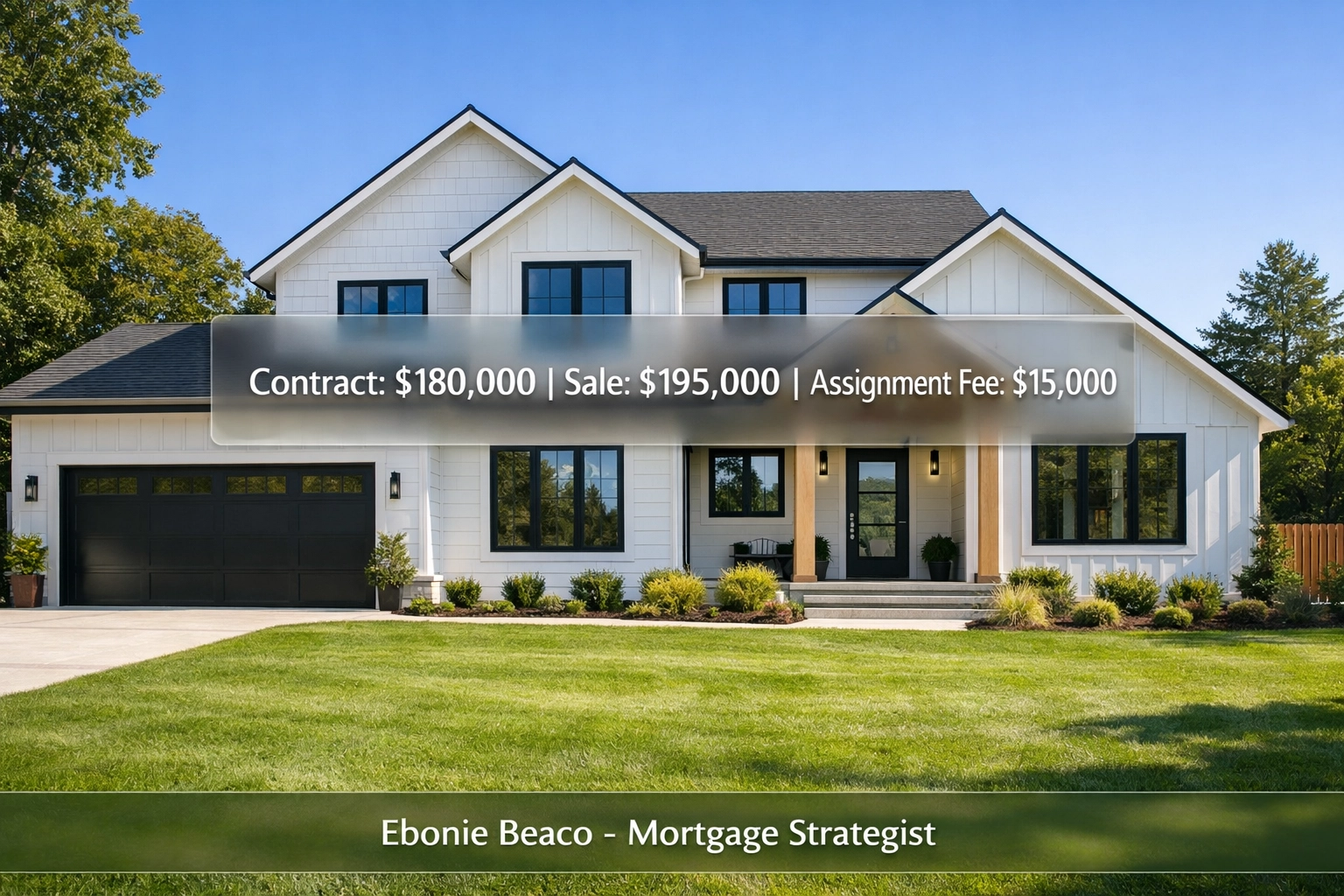
In this specific example, you negotiate with the motivated seller and successfully get the property under contract for $180,000. Since you know your cash buyer is willing to pay $195,000 for a deal with these specific metrics, the math becomes very straightforward for your closing. You execute an assignment of contract where the buyer pays the $180,000 to the seller and a separate $15,000 assignment fee to you at the time of closing. This $15,000 represents your gross profit for sourcing the deal, managing the seller relationship, and marketing the opportunity to your buyers list. This transparent approach ensures the seller gets the price they agreed to while the buyer gets an investment that fits their specific financial criteria.
Balancing Profit and Market Reality
Setting your assignment fee requires a delicate balance between maximizing your own income and maintaining a strong relationship with your cash buyers. While it is tempting to try and squeeze a $30,000 fee out of every deal, doing so might make the property unattractive to the very people you need to close the transaction. In many markets like Michigan or Arkansas, a standard fee ranges from $5,000 to $15,000, depending on the complexity and size of the deal. If you consistently bring "thin" deals to your buyers where the profit margins are too tight, they will eventually stop opening your emails. Building a long-term business in wholesale real estate relies on volume and trust rather than hitting a home run on a single transaction.
You should also consider the different types of buyers and how their financing affects the price they can pay for your wholesale deals. For instance, a buyer using a Fix and Flip Loan or hard money will have higher carrying costs than an all-cash hedge fund. Understanding these nuances allows you to tailor your assignment fee based on who is most likely to buy the specific property you have under contract. If you are working with a landlord looking for a long-term rental, they might be more interested in the cash flow and Debt Service Coverage Ratio (DSCR) than the immediate equity spread. I often help wholesalers understand these different buyer profiles so they can structure deals that appeal to a wider range of investors.
Avoiding Legal and Financial Pitfalls
One of the most important aspects of getting paid is ensuring your contracts are structured correctly to protect your assignment fee. You must use a contract that is legally assignable in your state and include specific language that allows you to market the property to third-party buyers. In some regions, like Illinois or Florida, there are specific licensing requirements or disclosures that must be handled properly to stay compliant with local real estate laws. Failure to follow these guidelines can lead to legal disputes or, worse, the title company refusing to release your fee at the end of the transaction. Always work with a reputable investor-friendly title company or attorney who understands how wholesaling houses works in your specific jurisdiction.
Transparency is your best friend when it comes to managing the expectations of both the seller and the buyer during the escrow process. Some wholesalers prefer a "double closing" to keep their assignment fee private, which involves two separate transactions occurring back-to-back. While this can protect your privacy, it also involves two sets of closing costs, which can eat into your total profit margin. If you are transparent about your role as a transaction coordinator or wholesaler, most professional buyers won't begrudge you a fair fee for the value you provided. You can explore more about the loan process to see how these timelines affect the speed at which you get paid.
Scaling Your Wholesale Business
Once you have mastered the calculation of a single assignment fee, the next step is to scale your operations to handle multiple deals per month. Scaling requires a shift in mindset from being a solo "hustler" to becoming a business owner who understands marketing ROI and lead conversion. You will need to track your cost per lead and cost per deal to ensure that your fees are high enough to cover your overhead and marketing expenses. Many successful wholesalers eventually transition into becoming the end buyers themselves, using the capital they earned from assignments to fund their own flips or rentals. This is where understanding advanced financing strategies like Bridge Loans or DSCR Investor Loans becomes incredibly valuable.
As a mortgage strategist, I work closely with wholesalers who want to grow their business and help their buyers find the right funding. If your buyer can't get financing, your deal doesn't close, and you don't get your assignment fee, so having a reliable lender resource is vital. I can help you vet your buyers' pre-approval letters or suggest alternative loan programs that might save a deal that looks like it's falling apart. Whether you are working on a small single-family home in Alabama or a multi-unit property in Chicago, the principles of deal analysis remain the same. Reach out today to see how we can work together to ensure your wholesale deals are structured for maximum success and reliability.
📞 Work With Ebonie Beaco
If you are a wholesaler looking to:
- Close more deals
- Connect your buyers with financing
- Structure deals that actually get approved
- Learn how to grow into a real estate investor
I can help you every step of the way.
Scedule a 1 on 1 at https://calendly.com/homeloansnetwork
Ebonie Beaco Mortgage Strategist | Senior Loan Officer Home Loans Network powered by Loan Factory Inc. NMLS #2389954
📱 Phone: 312-392-0664 🌐 Website: HomeLoansNetwork.com/contact-us
👉 Whether you need lending, deal structuring, or mentorship, reach out today.