Foreign National Investor Loans

Global investors frequently look toward the United States real estate market for stability and growth.
Whether you reside in London, Mexico City, or Tokyo, owning a piece of the American dream as an investment property is a highly accessible goal.
You do not need a Green Card or a Social Security Number to build a portfolio in states like Florida, California, or Illinois.
Foreign National Investor Loans are designed specifically for individuals who live and work outside the United States but want to purchase income-producing properties within U.S. borders.
Explore how these programs bypass traditional domestic requirements and how you can jump in to the market today.
Understanding the Basics of Foreign National Lending
Navigating international finance can feel overwhelming, but the structure of these loans is quite transparent.
Foreign National Investor Loan: A mortgage program specifically for non-U.S. residents to acquire investment real estate.
This program allows you to purchase property without a domestic credit score or residency status.
LTV (Loan-to-Value): The ratio of the loan amount divided by the appraised value of the property.
Higher LTV options allow you to leverage more of the bank's money while keeping your own capital liquid for other global ventures.
DSCR (Debt Service Coverage Ratio): A financial metric used to see if a property’s rental income covers its monthly mortgage debt.
Using a DSCR model means your personal global income is less important than the performance of the property itself.
Jump in and learn more about Mortgage Basics to see how these terms impact your borrowing power.
Why Investors Choose the U.S. Market
The United States offers a level of legal protection and market transparency that is difficult to find elsewhere.
Investors from around the world focus on high-growth regions like Miami, Orlando, Los Angeles, and Chicago.
Real estate in Georgia and Virginia also attracts significant interest due to stable rental yields and professional property management infrastructure.
You can target a wide variety of assets including single-family homes, condos, and even small multi-family buildings.
If you are looking for more information on the types of properties available, check out our Home Purchase page.
Key Eligibility and Requirements
Qualifying for a foreign national loan is different than a standard domestic loan, but the documentation is often simpler than you might expect.
Most lenders require a valid passport and a qualifying visa (such as a B-1, B-2, H-2, or H-3), though some programs exist for citizens of countries that participate in the Visa Waiver Program.
Asset Verification: Lenders typically require two months of bank statements to show you have the funds for a down payment and reserves.
Providing clear records of your liquidity ensures a smoother underwriting process.
Reserves: A specific amount of liquid cash held in a bank account after the loan closes, usually covering 6 to 12 months of mortgage payments.
Maintaining these reserves provides a safety net for your investment and reassures the lender of your financial stability.
Credit Reference Letters: In the absence of a U.S. credit score, lenders may accept letters from your local financial institutions or utility companies.
These letters serve as proof of your history of making timely payments in your home country.
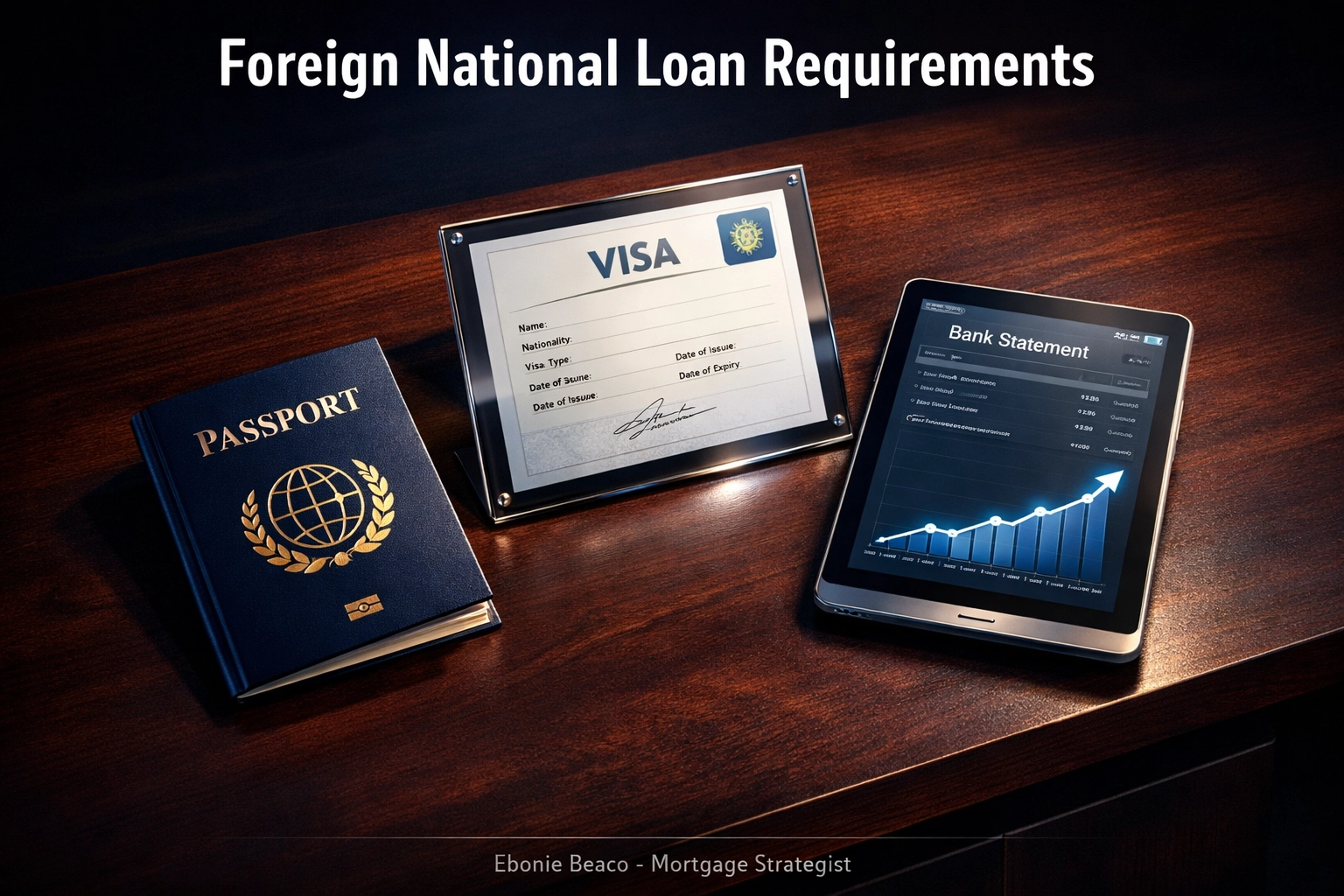
Description: An educational chart titled "Foreign National Loan Requirements" showing icons for Passport, Visa, Bank Statements, and Credit Reference Letters. Footer: Ebonie Beaco - Mortgage Strategist.
The Power of DSCR for Foreign Nationals
Many foreign investors struggle to provide U.S. style tax returns or pay stubs from their home country.
This is where Debt Service Coverage Ratio (DSCR) lending becomes a game changer.
Instead of looking at your global tax returns, the lender looks at the property you are buying.
If the monthly rent is $2,500 and the mortgage payment (including taxes and insurance) is $2,000, the property has a positive ratio.
This allows for a much faster approval process and fewer requests for personal financial documents.
Explore our DSCR Investor Loans options to see how cash flow can lead to your next approval.
Financial Example: Buying a Condo in Florida
Let’s look at a real-world scenario for an investor named Carlos from Mexico.
Carlos wants to buy a vacation rental condo in Orlando, Florida, for $400,000.
He does not have a U.S. Social Security Number or a U.S. credit score.
The Financial Breakdown:
- Purchase Price: $400,000
- Down Payment (30%): $120,000
- Loan Amount: $280,000
- Estimated Monthly Rent: $3,200
- Estimated Monthly Mortgage (PITI): $2,400
- DSCR Ratio: 1.33 ($3,200 / $2,400)
Because the rental income easily covers the mortgage payment, Carlos can qualify using the property's potential income.
He provides his Mexican passport, two months of bank statements showing the down payment funds, and two credit reference letters from his bank in Mexico City.
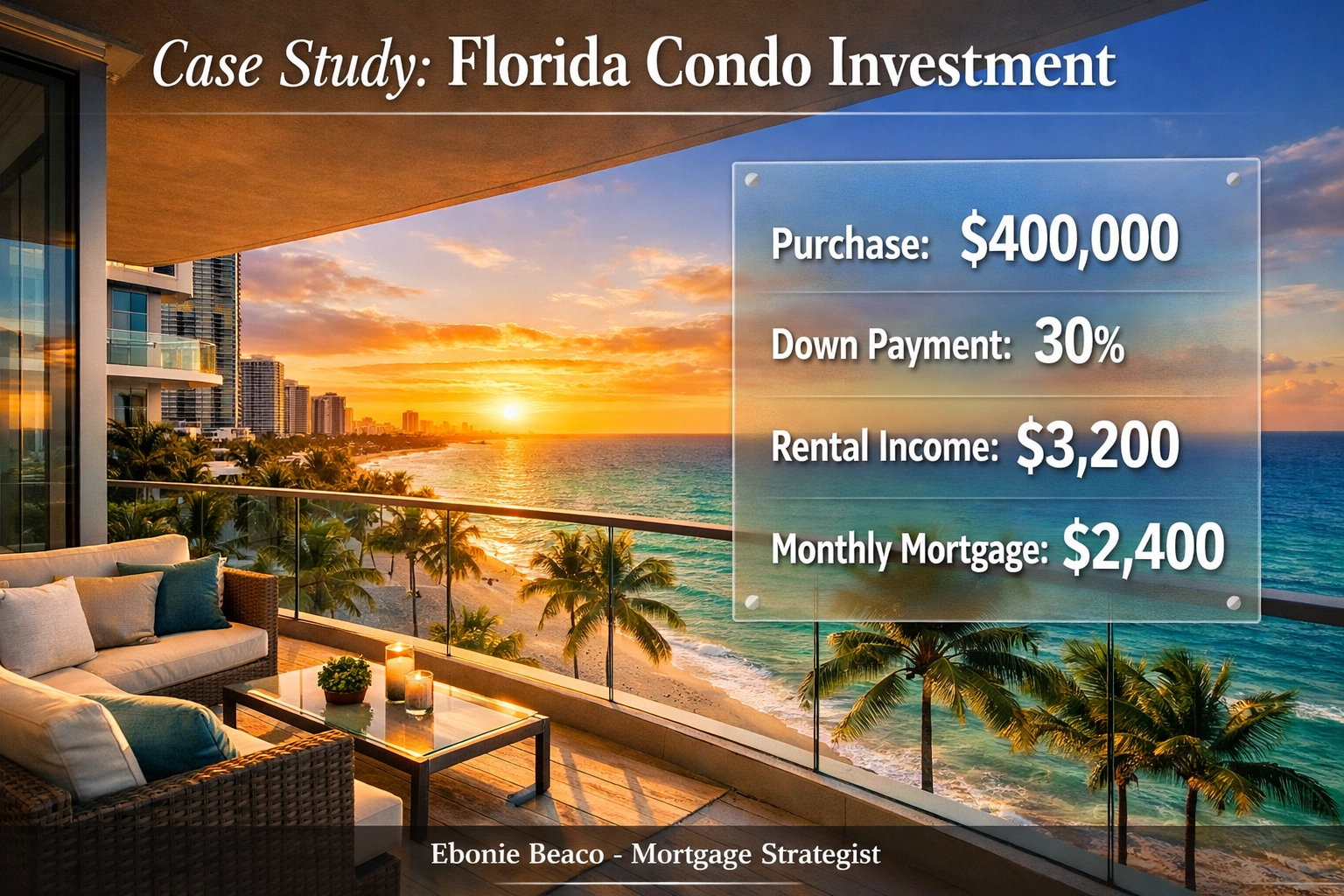
Description: A financial deal breakdown graphic for a $400k property purchase, showing 30% down payment, $3,200 rental income, and $2,400 mortgage payment. Title: Case Study: Foreign National Florida Condo Purchase. Footer: Ebonie Beaco - Mortgage Strategist.
Geographic Focus: Where to Invest
Each state has its own unique market dynamics.
In Illinois, specifically Chicago, investors often look for multi-unit properties that provide high cash flow.
Florida remains the top destination for foreign nationals due to its favorable climate and strong short-term rental market for Airbnb and VRBO properties.
California offers long-term appreciation potential in major hubs like San Francisco and San Diego.
If you are interested in growing a portfolio across multiple states, we guide you through the process for each region.
Check out our About Us page to see our coverage areas and expertise.
Legal Entities and Ownership
Many international investors prefer to hold their U.S. real estate in a legal entity rather than their own name.
LLC (Limited Liability Company): A legal structure that protects your personal assets from business liabilities.
Holding property in an LLC can provide privacy and potential tax benefits for your investment portfolio.
Using an LLC is a standard practice for sophisticated investors.
We frequently work with borrowers who use an Entity-Based Lending approach to manage their U.S. holdings.
You can learn more about specialized structures on our Loan Programs page.
Steps to Secure Your Foreign National Loan
The process is designed to be efficient, even if you are thousands of miles away.
- Identify Your Strategy: Decide if you want a long-term rental or a short-term vacation property.
- Initial Consultation: Discuss your goals and the specific requirements for your home country.
- Gather Documentation: Prepare your passport, visa info, and bank statements.
- Get Pre-Approved: This shows sellers you are a serious buyer and ready to move forward.
- Property Appraisal: The lender will order an appraisal to verify the property value and estimated rental income.
- Closing: You can often close remotely via a power of attorney or at a local U.S. embassy.
Access our Loan Process guide for a detailed breakdown of what to expect during each phase.
Common Questions from Global Investors
You might wonder about the speed of the process.
Typically, these loans take about 30 to 45 days to close, similar to domestic mortgages.
You might also ask about the interest rates.
Because foreign national loans carry a slightly higher risk for lenders, rates are usually higher than those for U.S. citizens, but they remain very competitive compared to international financing options.
Review our FAQ for more answers to common investment questions.
Navigating the U.S. Tax and Legal Landscape
While we focus on the financing side, it is vital to have a team that understands the Foreign Investment in Real Property Tax Act (FIRPTA).
Working with a qualified tax professional who understands international treaties can save you significant money and stress.
Our goal is to be your mortgage strategist, ensuring your financing aligns with your broader financial goals.
Compare your options and see how we have helped others by reading our Testimonials.
Ready to Start Your U.S. Investment Journey?
The U.S. real estate market is open for business, and you don't need to be a resident to take advantage of it.
Whether you are looking for a condo in Miami, a townhouse in Chicago, or an investment property in California, we have the tools to help you succeed.
Stop letting borders limit your financial growth and start building your international wealth today.
Scedule a 1 on 1 at https://calendly.com/homeloansnetwork
Ebonie Beaco
Mortgage Strategist | Senior Loan Officer
Home Loans Network powered by Loan Factory Inc.
NMLS #2389954
HomeLoansNetwork.com
312-392-0664
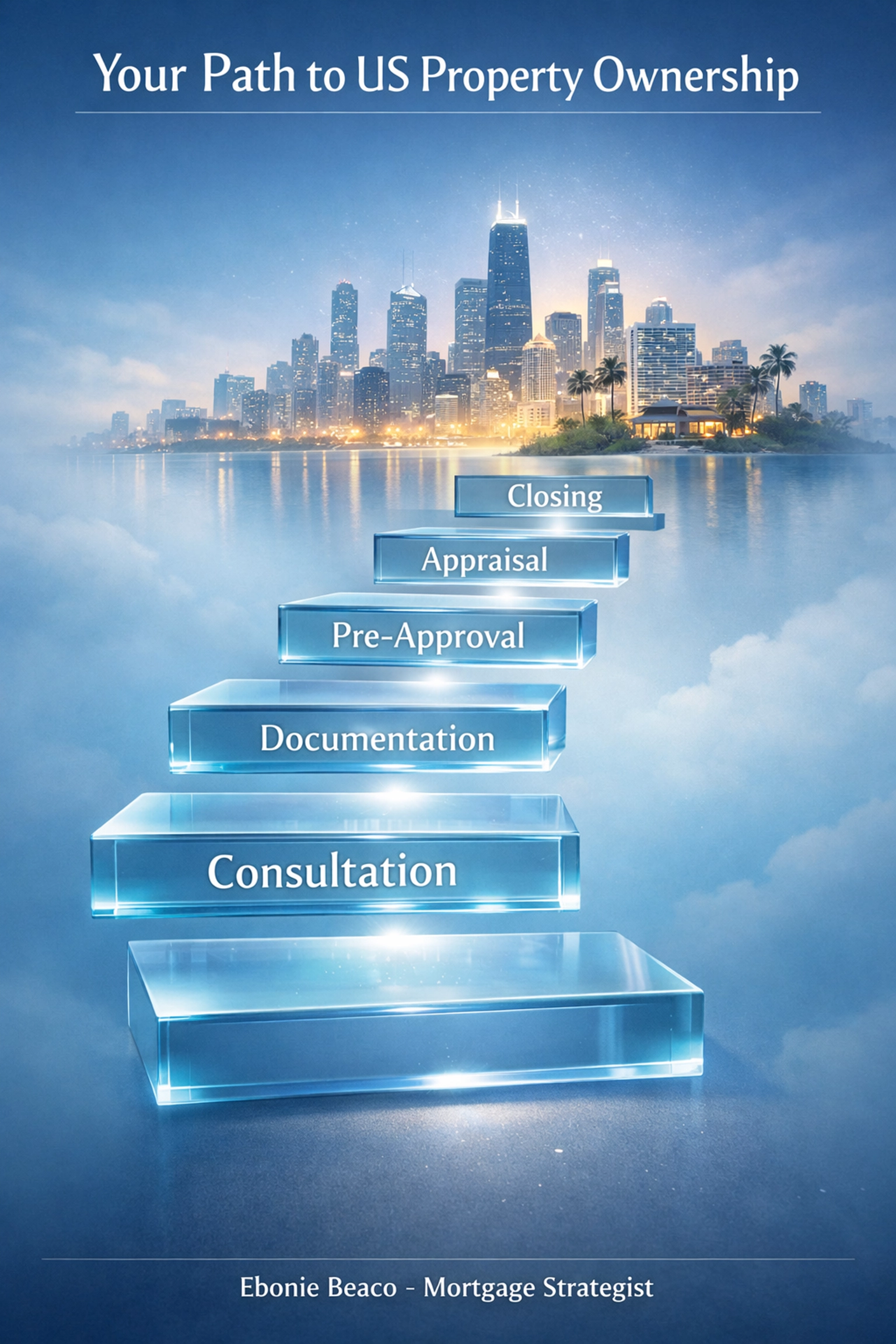
Description: A professional graphic titled "Your Path to US Property Ownership" showing a step-by-step roadmap from Consultation to Closing. Footer: Ebonie Beaco - Mortgage Strategist.