Florida Real Estate Market: Trends and Opportunities for Investors

Florida’s real estate landscape is undergoing a significant transformation in 2026. After years of rapid price surges and tight inventory, the market is finding a new equilibrium. For real estate investors, landlords, and homeowners, this shift represents a move away from the frantic bidding wars of the past and toward a more calculated, strategic environment.
Navigating this market requires an understanding of regional nuances, insurance updates, and the specific financing tools that allow you to scale. Whether you are looking at the coastal condo market or inland single-family rentals, the opportunities are shifting from simple appreciation plays to long-term cash flow and value-add strategies.
The Shifting Landscape: From Seller’s Peak to Market Equilibrium
Florida is currently transitioning toward a more balanced market. For the first time in several years, inventory levels are reaching a point where buyers and investors have room to breathe and negotiate.
Single-family home inventory across the state is currently sitting between 5.1 and 5.3 months of supply. In the world of real estate, a six-month supply is generally considered a "neutral" market. This means we are very close to a state where neither the buyer nor the seller holds all the cards. This balance allows you to perform more thorough due diligence and potentially secure seller concessions that were unheard of just two years ago.
The condo and townhouse sector tells a different story. In many Florida metros, condo inventory has exceeded 9 months of supply. This high inventory level signals a strong buyer’s market. Investors focusing on short-term rentals or urban living spaces may find significant leverage here as some sellers look to exit the market. You can explore more about how these trends impact your buying power at Home Loans Network Mortgage Basics.
Mortgage Rate Projections and Their Impact on Demand
As we progress through 2026, mortgage rates are beginning to ease toward the 6% range. While we may not see the historic lows of 2020 again soon, even a modest decline from 7% to 6% has a massive psychological and financial impact on the market.
In a market like Orlando, a 1% drop in rates can bring thousands of additional buyers back into the fold every month. This increased demand helps stabilize floor prices and ensures that your exit strategy, whether selling a flip or refinancing a rental, remains viable. For homeowners looking to move up or investors looking to expand their portfolios, these lower rates improve debt-to-income (DTI) ratios and monthly cash flow.
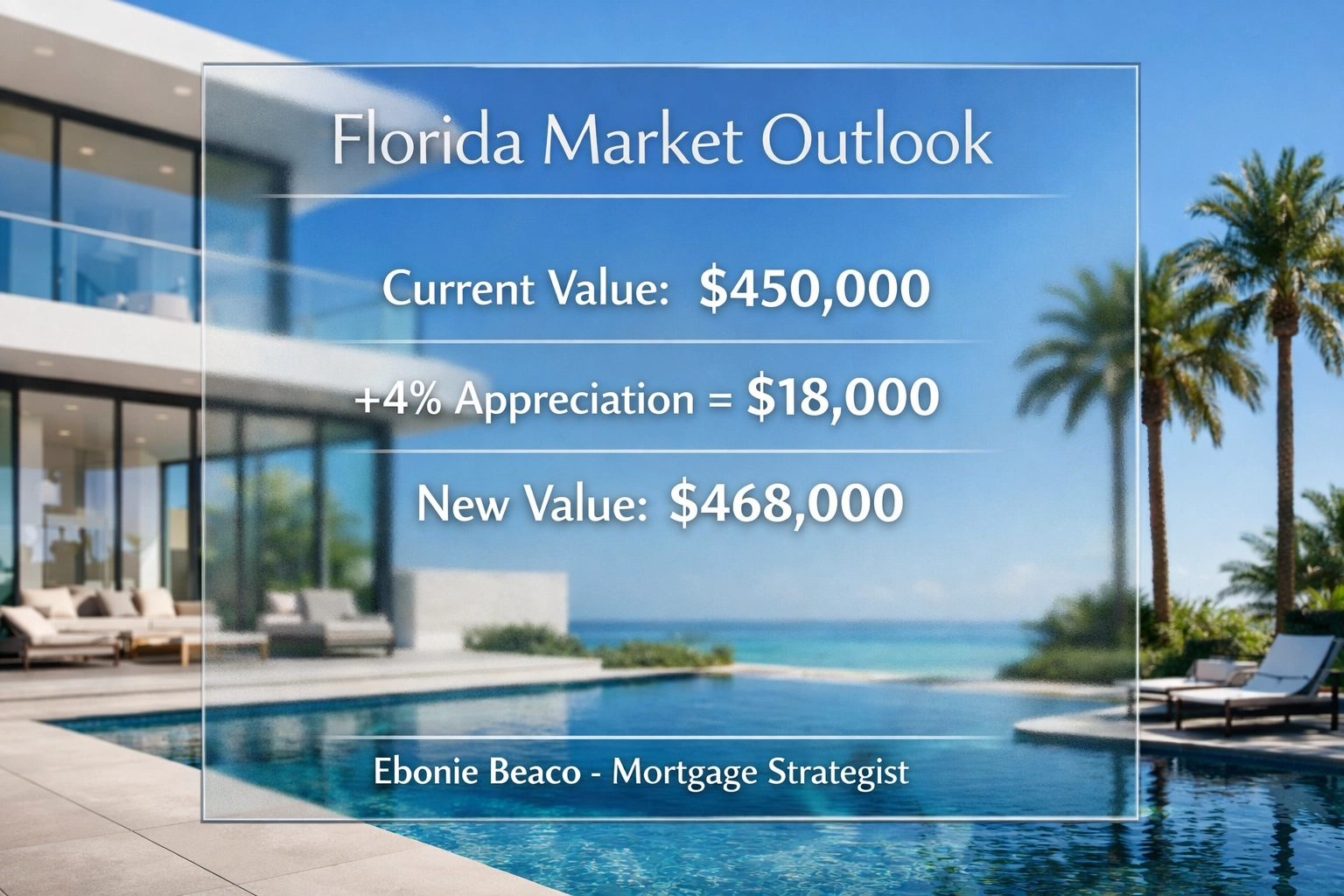 Image Instructions: Title "Florida Market Outlook" on the image. Add "Ebonie Beaco - Mortgage Loan Officer" at the bottom. The image should feature a clean, professional growth chart showing a property value increase calculation. No money or cash icons. Calculation: Current Value $450,000 x 4% Projected Growth = $18,000 Appreciation. New Value: $468,000.
Regional Spotlights: Where the Opportunities Are Hiding
Florida is not a monolith. Each metropolitan area offers a different risk-to-reward profile for real estate investors.
Tampa Bay: The Balanced Play
Tampa remains a favorite for buy-and-hold investors. With inventory around 4.3 months, it is a balanced market where single-family median prices hover around $415,000. In certain submarkets, buyers are finding they can negotiate nearly 10% off the original asking price. This leverage is perfect for those using a BRRRR (Buy, Rehab, Rent, Refinance, Repeat) strategy.
Cape Coral–Fort Myers: The Negotiation Hub
If you are looking for leverage, the Cape Coral and Fort Myers area is currently a standout. Median selling times have extended to over 119 days, and nearly 37% of listings have seen price reductions. This is an ideal environment for investors looking to pick up distressed assets or properties that need a little TLC before being converted into high-performing rentals.
Jacksonville: The Affordability King
For cash-flow-heavy investors, Jacksonville continues to be a top choice. Compared to the high-priced coastal metros of South Florida, Jacksonville offers a more accessible entry point. This makes it a prime location for DSCR (Debt Service Coverage Ratio) loans, where the property’s ability to generate rent is the primary factor in loan qualification rather than your personal income.
Miami and Luxury Segments
Miami continues to defy broader trends by retaining strong pricing in its prime coastal submarkets. While investor activity in the condo space has cooled slightly, the demand for high-end luxury rentals and single-family homes in gated communities remains robust.
The Insurance Recovery: A Win for Landlords
One of the biggest hurdles for Florida investors in recent years has been the cost and availability of property insurance. However, legislative reforms from 2022 and 2023 are finally starting to show results in 2026.
The entry of 17 new private insurers into the Florida market is a clear sign of renewed confidence. Furthermore, Citizens Property Insurance (the state-backed "insurer of last resort") has seen its policy count drop significantly. For you as an investor, this means more competition among insurance providers, which can lead to stabilized or even lower premiums. Lower insurance costs directly improve your net operating income (NOI), making your investment more profitable.
Financing Strategies for the 2026 Florida Market
To succeed in this evolving market, you need to use the right financing tools. Standard 30-year fixed mortgages are great, but they aren't always the best fit for active investors or self-employed individuals.
DSCR Investor Loans
DSCR (Debt Service Coverage Ratio): A loan where qualification is based on the property’s rental income rather than the borrower’s personal debt-to-income ratio. If the property generates enough rent to cover the mortgage, taxes, insurance, and HOA fees, you can likely secure the loan. This is an essential tool for landlords who have reached their limit on traditional financing.
Fix and Flip Financing
With inventory rising, there are more opportunities to find properties that need renovation. Fix and Flip loans provide short-term capital to purchase and rehab a property. These are often interest-only loans, allowing you to maximize your cash during the construction phase.
Cash-Out Refinance and HELOCs
Current homeowners who have seen their equity skyrocket over the last few years can use a Cash-Out Refinance or a HELOC (Home Equity Line of Credit) to fund their next down payment. This strategy allows you to tap into the "dead" equity in your primary residence to acquire income-producing assets. You can check your eligibility for these programs through the Home Loans Network Online Forms.
Non-QM and Bank Statement Loans
For self-employed investors or those with unique financial situations, Non-QM (Non-Qualified Mortgage) loans offer flexibility. Instead of using tax returns, which may show lower income due to write-offs, lenders use bank statements to verify cash flow. This is a game-changer for entrepreneurs looking to buy in Florida.
Real-World Example: The Appreciation Play
Understanding how appreciation works over time is vital for long-term wealth building. While Florida’s growth has slowed to a more sustainable pace, it remains positive in most regions.
The Calculation: Let’s say you purchase a property in a growing area like Orlando for $450,000. If the market sees a conservative 4% appreciation over the next year:
- Current Value: $450,000
- Appreciation Rate: 4% (0.04)
- Value Increase: $450,000 x 0.04 = $18,000
- Estimated New Value: $468,000
This $18,000 in equity gain, combined with the principal pay-down from your tenants, creates a powerful wealth-building engine. Even in years where growth is flat, the rental income and tax benefits of owning real estate provide a safety net that other asset classes lack.
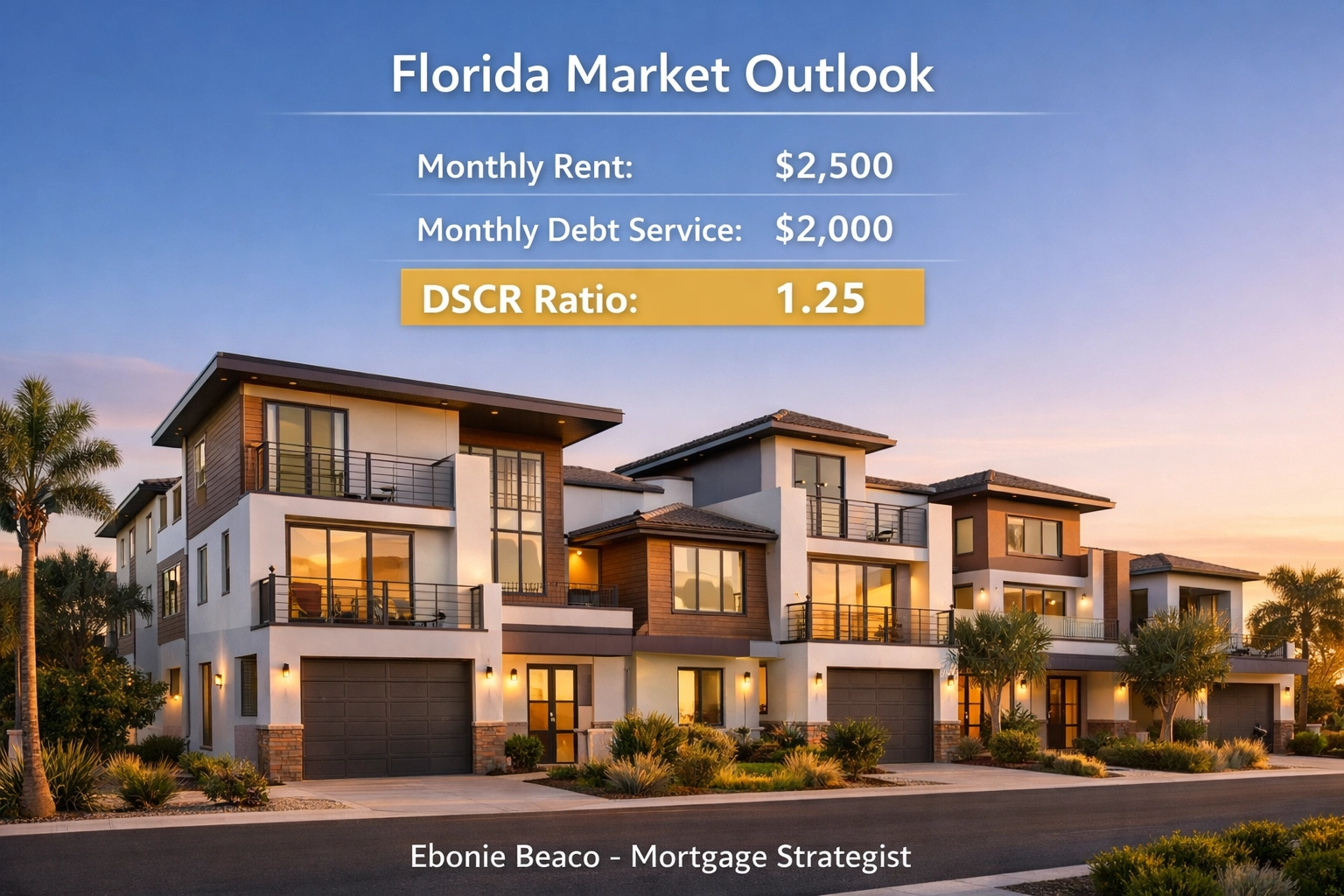 Image Instructions: Title "Florida Market Outlook" on the image. Add "Ebonie Beaco - Mortgage Loan Officer" at the bottom. No money or cash. The visual should be a professional real estate investment infographic showing the DSCR calculation: Monthly Rent ($2,500) / Monthly Debt Service ($2,000) = 1.25 DSCR Ratio.
Navigating the Florida Loan Process
Whether you are a first-time investor or a seasoned landlord with a massive portfolio, the loan process should be transparent and predictable. At Home Loans Network, we focus on guiding you through each step, from the initial pre-approval to the final closing signature.
You can learn more about our specific steps at Home Loans Network Loan Process. Understanding the timeline and documentation required helps you act fast when a deal hits the market. In a balanced market, speed and certainty of closing are often what get your offer accepted over the competition.
Final Guidance for Florida Investors
The 2026 Florida real estate market is full of potential, but it rewards the educated investor. The days of buying any property and watching it double in value overnight are gone. Today’s market is about finding value in high-inventory segments, leveraging the stabilizing insurance market, and using specialized mortgage products to maximize your leverage.
Focus on the fundamentals:
- Analyze your DSCR ratios carefully.
- Monitor inventory levels in specific zip codes.
- Keep an eye on interest rate trends to timing your refinances.
- Ensure your insurance quotes are updated to reflect the new market players.
Investing in Florida? Contact Ebonie Beaco for Florida-specific mortgage loans.
Schedule a 1 on 1 at https://calendly.com/homeloansnetwork
Ebonie Beaco
Mortgage Strategist | Senior Loan Officer
Home Loans Network powered by Loan Factory Inc.
NMLS #2389954
HomeLoansNetwork.com
312-392-0664