Estimate Like a Pro: How to Predict Rehab Costs for Wholesaling Houses
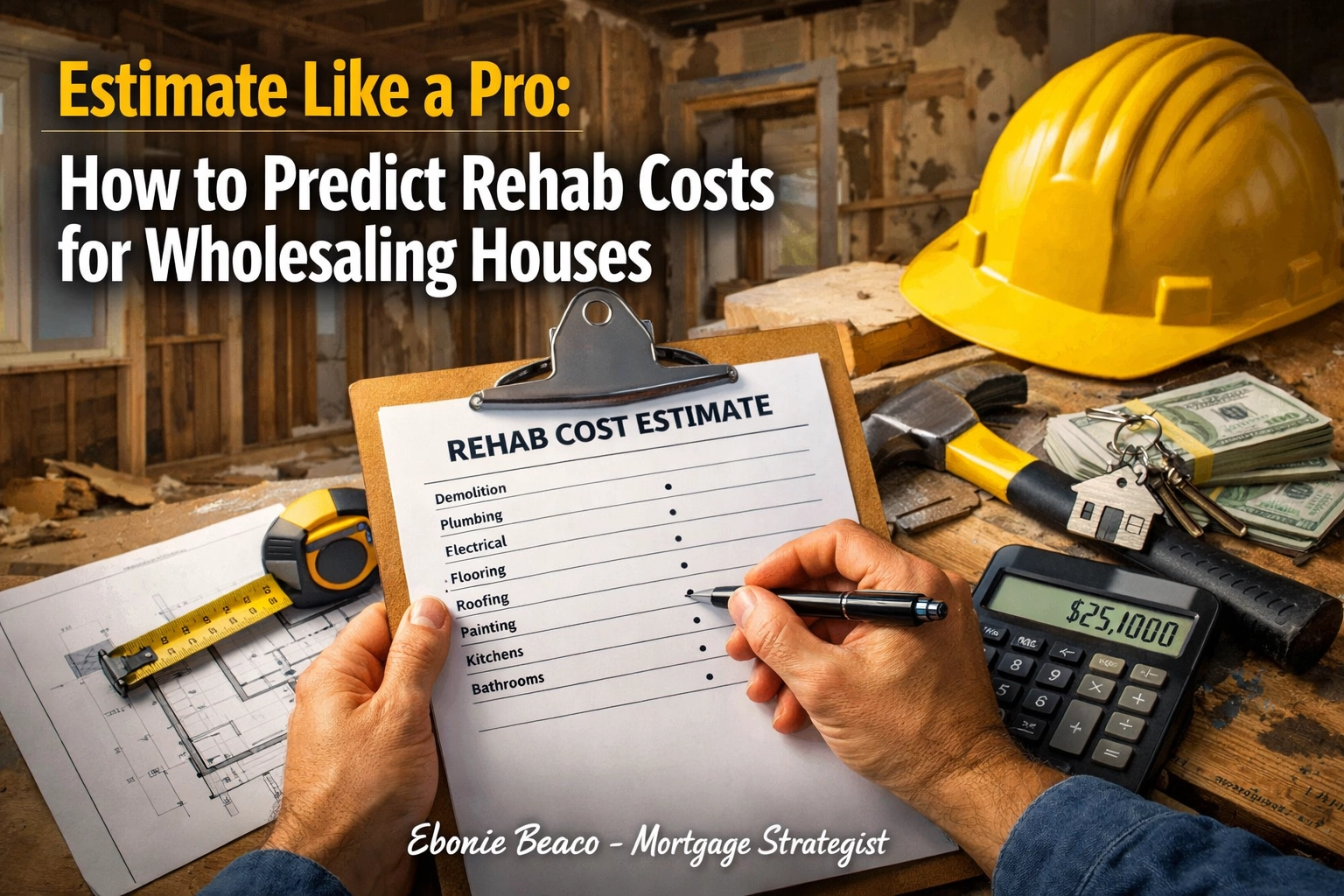
Accuracy in estimating repair costs is the difference between a successful wholesale fee and a deal that falls apart at the closing table. Many new investors in markets like Chicago or Atlanta rush through the inspection phase without a clear strategy for quantifying damages. When you present an off-market deal to a cash buyer, they rely on your numbers to determine if the investment fits their portfolio. If your rehab estimate is off by $10,000, your buyer’s projected profit evaporates, and your reputation as a reliable wholesaler suffers immediately. Successful wholesaling houses requires a disciplined approach to seeing past the cosmetic issues and identifying structural needs. You must learn to view a property through the eyes of a contractor to ensure your purchase price allows for a healthy assignment fee. This level of precision ensures that everyone involved in the transaction can proceed with confidence.
Before you can calculate a rehab budget, you need to understand two critical industry terms: After Repair Value (ARV) and Maximum Allowable Offer (MAO). The After Repair Value is the estimated market value of a property after all necessary renovations and upgrades have been completed. You calculate this by looking at comparable sales in the immediate area of cities like Detroit or Indianapolis to see what buyers are currently paying for renovated homes. The Maximum Allowable Offer is the highest price a wholesaler or investor should pay for a distressed property to ensure a profit remains for the end buyer. This calculation typically follows the 70% rule, where you take 70% of the ARV and subtract the estimated rehab costs. Using this formula helps you stay objective and prevents emotional bidding on properties that do not have enough equity. You can explore more about these foundational concepts by visiting our mortgage basics page to sharpen your financial literacy. Staying grounded in these formulas prevents you from overpaying and losing your competitive edge in real estate investing.
Conducting a methodical walkthrough is the most effective way to document every detail needed for a precise estimate. You should start on the exterior, checking the roof, siding, and foundation for any signs of water damage or structural shifts that could be expensive. Once inside, move room by room and take extensive photos and videos to reference later when you are reviewing local labor costs. Pay close attention to high-ticket items like the HVAC system, electrical panel, and plumbing, as these systems can quickly drain a renovation budget if they require full replacement. It is helpful to bring a checklist that includes specific categories like flooring, drywall, paint, and fixtures to ensure no detail is overlooked. In competitive markets across Virginia or Florida, being thorough during your initial visit prevents costly surprises during the due diligence period. Documenting everything allows you to provide a transparent scope of work to your cash buyers, which speeds up their decision-making process.
While every house is unique, using cost-per-square-foot benchmarks provides a helpful starting point for your initial evaluation. A light rehab generally costs between $15 and $25 per square foot and usually involves paint, new carpet, and basic cosmetic updates like light fixtures. A medium rehab ranges from $25 to $50 per square foot and includes kitchen or bathroom updates along with minor system repairs like a new water heater or window replacements. Full gut renovations can exceed $60 to $100 per square foot, especially if you are moving walls or replacing entire electrical and plumbing systems to meet modern codes. These figures vary based on local labor rates in places like Los Angeles compared to Birmingham, so always adjust for your specific region. Relying on these benchmarks helps you quickly decide if a deal is worth a deeper dive or if you should move on to the next lead. You can use our mortgage calculators to see how different price points affect potential loan structures for your future buyers.
Let’s look at a practical calculation example for a 1,500-square-foot ranch home in a suburban Michigan neighborhood that needs significant cosmetic updates. Suppose the property needs new luxury vinyl plank flooring throughout, a complete kitchen overhaul, and one full bathroom update to meet market standards. You estimate the flooring will cost $10,000, the kitchen cabinets and counters will total $15,000, and the bathroom renovation will require $8,000 in labor and materials. When you add these specific components together, your total projected rehab cost comes to $33,000. If the ARV for similar homes in the area is $250,000, you would apply the 70% rule to find your target acquisition price. Taking $175,000 (which is 70% of the ARV) and subtracting the $33,000 rehab cost leaves you with a Maximum Allowable Offer of $142,000. This example demonstrates how specific repairs dictate your negotiation strategy with the seller and protect your profit margin.
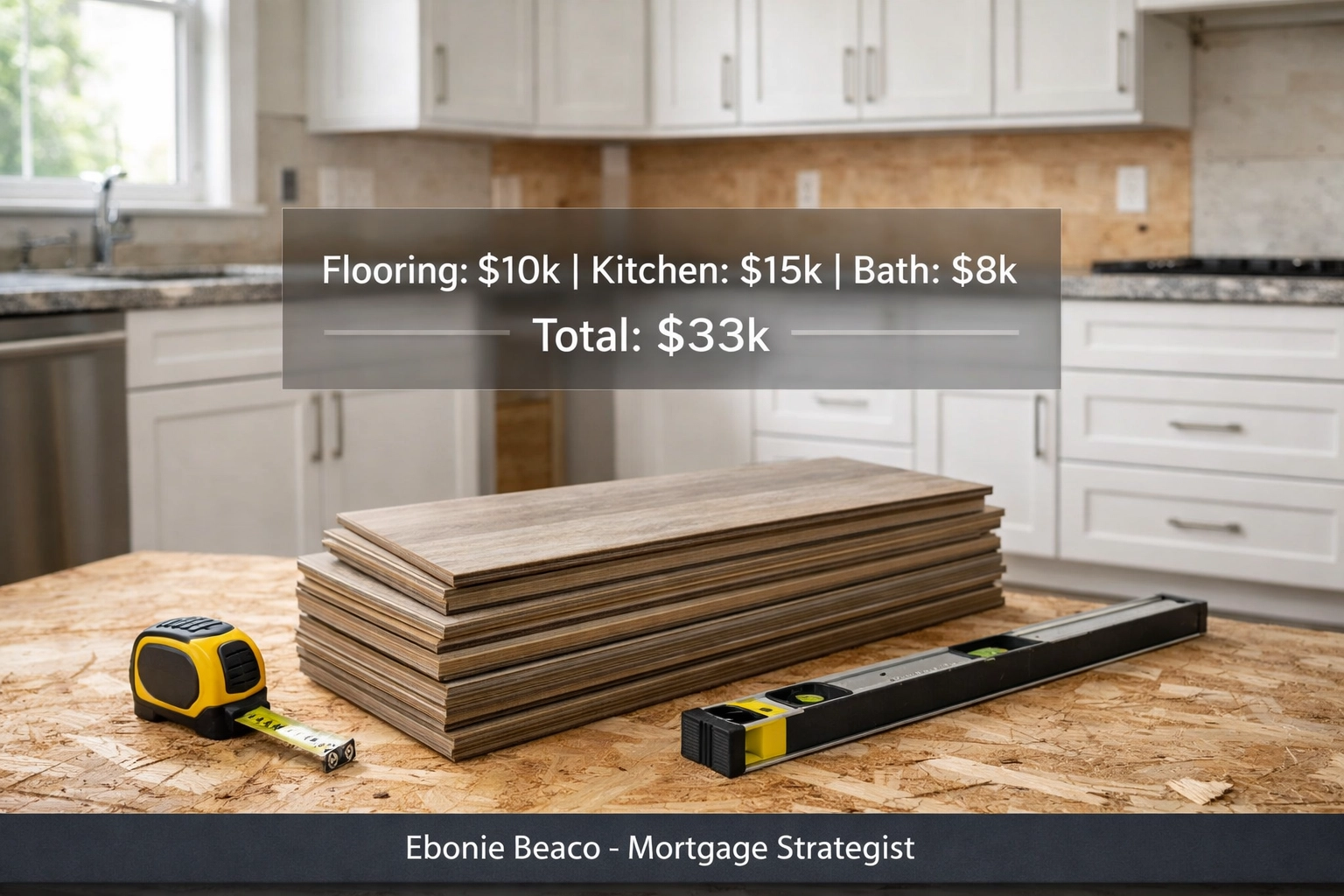
Always include a contingency buffer of at least 10% to account for hidden issues that only become visible after the demolition begins on-site. In older homes common in parts of Indiana or Illinois, you might find outdated knob-and-tube wiring or cracked sewer lines hidden behind the walls. A $33,000 rehab project should actually be budgeted at roughly $36,300 to give your buyer a safety net for these unforeseen expenses. To refine these numbers, you should eventually walk the property with a trusted general contractor who can provide a formal bid based on your scope of work. Multiple bids allow you to compare different approaches and ensure the pricing is competitive for the current local market conditions. Providing these detailed bids to your cash buyers makes your wholesale package much more attractive and significantly more professional. Transparency in these figures builds long-term trust with investors who are looking for reliable and repeatable off-market deals.
Understanding rehab costs is also vital because your cash buyers will often use fix and flip financing or bridge loans to fund the project. Lenders will evaluate the renovation budget to ensure the loan-to-cost ratio fits their specific requirements and risk profile. If you present a deal with an unrealistic rehab estimate, the buyer’s loan might be rejected during the appraisal or underwriting phase. This creates a bottleneck that can kill the transaction and damage your relationship with both the seller and the buyer. By providing accurate data, you help the investor qualify for programs like DSCR investor loans if they plan to keep the property as a long-term rental. Your role as a wholesaler is to bridge the gap between a distressed asset and a viable investment opportunity through clear communication and data. This proactive approach ensures a smoother closing for all parties involved in the transaction.
Master the art of the estimate, and you will find that finding cash buyers becomes significantly easier over time. Investors are looking for professionals who do the heavy lifting of property analysis so they can focus on the execution of the flip or rental management. When you provide a deal that is backed by realistic numbers and a clear scope of work, you position yourself as an expert in real estate investing. This level of detail is what separates high-volume wholesalers from those who struggle to close a single deal each year. If you have questions about how these estimates impact the financing options for your buyers, we are here to provide guidance and support. Access our resources on home purchase strategies to see how we support investors across the country. Jump in today and start refining your process to scale your wholesaling business and build lasting wealth. Compare your options and reach out whenever you need a professional perspective on your next deal.
Scedule a 1 on 1 at https://calendly.com/homeloansnetwork Ebonie Beaco
Mortgage Strategist | Senior Loan Officer
Home Loans Network powered by Loan Factory Inc.
NMLS #2389954
HomeLoansNetwork.com
312-392-0664