Double Closings: When and Why to Hide Your Wholesale Real Estate Fee
Wholesale real estate is one of the most exciting ways to enter the world of real estate investing because it allows you to sit at the center of the deal without necessarily swinging a hammer or managing tenants. However, as you scale your business in competitive markets like Chicago, Illinois, or the fast-moving neighborhoods of Atlanta, Georgia, you will eventually run into a specific type of friction. This friction occurs when the spread between what you are paying the seller and what the cash buyer is paying you becomes significant enough to cause "fee fatigue" or "seller's remorse." When your assignment fee starts to look like a small fortune, traditional assignment contracts can become a liability.
This is where the double closing enters the conversation. A double closing, also known as a simultaneous closing or an "A-B, B-C" transaction, is a strategy used by professional wholesalers to protect their profit margins and ensure a smooth path to the closing table. Instead of assigning a contract for a fee that is visible to everyone on the settlement statement, you actually purchase the property and immediately sell it to your end buyer. It is a more sophisticated move that requires a deeper understanding of real estate finance and title mechanics, but for the right deal, it is the only way to ensure you actually get paid what you are worth.
Defining the Mechanics: What is a Double Closing?
In a standard wholesale deal, you use an assignment of contract. You secure an off-market deal, find a cash buyer, and "assign" your right to purchase the property to that buyer for a fee. The closing statement (HUD-1 or ALTA) clearly shows the "Assignment Fee" going to you. If that fee is $5,000, most people don't blink an eye. But if you have negotiated an incredible deal and your fee is $45,000, the seller might feel like they were taken advantage of, and the buyer might feel like they are overpaying, even if the numbers still work for their investment strategy.
A double closing solves this by splitting the transaction into two distinct parts. Transaction A-B is the purchase between the original seller (A) and you, the wholesaler (B). Transaction B-C is the sale between you (B) and the final cash buyer (C). Because these are two separate transactions, the original seller never sees the settlement statement for the second sale, and the end buyer never sees the settlement statement for the first purchase. Your profit is simply the difference between the two prices, minus your closing costs.

Why Privacy in Wholesale Real Estate is a Strategic Necessity
Privacy is not about being deceptive; it is about managing the psychology of a real estate transaction. Real estate investing is often an emotional process for sellers, especially those in distressed situations in markets like Richmond, Virginia, or throughout the suburbs of Detroit, Michigan. If a seller realizes that you are making a substantial profit by simply connecting them to a buyer, they may attempt to circumvent you or refuse to sign the final documents out of a sense of unfairness. They often forget the marketing dollars, the time spent on the phone, and the risk you took to secure the deal in the first place.
On the flip side, some cash buyers, despite being professional investors, can become difficult when they see a large assignment fee. They might try to renegotiate your fee down at the last minute, knowing that you have already put in the work and are close to the finish line. By utilizing a double closing, you maintain control over the narrative and the financial details of the deal. You are acting as a principal in the transaction, which carries more weight and legal standing than someone merely "flipping a contract."
Navigating the Costs of a Double Closing
While the privacy benefits are high, double closings are not free. In an assignment, you typically have very little skin in the game regarding closing costs. In a double closing, you are responsible for the closing costs on both the purchase and the sale. You will pay for title insurance, escrow fees, and transfer taxes twice. In states like Florida or California, where transfer taxes and title fees can be substantial, these costs must be factored into your deal analysis before you decide which route to take.
Furthermore, you generally need the funds to close the first transaction (A-B) before you can receive the funds from the second (B-C). Most title companies no longer allow "pass-through" funding, where you use the end buyer’s money to pay the original seller. This means you will likely need "transactional funding," which is a very short-term loan (often 24 hours or less) specifically designed for double closings. These lenders charge a small percentage of the loan amount, usually around 1% to 2%, but they provide the proof of funds and liquidity needed to make the deal happen legally and ethically.
A Practical Deal Breakdown: The Numbers in Action
Let's look at a hypothetical scenario for a distressed property in Gary, Indiana. You find a motivated seller with a property that needs a full renovation. You negotiate a purchase price of $120,000. After running your comps, you realize the After Repair Value (ARV) is $250,000, and your cash buyer is willing to pay $175,000 for it as-is.
If you assigned this deal, your fee would be $55,000. Seeing that number might cause the seller to walk away. Instead, you opt for a double closing.
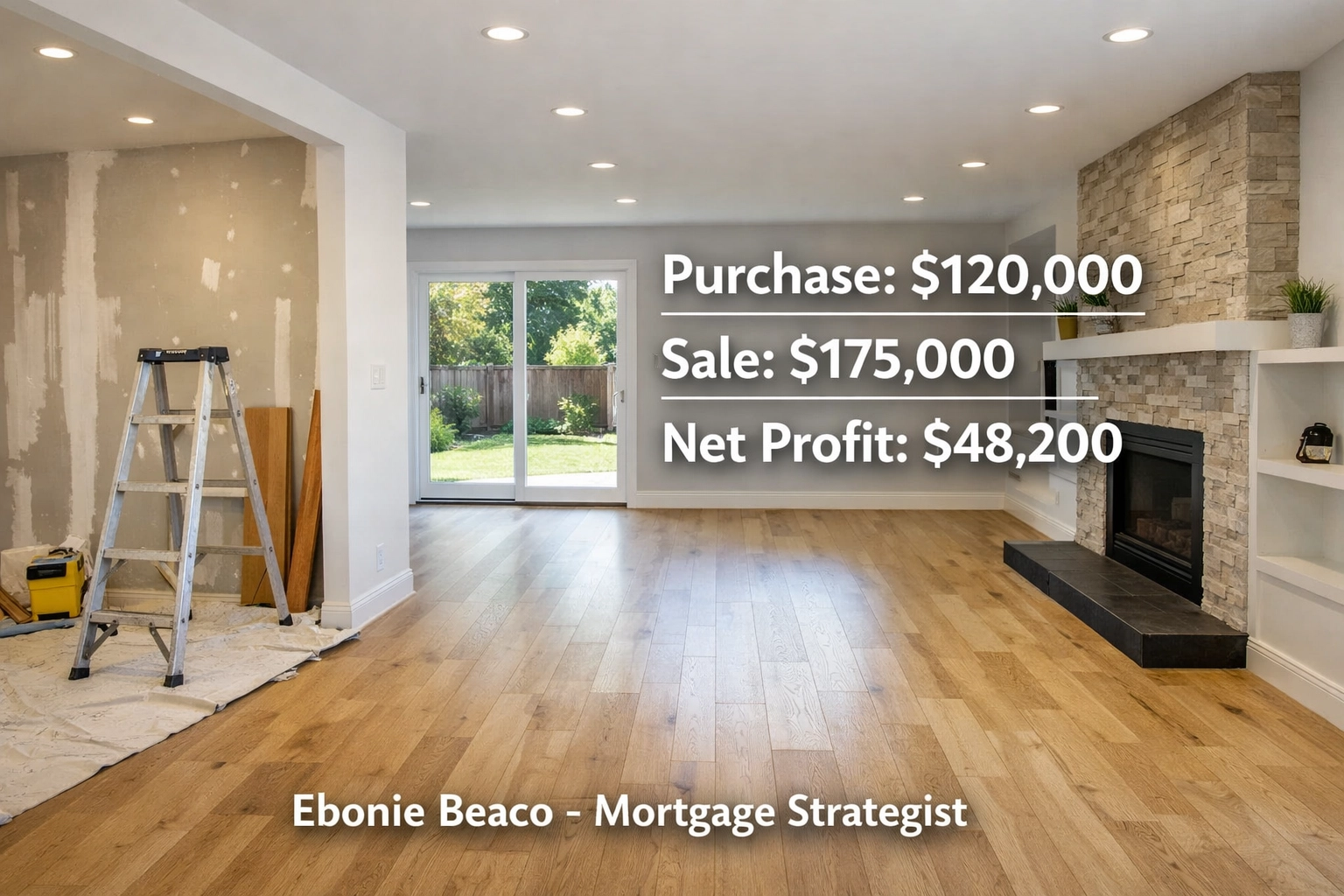
- Purchase Price (A-B): $120,000
- Sale Price (B-C): $175,000
- Gross Spread: $55,000
- Estimated A-B Closing Costs: $2,500
- Estimated B-C Closing Costs: $2,500
- Transactional Funding Fee (1.5% of $120k): $1,800
- Net Profit: $48,200
Even after paying over $6,000 in costs, you still walk away with a massive profit, and more importantly, you ensured the deal actually closed without any friction from the parties involved.
Legal Considerations and Choosing the Right Title Company
It is crucial to understand that the legality and customs of double closings vary by state. For example, some states have specific disclosure requirements, and some title companies are simply not "investor-friendly" and will refuse to handle a double closing. When you are operating in markets like St. Louis, Missouri, or Louisville, Kentucky, you need to vet your title agents or real estate attorneys early in the process. Ask them specifically if they handle double closings and if they are comfortable with transactional funding.
A knowledgeable title agent will understand how to structure the files so that the chain of title is clean and the transactions are recorded correctly. This protects you from future legal headaches and ensures that your cash buyer receives a clear title and title insurance policy. As a mortgage strategist, I often see wholesalers transition into becoming full-scale investors, and mastering the double closing is a major step in that evolution. It shows a level of professionalism that attracts higher-quality cash buyers and more significant opportunities.
When Should You Stick to a Simple Assignment?
Double closings are not always the answer. If your profit is under $10,000, the added costs of a double closing and transactional funding might eat up 30% to 50% of your profit. In those cases, a transparent assignment of contract is usually the better path. You should also consider the sophistication of your buyer. If you are selling to a large institutional buyer or a seasoned "fix and flip" pro who understands the value you bring, they are less likely to care about your fee, and a simple assignment is faster and cheaper for everyone involved.
The decision to double close should be based on a calculated assessment of risk and profit. If you feel the deal is at risk because of the fee visibility, or if you are dealing with a property that has complex ownership issues that require you to be in the chain of title for a moment, the double closing is your best tool. It is about having more than one way to cross the finish line.

Growing From Wholesaler to Investor
Many wholesalers use their profits to eventually hold properties as rentals or to execute their own fix-and-flip projects. When you reach that stage, your financing needs will change. You'll move from needing transactional funding to needing DSCR loans, hard money, or fix-and-flip financing. Understanding the nuances of how deals are structured: including double closings: makes you a better borrower and a better partner for your lending team.
In states like California and Virginia, where the market is high-priced and high-stakes, the ability to navigate these complex closings sets you apart from the thousands of people who just watched a video about wholesaling and have no idea how to actually execute. Building a relationship with a mortgage strategist who understands the investor mindset is key. We can help you look at the long-term play, ensuring that your current wholesale profits are positioned to help you qualify for the long-term investment debt you need to build true wealth.
📞 Work With Ebonie Beaco
If you are a wholesaler looking to:
- Close more deals
- Connect your buyers with financing
- Structure deals that actually get approved
- Learn how to grow into a real estate investor
I can help you every step of the way.
Ebonie Beaco Mortgage Strategist | Senior Loan Officer Home Loans Network powered by Loan Factory Inc. NMLS #2389954
📱 Phone: 312-392-0664 📧 Schedule a 1 on 1: https://calendly.com/homeloansnetwork 🌐 Website: HomeLoansNetwork.com
👉 Whether you need lending, deal structuring, or mentorship, reach out today.