Double Closings vs. Assignments: Which Is Better For Your Atlanta Wholesale Deal?

If you are active in the Atlanta real estate market, you know the pace is relentless. From the historic bungalows in the West End to the rapid growth in Gwinnett County, wholesalers are the boots on the ground finding the deals that keep the local investment ecosystem moving. But once you have a distressed property under contract, you face a critical fork in the road: do you assign the contract or opt for a double closing?
This decision impacts your profit margins, your relationship with the seller, and your standing with the end buyer. In states like Georgia, Florida, and California, the legalities and local customs surrounding these strategies can vary, making it essential to understand the logistics before you head to the closing table.
Understanding the Fundamentals
Wholesaling is essentially the act of "flipping" a piece of paper: the purchase agreement: rather than the physical property itself. You find a motivated seller, secure a contract at a deep discount, and then find a cash buyer who wants the deal for a fix-and-flip or a long-term rental.
What is an Assignment of Contract?
Assignment of Contract
A legal transfer of rights and obligations from the original buyer (the wholesaler) to a new buyer (the end investor) before the transaction closes.
This is the "classic" wholesale move. You sign a contract with the seller that includes an "and/or assigns" clause. You then find an end buyer and sign an Assignment Agreement. You are essentially selling your interest in the contract for an assignment fee. The end buyer steps into your shoes, brings the full purchase price to the table, and closes directly with the seller.
What is a Double Closing?
Double Closing
A sequence of two distinct real estate transactions involving the same property, occurring back-to-back or on the same day.
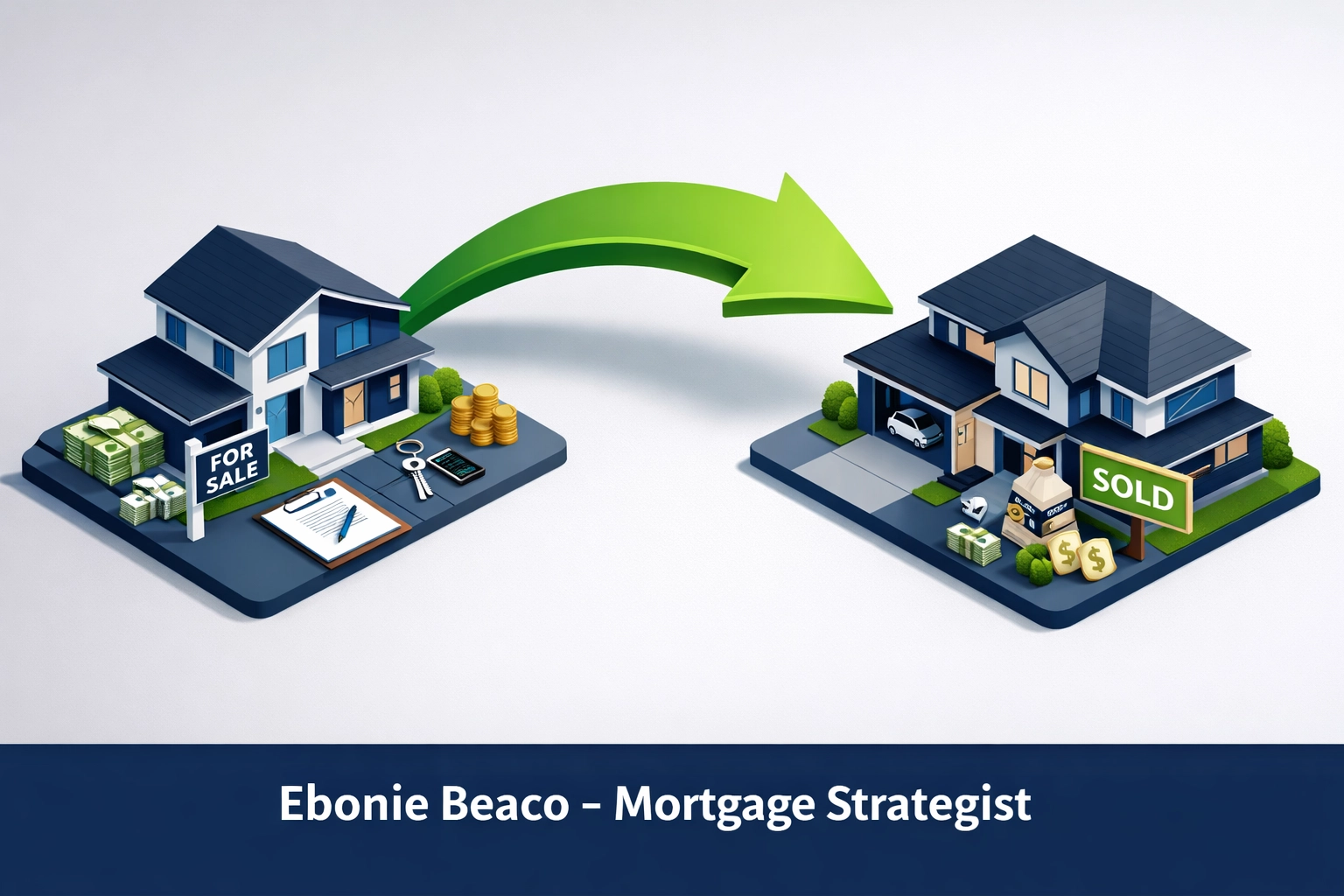
Also known as an "A-B and B-C" closing, this involves two separate sets of paperwork. In the first transaction (A-B), you (the wholesaler) buy the property from the seller. In the second transaction (B-C), you immediately sell the property to your end buyer. You briefly take title to the property, even if it is only for a few minutes.

Comparing the Logistics: Assignment vs. Double Closing
Choosing between these two methods involves balancing simplicity against privacy.
The Ease of Assignments
Assignments are favored for their simplicity. There is only one set of closing costs, and you don’t need to bring your own funds to the table. The end buyer’s cash pays the seller, and you receive your fee as a line item on the Settlement Statement (HUD-1 or ALTA).
Explore the loan process at Home Loans Network to see how end buyers often structure their side of these deals.
Why wholesalers choose assignments:
- Minimal Capital: You do not need to secure transactional funding.
- Lower Costs: You avoid paying double sets of title insurance, escrow fees, and transfer taxes.
- Speed: One transaction is usually faster than two.
The Privacy of Double Closings
The biggest hurdle with an assignment is transparency. Both the seller and the end buyer see exactly how much you are making. If you secured a property for $150,000 and you are assigning it for $190,000, that $40,000 assignment fee is visible to everyone. Some sellers might feel "cheated," and some buyers might try to negotiate your fee down if they think it is too high.
Double closings solve this. Because there are two separate transactions, the seller only sees the A-B price, and the buyer only sees the B-C price. Your profit remains confidential.
Why wholesalers choose double closings:
- Large Spreads: When your profit is significant (typically over $15,000 or $20,000), privacy is often worth the extra cost.
- Lender Restrictions: Many traditional lenders and some hard money lenders have "anti-assignment" clauses. They won’t fund a deal if the contract was assigned.
- Professionalism: Some high-end investors prefer a clean purchase over an assignment.
Financial Breakdowns: Seeing the Numbers
To understand the financial impact, let’s look at two scenarios for an Atlanta property with a contract price of $200,000.
Scenario 1: The $10,000 Assignment
If your profit is modest, an assignment is almost always the better route.
| Component | Amount |
|---|---|
| Contract Price (A-B) | $200,000 |
| End Buyer Price (B-C) | $210,000 |
| Assignment Fee | $10,000 |
| Wholesaler Closing Costs | $0 |
| Net Profit | $10,000 |
In this case, the $10,000 fee is transparent. Most buyers in the Atlanta market won't bat an eye at a $10k spread on a $200k deal. It is considered a fair finders' fee.
Scenario 2: The $40,000 Double Closing
If you found a massive "home run" deal, a double closing protects that margin.
| Component | Amount |
|---|---|
| Purchase Price (A-B) | $200,000 |
| Sale Price (B-C) | $240,000 |
| Transactional Funding Fee (approx 1-2%) | $3,000 |
| Additional Closing Costs (Title/Transfer) | $2,500 |
| Net Profit | $34,500 |
Even though you paid $5,500 in extra fees, you protected your $40,000 spread from being scrutinized or negotiated away by the other parties.
Legal and Regional Nuances
While wholesaling is a national strategy, the "ground rules" change depending on where you operate.
Atlanta and Georgia Context
In Georgia, real estate closings must be conducted by a licensed attorney. Not all closing attorneys are "investor-friendly." You need to find a firm that understands how to handle dry fundings (where the end buyer's money is used for both sides) or transactional funding (short-term loans used to bridge the A-B and B-C gap).
Florida and California Considerations
In Florida, "double closings" are very common, but title companies are increasingly strict about "same-day" funds. You often need verified transactional funding to prove you actually closed the A-B leg.
In California, the high price points make assignments attractive to save on massive transfer taxes. However, many California REO (Bank Owned) or HUD properties explicitly forbid assignments, making a double closing the only viable option for a wholesaler.
Access our loan programs to see how we help investors finance their end of these transactions, whether they are looking for DSCR Investor Loans or Fix and Flip Loans.
When the "And/Or Assigns" Clause Fails
Sometimes, the contract itself dictates your strategy. If you are using a standard Georgia REALTOR® contract, you may find that the default language prohibits assignments without written consent. If the seller refuses to sign an amendment allowing the assignment, your only path to the deal is a double closing.
Jump in and check out our mortgage calculators to help your end buyers understand their monthly payments on various loan types, which can help you vet them more effectively before choosing your closing strategy.
Selecting Your Closing Strategy
How do you decide? Ask yourself these three questions:
- How much is the profit? If it is under $15k, assign it. If it is over $20k, consider double closing.
- Does the contract allow assignments? If not, and you can't get an amendment, you must double close.
- Does the end buyer use traditional financing? If your buyer is using a conventional loan or an FHA loan, they may have seasoning requirements or anti-assignment rules. In these cases, a double closing is often the only way their lender will approve the deal.

Transitioning from Wholesaler to Investor
Many wholesalers eventually want to stop "flipping paper" and start "flipping houses" or building a rental portfolio. If you decide to close on a deal and keep it, you'll need more than just transactional funding.
For those looking to transition, exploring DSCR Investor Loans is a game changer. These loans allow you to qualify based on the property's rental income rather than your personal debt-to-income ratio. It is the primary tool used by the BRRRR (Buy, Rehab, Rent, Refinance, Repeat) community in Atlanta and beyond.
Compare your options and see how fix and flip financing can help you move from the middleman role into the owner-investor role.
Final Guidance for the Atlanta Market
Wholesaling is a high-energy business that rewards those who understand the mechanics of the deal. Whether you are assigning a contract in Cobb County or orchestrating a double closing in Fulton County, the goal is a clean, professional transaction.
Transparency with your end buyer is key to building a long-term "buyer's list." If you choose to double close to protect a large fee, ensure your transactional funding is lined up well in advance. If you choose to assign, make sure your fee is clearly disclosed to avoid surprises at the 11th hour.
Schedule a 1 on 1 at https://calendly.com/homeloansnetwork
Ebonie Beaco
Mortgage Strategist | Senior Loan Officer
Home Loans Network powered by Loan Factory Inc.
NMLS #2389954
HomeLoansNetwork.com
312-392-0664