Deal Killers: Why Most Wholesale Real Estate Deals Fail Before the Finish Line
Entering the arena of wholesale real estate often feels like a gold rush, especially with the high-intensity markets we are seeing in 2026 across regions like Chicago, Florida, and Georgia. You might find a distressed property, get a verbal agreement from a seller, and assume the assignment fee is already in your bank account. However, the gap between an executed contract and a successful closing is where most beginner and intermediate wholesalers lose their momentum. Navigating these pitfalls requires more than just hustle; it demands a transparent understanding of market fundamentals and the specific stressors that cause investors to walk away. By identifying these "deal killers" early in your process, you can pivot your strategy and ensure your time is spent on transactions that actually reach the finish line. Explore the common reasons why these deals collapse so you can safeguard your reputation and your revenue.
One of the most frequent reasons a wholesale deal falls apart is poor underwriting that takes far too long to complete. Expert wholesalers typically follow a strict guideline where they aim to complete their initial underwriting in ten minutes or less. If you find yourself spending hours trying to justify a purchase price, you are likely attempting to force a deal that simply does not exist. This behavior often stems from a desire to make the numbers fit your expectations rather than reflecting the actual market conditions in states like Michigan or Indiana. When you spend too much time "massaging" the data, you lose the objective perspective needed to present a viable opportunity to a cash buyer. Accessing accurate data quickly is the hallmark of a professional who understands that speed and accuracy are the twin pillars of wholesaling houses successfully.
 A professional in a modern office looking stressed while reviewing property documents on a laptop, with a traditional suburban house visible through the window. Footer: Ebonie Beaco - Mortgage Strategist
Flawed comparable sales analysis is another silent killer that destroys credibility and kills deals instantly. Many wholesalers fall into the trap of "comp hunting," which involves searching through multiple platforms until they find one or two high sales that support an inflated After Repair Value (ARV). If you have to ignore three low-priced sales in the same neighborhood to focus on one outlier, your end buyer will notice the discrepancy immediately during their due diligence. Successful investors in markets like Virginia and California rely on conservative estimates to protect their profit margins, so an unrealistic ARV makes your deal look like a liability rather than an asset. You should aim for a minimum of three solid, recent comparables within a half-mile radius that closely match the property’s square footage and style. Compare your findings against the most recent market trends to ensure your exit strategy remains grounded in reality.
Certain property-specific issues act as permanent value suppressors that no amount of renovation can fully resolve. Characteristics such as proximity to busy highways, high-voltage power lines, or locations in extreme high-crime areas often represent significant hurdles for retail buyers. While a fix-and-flip investor can replace a roof or update a kitchen, they cannot move the house away from a cell tower or a loud intersection. Wholesalers who fail to account for these external obsolescences often price their deals too high, leaving no room for the end buyer to compensate for the slower resale time. Jump in and evaluate the surroundings of every off-market property with the same scrutiny a bank appraiser would use. If the location possesses an inherent flaw, the purchase price must be adjusted drastically to entice an investor to take on that additional risk.
A major disconnect often occurs when a wholesaler does not understand the financing requirements of their cash buyers. While you are wholesaling houses to "cash buyers," many of these investors are actually using fix and flip financing or bridge loans to fund their acquisitions. If the property is in such poor condition that it won't meet the minimum safety standards for a private lender, or if your assignment fee pushes the loan-to-value ratio too high, the deal will stall. Understanding how DSCR investor loans or hard money structures work allows you to vet your deals from a lender’s perspective before you ever blast them to your list. You can build significant trust with your buyers by presenting deals that are already "lender-ready," ensuring a smoother transition from contract to closing. Speak with a mortgage strategist to understand the current leverage limits in active markets like Alabama and Arkansas.
Negotiation failures and a lack of rapport with the seller can also cause a deal to implode at the eleventh hour. Many wholesalers treat the seller as a transaction rather than a person, leading to a lack of trust that manifests as "seller's remorse" once the contract is signed. If the seller feels pressured or doesn't understand the loan programs or the closing process, they may stop communicating or refuse to allow access for inspections. Handling objections with empathy and transparency is essential to keeping the deal together when challenges arise. You must be able to explain the wholesaling process clearly, ensuring the seller knows you are an investor who may assign the contract to a partner. When communication breaks down, the deal usually follows, leaving you with nothing but a wasted marketing budget.
To illustrate how thin margins can kill a deal, let's look at a common scenario where the numbers are forced. Imagine an investor finds a property in Illinois with a projected ARV of $300,000, but the property needs $70,000 in repairs. Using a standard investment formula, the maximum allowable offer might be around $140,000, but the wholesaler puts it under contract for $175,000, hoping to tack on a $10,000 fee. When the end buyer looks at the "all-in" cost of $185,000 plus the $70,000 renovation, they realize their total investment is $255,000, leaving only $45,000 for holding costs, commissions, and profit. Most experienced flippers will reject this deal because the risk-to-reward ratio is too low for the current market. Review the breakdown below to see how a more realistic structure would look to an investor.
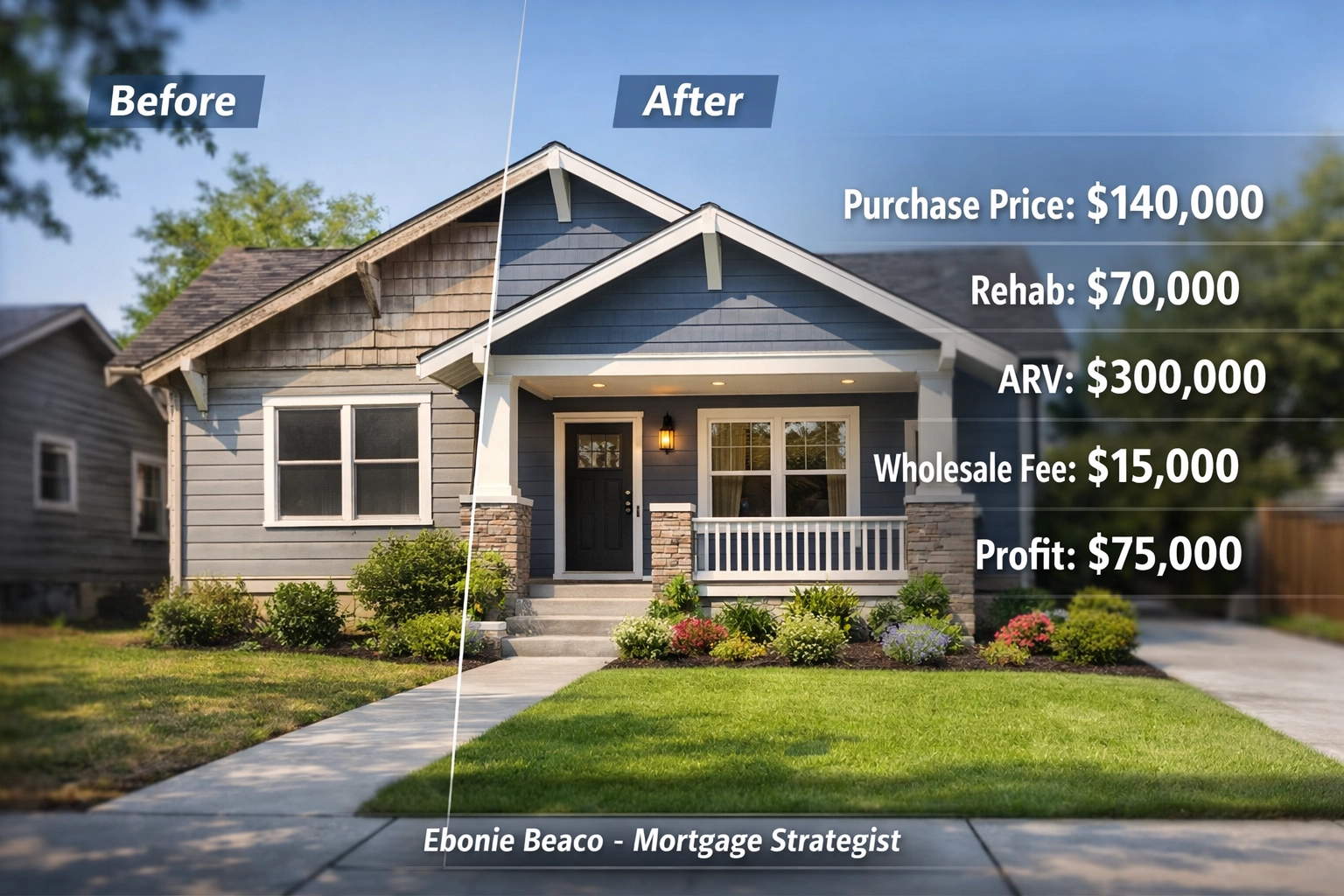 Deal Breakdown Visual: Purchase Price: $140,000 | Estimated Rehab: $70,000 | ARV: $300,000 | Wholesale Fee: $15,000 | Buyer Profit Potential: $75,000. Footer: Ebonie Beaco - Mortgage Strategist
Ultimately, the key to surviving the "deal killer" phase of your career is to stop viewing every lead as a guaranteed payday. By adopting a mindset of a mortgage strategist and an investment analyst, you can filter out the noise and focus on high-probability transactions. Whether you are working in the suburbs of Chicago or the coastal markets of Florida, your reputation is built on the quality of the deals you bring to the table. Don't be afraid to walk away from a deal that doesn't satisfy the numbers or the logistics required for a clean close. Consistency in your underwriting and transparency in your communication will separate you from the sea of amateurs who eventually wash out of the industry. Reach out to discuss how we can help you structure your next transaction for maximum success.
📞 Work With Ebonie Beaco
If you are a wholesaler looking to:
- Close more deals
- Connect your buyers with financing
- Structure deals that actually get approved
- Learn how to grow into a real estate investor
I can help you every step of the way.
Ebonie Beaco Mortgage Strategist | Senior Loan Officer Home Loans Network powered by Loan Factory Inc. NMLS #2389954
📱 Phone: 312-392-0664 📧 Schedule a 1 on 1: https://calendly.com/homeloansnetwork 🌐 Website: HomeLoansNetwork.com/contact-us
👉 Whether you need lending, deal structuring, or mentorship, reach out today.
Meta Title: Why Wholesale Real Estate Deals Fail: Top Deal Killers Explained Meta Description: Discover why most wholesale real estate deals fall apart before closing. Learn about underwriting errors, comp analysis, and how to protect your assignment fees.