Contract Protection: The 3 Essential Contingencies for Every Wholesale Deal
Wholesaling houses involves a high level of strategic coordination and legal precision to ensure that you, as the middleman, are never left holding a liability you cannot manage. Engaging in wholesale real estate requires a deep understanding of contract law and the specific clauses that safeguard your earnest money and your reputation in the investment community. You must approach every deal with the mindset of a professional strategist who anticipates potential roadblocks before they arise during the escrow period. By utilizing specific "escape hatches" or contingencies, you allow yourself the flexibility to exit a deal if your end buyer disappears or if the property condition is worse than initially anticipated. Explore the foundational elements of a secure purchase agreement to ensure your off-market deals remain profitable and low-risk throughout the transaction lifecycle. Jump in and analyze how these legal protections function as the bedrock of a successful wholesaling business across markets like Chicago, Illinois, and various high-volume regions in Florida.
The inspection contingency serves as your primary defense against unforeseen property defects that could jeopardize the entire financial structure of your real estate investing strategy. This clause specifies that your obligation to purchase is strictly dependent on a thorough walkthrough or a professional assessment of the physical structure within a set timeframe. You should typically allow for a period of seven to ten days to verify that the foundation, roof, and mechanical systems align with your initial repair estimates. If the inspection reveals significant issues that were not disclosed, this contingency allows you to renegotiate the price or cancel the contract without losing your deposit. Many wholesalers in competitive markets like Virginia and Georgia use this time to bring their cash buyers through the property to confirm the renovation budget. Access the security of a well-drafted inspection clause to maintain your leverage and protect your capital from distressed assets that may have hidden, costly complications.

Modern home interior showcasing a clean, renovated living space, branding footer: Ebonie Beaco - Mortgage Strategist
A financing or funding contingency is equally vital, even when you are marketing the deal as a cash transaction to the seller. While you likely intend to assign the contract to a third party, you must protect yourself in the event your end buyer fails to secure the necessary fix and flip financing or hard money. This clause essentially states that the purchase is contingent upon the buyer obtaining the funds required to close the transaction on the agreed-upon date. Without this protection, you could be legally obligated to close the deal personally, which is a significant risk if you do not have the liquid capital available. You can find more information about how different funding structures operate by reviewing our FAQ section regarding investor loan types and requirements. Compare your options carefully to ensure that your contracts reflect the reality of your funding sources and the reliability of your investor network in states like Michigan and Indiana.
The assignment clause is arguably the most critical component for any professional operating in the wholesale real estate sector. This specific language explicitly grants you the right to transfer your interest in the purchase agreement to another entity or individual for a fee. Without a clear assignment provision, the seller could legally block your attempt to bring in a cash buyer, effectively shutting down your ability to generate a wholesale profit. You should ensure the contract states that the buyer has the right to assign the contract and that the seller consents to this potential transfer of obligations. This transparency helps build trust with the seller while clearly outlining the mechanics of how the deal will eventually move toward a successful closing. Real estate professionals in California and Arkansas rely on these clauses to scale their portfolios and maintain a steady flow of off-market deals.
To illustrate the importance of these protections, let us examine a detailed deal breakdown for a distressed property located in a suburb of Chicago. Suppose you find a property with an After Repair Value (ARV) of $300,000 that requires approximately $50,000 in renovations to meet market standards. Using the standard investment formula, you calculate your Maximum Allowable Offer (MAO) by taking 70% of the ARV ($210,000), subtracting the repair costs ($50,000), and deducting your desired wholesale fee of $15,000. This leaves you with a target purchase price of $145,000 to present to the motivated seller during your initial negotiations. If your inspection reveals that the roof actually needs a $20,000 replacement instead of a minor repair, your inspection contingency allows you to reduce your offer to $125,000 or exit the deal entirely. You can use our mortgage calculators to help your end buyers understand their potential debt service and cash flow requirements for the project.
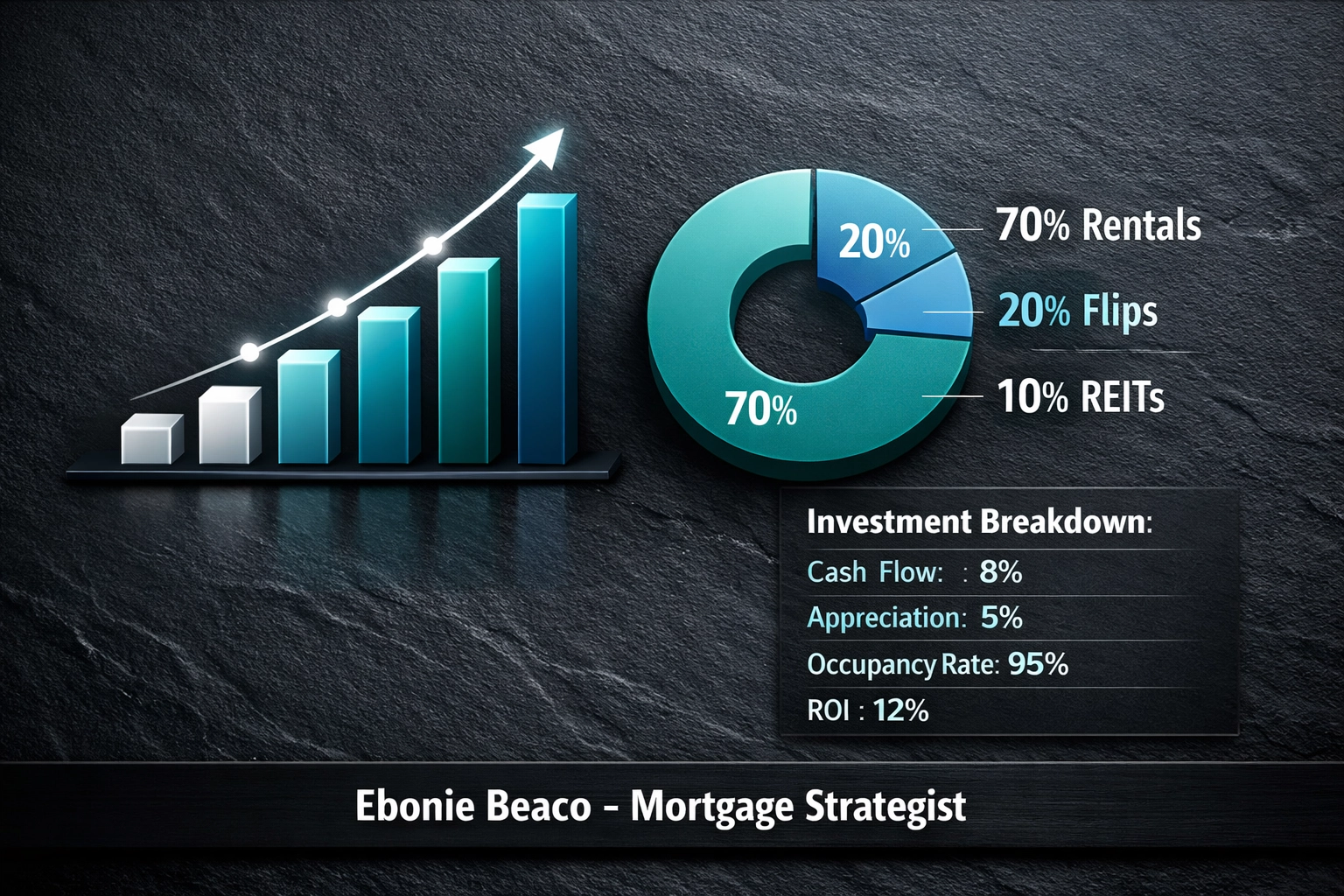
Professional financial chart showing a wholesale deal breakdown with ARV, Repairs, and Assignment Fee calculations, branding footer: Ebonie Beaco - Mortgage Strategist
| Component | Value | Calculation |
|---|---|---|
| After Repair Value (ARV) | $300,000 | Market Analysis |
| Standard Investor Margin | 70% | $300,000 * 0.70 = $210,000 |
| Estimated Repair Costs | $50,000 | Contractor Quote |
| Target Wholesale Fee | $15,000 | Strategy Goal |
| Maximum Allowable Offer (MAO) | $145,000 | $210,000 - $50,000 - $15,000 |
Managing your earnest money deposit (EMD) requires a balanced approach to satisfy the seller's need for security while minimizing your own financial exposure. You should always aim to keep your EMD as low as possible, often ranging from $500 to $2,000 depending on the total purchase price and local market norms in areas like Alabama or Kentucky. By linking your EMD directly to the successful completion of your contingency periods, you ensure that your funds are refundable if the deal falls apart for a valid, protected reason. It is often helpful to use a neutral third-party title company or attorney to hold these funds in escrow, providing an extra layer of professional oversight to the transaction. You can learn more about the steps involved in securing a property by visiting our page on the loan process and escrow management. Professional wholesalers understand that protecting their liquidity is just as important as finding the next great off-market opportunity.
Scaling your wholesaling business involves moving beyond simple find-and-flip tactics and adopting the sophisticated strategies used by high-level real estate investors. As you grow, you might transition into more complex financing structures, such as using DSCR investor loans for properties you decide to keep as long-term rentals. Maintaining a high standard of professional ethics and transparent communication with your sellers will set you apart from less experienced competitors in crowded markets like Virginia and Missouri. You should always encourage your sellers to seek legal counsel if they have questions about the assignment process or the specific contingencies you have included in the contract. This proactive approach reduces the likelihood of disputes and ensures that every party involved feels confident in the path toward a successful closing. Explore the different ways you can provide value to your network by staying informed about current mortgage basics and interest rate trends.
Ultimately, the strength of your wholesale real estate business is determined by the quality of your contracts and your ability to manage risk effectively. These three essential contingencies: inspection, financing, and assignment: provide the necessary framework to navigate the uncertainties of the housing market with confidence. Whether you are working in the busy urban environment of Chicago or the growing suburban sectors of Florida, these protections remain the industry standard for safe and profitable wholesaling. Use the resources available on our about us page to understand our commitment to supporting the real estate investment community with reliable data and strategic insights. By mastering the art of the purchase agreement, you position yourself as a knowledgeable leader who can solve complex property problems while generating consistent returns. Compare your current contract templates against these professional standards to ensure you are fully protected in every future transaction you undertake.
Scedule a 1 on 1 at https://calendly.com/homeloansnetwork
Ebonie Beaco
Mortgage Strategist | Senior Loan Officer
Home Loans Network powered by Loan Factory Inc.
NMLS #2389954
HomeLoansNetwork.com
312-392-0664