Closing Costs for Investment Properties: What to Expect
When you step into the world of real estate investing, the down payment usually takes center stage. You calculate your 20% or 25% for a DSCR loan and assume you are ready to roll. Then, the Loan Estimate arrives, and you see a list of fees that can add thousands to your "cash to close" requirement.
Closing costs are the professional service fees and government taxes required to finalize a real estate transaction. Whether you are buying a multi-unit building in Chicago, a short-term rental in Florida, or a fix-and-flip project in California, these costs are part of the deal.
In this guide, we explore exactly what you should expect when it time comes to sign the final paperwork and how these costs impact your overall investment strategy.
Defining the Cost of Entry
Closing costs represent the various expenses paid at the end of a real estate transaction. While every deal is unique, buyers typically pay between 2% and 6% of the total purchase price in closing costs when financing is involved.
Closing Costs: A collection of fees paid by buyers and sellers at the end of a real estate transaction to cover loan processing, title transfers, and government filings. These expenses ensure the property title is clear and the lender is protected.
If you are a cash buyer, your costs will be significantly lower because you skip the lender-specific fees. However, for most investors using leverage to scale their portfolios, these costs are a standard part of the process.
The Financial Breakdown: A Real-World Example
To understand how these percentages play out in a real transaction, let's look at a typical investment scenario. Imagine you are purchasing a rental property in Atlanta, Georgia, or Virginia Beach, Virginia.
Property Purchase Price: $350,000
Down Payment (25%): $87,500
Estimated Closing Costs (4%): $14,000
Total Cash Required: $101,500
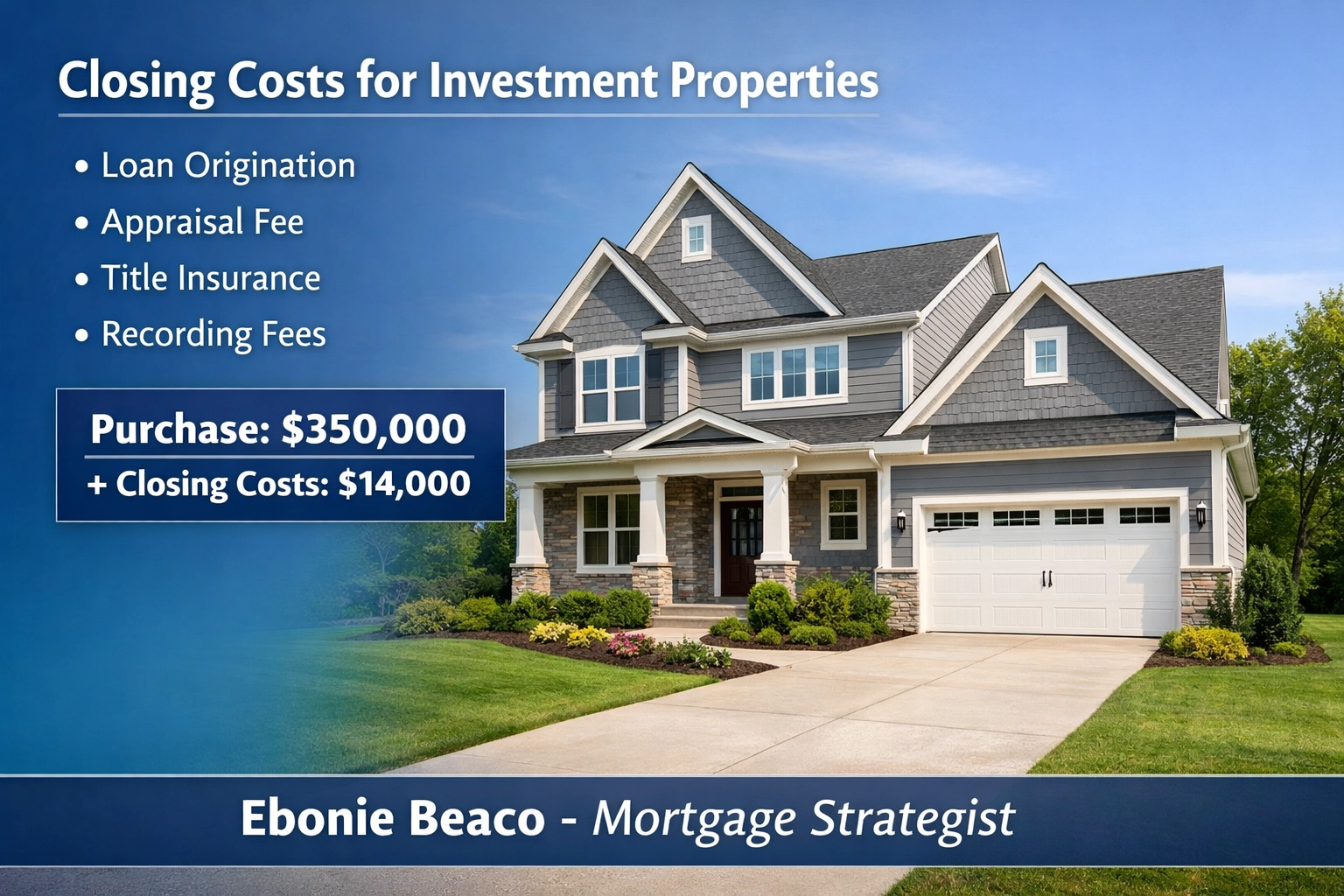
In this scenario, that $14,000 covers everything from the appraisal to the title insurance. Knowing these numbers ahead of time helps you accurately calculate your Return on Investment (ROI) and ensures you don't run out of liquidity before the keys are in your hand. You can use our mortgage calculators to run your own scenarios.
Buyer Closing Costs: What You Are Paying For
When you use financing, such as a Non-QM loan or a bank statement loan, the lender requires several services to verify the property value and your eligibility. Here is a breakdown of common buyer-side costs:
Loan Origination Fee: A fee charged by the lender for processing the loan application. This is often calculated as a percentage of the total loan amount.
Underwriting Fee: A cost associated with the lender’s internal review of your financial documents and the property’s potential. This ensures the deal meets all risk guidelines.
Appraisal Fee: The cost of having a professional appraiser determine the fair market value of the property. For investment properties, this often includes a "Rent Schedule" to confirm the market rent.
Credit Report Fee: A small charge for the lender to pull your credit history from the major bureaus.
Title Search Fee: A fee paid to a title company to research the property’s history and ensure there are no liens or ownership disputes.
Lender’s Title Insurance: A policy that protects the lender against future claims or legal issues related to the property’s title.
Recording Fees: Government fees paid to the local county or city to officially record the change in ownership.
Escrow Deposits: Funds collected at closing to jumpstart your escrow account for future property taxes and homeowners insurance.
Explore more about the steps involved in our loan process to see where these fees fit into the timeline.
How Financing Choice Affects Your Costs
The type of loan you choose plays a massive role in your closing costs. Investors in high-growth markets like Michigan, Indiana, or Alabama often choose different programs based on their tax structure or property type.
DSCR Investor Loans
Debt Service Coverage Ratio (DSCR) loans are popular because they focus on the property's income rather than your personal income. Because these are specialized products, origination fees or "points" might be slightly higher than a traditional conventional loan, but they offer the flexibility needed to scale a portfolio quickly.
Fix and Flip Financing
If you are buying a distressed property in Arkansas or Missouri to renovate and resell, you might use a bridge loan or hard money. These often have higher upfront points but lower long-term costs because the loan duration is short.
Cash-Out Refinance
If you already own a property and want to access equity for your next deal, you will still encounter closing costs. A cash-out refinance requires many of the same fees as a purchase, including an appraisal and title work. This is a common strategy for BRRRR investors looking to recycle their capital. Access more details on our home refinance page.
Seller Closing Costs: The Higher Burden
While buyers focus on the 2% to 6% range, sellers often face much higher costs, usually ranging from 6% to 10% of the sale price. This is primarily because the seller traditionally pays the real estate agent commissions for both the listing agent and the buyer's agent.
Real Estate Commissions: The percentage of the sale price paid to the agents involved in the transaction. This is typically the largest expense for a seller.
Transfer Taxes: Taxes imposed by the state or local government when a property changes hands. In some regions, like Chicago, these can be a significant line item.
Owner’s Title Insurance: In many markets, it is customary for the seller to pay for the buyer’s title insurance policy to guarantee a clean title.
Strategic Considerations for Investors
Successful investing requires more than just finding a good house; it requires understanding the total cost of capital. When you are analyzing a deal in Kentucky or California, remember to account for these variables:
- Negotiate Seller Credits: In some market conditions, you can ask the seller to cover a portion of your closing costs. This reduces your "cash out of pocket" but may require a higher offer price.
- Shop for Title Services: While you can't choose your lender's fees, you can often shop around for the title company or attorney to find more competitive rates.
- Buy Down the Rate: You may choose to pay "discount points" at closing to secure a lower interest rate. This increases your closing costs but improves your monthly cash flow over the long term.
Jump in and review our mortgage basics to further sharpen your financial literacy.
Local Market Nuances
Real estate is local, and closing costs are no exception.
- Florida: Be prepared for documentary stamp taxes on the deed and the mortgage.
- Illinois/Chicago: Local transfer stamps can vary by municipality, and attorney fees are a standard part of every closing.
- California: Escrow fees are common, and the responsibility for certain costs can shift depending on whether you are in Northern or Southern California.
Because these rules change frequently, working with a mortgage strategist who understands these regional differences is vital. You can find more specific answers in our FAQ section.
Moving Forward With Confidence
Understanding closing costs allows you to move from being an amateur "house hunter" to a professional real estate investor. When you know exactly what to expect, you can structure your deals more effectively, manage your liquidity, and avoid the stress of last-minute financial surprises.
Whether you are looking for your first rental property or adding a 10-unit apartment building to your portfolio, transparency in financing is the key to long-term success. Compare your options and ensure your next deal is structured for maximum profit.
Explore your financing options or request a tailored cost breakdown for your next investment.
Scedule a 1 on 1 at https://calendly.com/homeloansnetwork
Ebonie Beaco
Mortgage Strategist | Senior Loan Officer
Home Loans Network powered by Loan Factory Inc.
NMLS #2389954
HomeLoansNetwork.com
312-392-0664
Contact Ebonie Beaco for a detailed cost breakdown or mentoring at www.homeloansnetwork.com.