Chicago Multi-Family Investing: Building Wealth in the Windy City
Chicago has long been a powerhouse for real estate investors. The city’s unique layout, filled with vintage two-flats, three-flats, and mid-sized apartment buildings, makes it one of the most accessible markets for those looking to scale a rental portfolio. Whether you are a first-time buyer looking to house-hack or a seasoned landlord expanding your holdings, the Windy City offers a blend of cash flow and appreciation that is hard to find in coastal markets.
Navigating the Chicago market requires a solid understanding of local trends and a clear strategy for financing. With inventory expansion slowing down and vacancy rates remaining low, the environment for multi-family investing is currently very favorable for those who know how to spot a deal and secure the right funding.
The Current State of Chicago Multifamily
Chicago stands out from many other major U.S. markets because it is not currently oversupplied. While cities in the Sun Belt have seen a massive surge in new apartment deliveries, Chicago has remained conservative. Research indicates that by 2026, apartment deliveries are expected to fall below 4,000 units, which is the lowest level the city has seen since 2012.
This supply shortage creates a significant advantage for property owners. When there are fewer new buildings to compete with, existing multi-family properties stay occupied. The Chicago metro area ended 2025 with a vacancy rate of approximately 3.8%. For investors focusing on Class B and C properties (the types of buildings most common in Chicago neighborhoods), vacancy rates typically hover around 4.5% to 5%. This stability allows for consistent rental income and more predictable long-term planning.
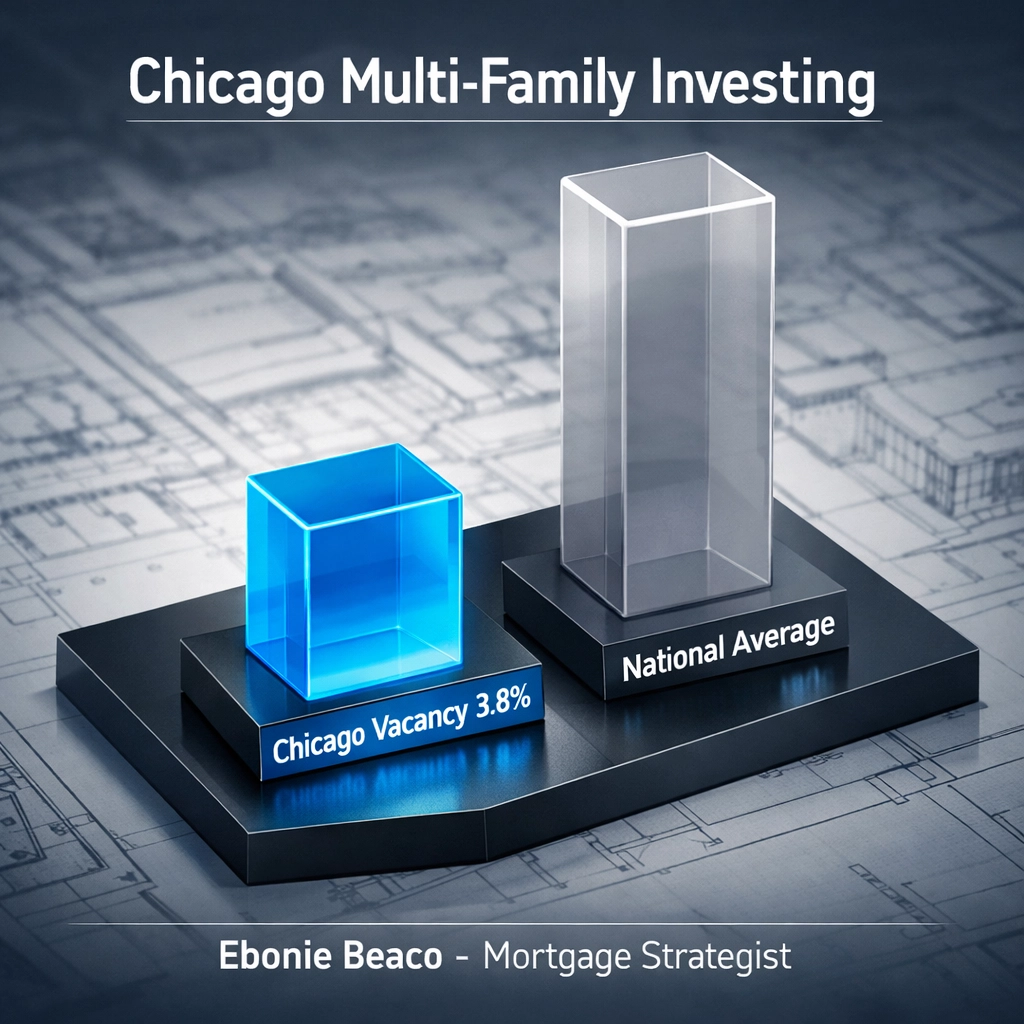 Image Description: A professional data chart showing Chicago's vacancy rate of 3.8% compared to the long-term metro average. Title: "Chicago Multi-Family Market Stability". Bottom text: "Ebonie Beaco - Mortgage Loan Officer". No cash or money icons.
Why Chicago Investors Choose Multi-Family Properties
Investing in multi-family units rather than single-family homes offers several strategic advantages. In a city like Chicago, where the cost of living is high but still more affordable than New York or Los Angeles, multi-family units provide a higher return on investment (ROI) through economies of scale.
- Lower Vacancy Risk: If a single-family home goes vacant, you are 100% vacant. In a four-unit building, one vacancy only represents 25% of your income potential, meaning the other three units can still cover the mortgage.
- Increased Cash Flow: Multi-family properties typically generate more monthly revenue relative to the purchase price than single-family homes.
- Efficient Management: Managing four units under one roof is often simpler and more cost-effective than managing four separate houses across different neighborhoods.
Explore your options for acquiring these types of properties by visiting our home purchase page.
Understanding the Math: The Gross Rent Multiplier (GRM)
When you are looking at potential deals in neighborhoods like Logan Square, Avondale, or Bronzeville, you need a quick way to filter the good deals from the bad. One of the most common metrics used by Chicago investors is the Gross Rent Multiplier (GRM).
Gross Rent Multiplier (GRM): A ratio used to estimate the value of an income-producing property by comparing the purchase price to its gross annual rental income.
The formula is simple: GRM = Purchase Price / Gross Annual Rental Income
For example, if you are looking at a three-unit building in a developing pocket of the South Side:
- Purchase Price: $450,000
- Monthly Rent per Unit: $1,500
- Total Monthly Rent: $4,500
- Gross Annual Rental Income: $54,000 ($4,500 x 12)
- GRM Calculation: $450,000 / $54,000 = 8.33
In Chicago, a lower GRM generally indicates a better deal in terms of income potential, though you must balance this against the property condition and neighborhood stability. Most investors look for a GRM between 8 and 12, depending on the specific submarket.
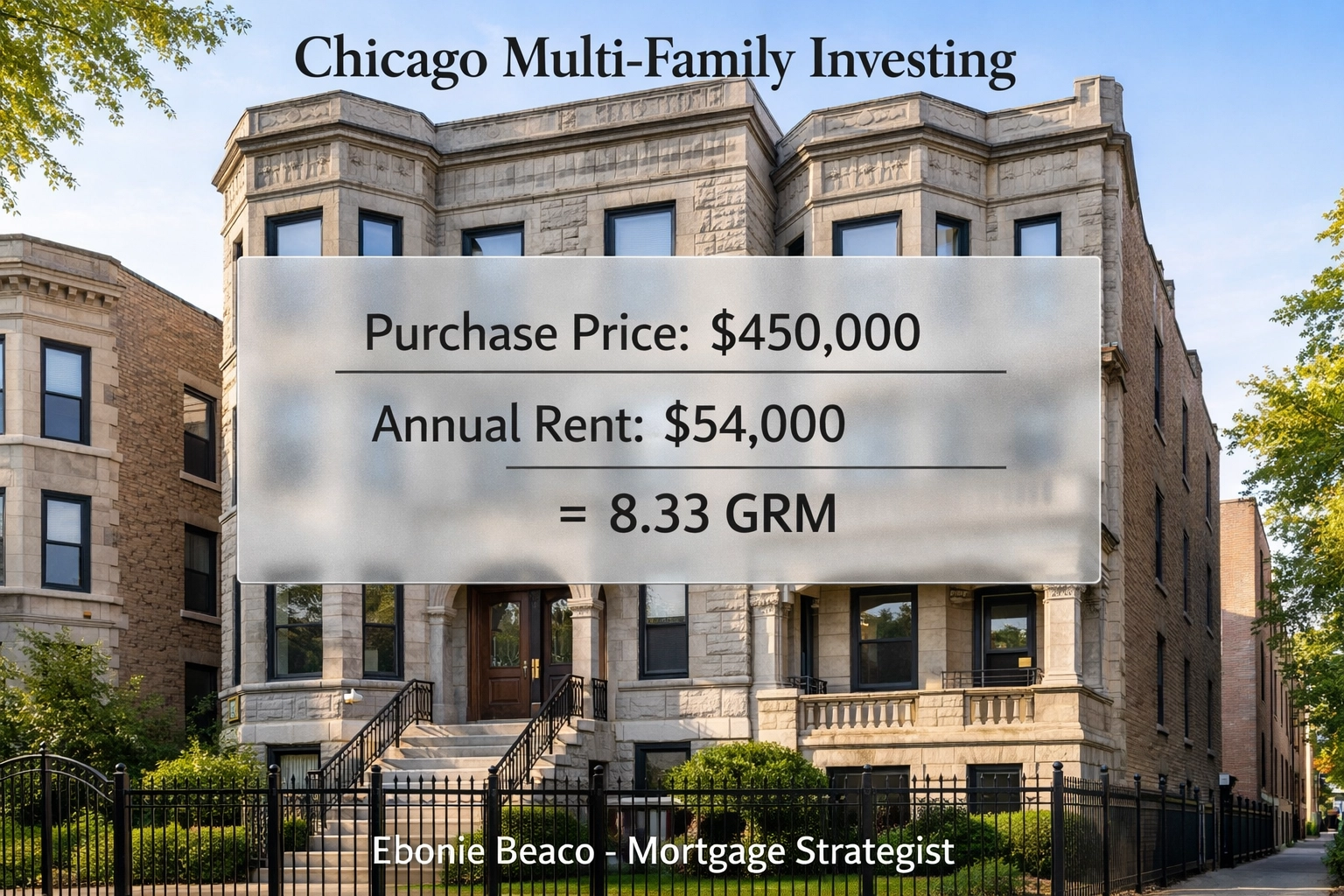 Image Description: An investment analysis graphic showing the GRM calculation. Purchase Price: $450,000. Annual Income: $54,000. GRM = 8.33. Title: "Chicago Multi-Family Investing: Calculating GRM". Bottom text: "Ebonie Beaco - Mortgage Loan Officer". No cash or money icons.
Financing Your Chicago Multi-Family Deal
Securing a mortgage for a multi-family property is different than financing a standard home. Depending on your goals, there are several paths you can take. You can learn more about the specifics on our mortgage basics page.
DSCR Investor Loans
For many landlords, DSCR (Debt Service Coverage Ratio) loans are the go-to choice. These loans focus on the income generated by the property rather than your personal income or tax returns. If the rental income covers the mortgage payment (and a bit more), the loan is often approved. This is an excellent option for self-employed investors or those who have already reached their limit on conventional loans.
Landlord Loans and Non-QM Options
If you are looking for flexibility, Non-QM (Non-Qualified Mortgage) loans offer terms that traditional banks might not provide. These are ideal for investors who need to move quickly or have unique financial profiles. Landlord loans are specifically designed to help you acquire or refinance rental units with minimal red tape.
House-Hacking with Conventional Loans
If you plan to live in one of the units, you can often secure a residential loan with a much lower down payment. This allows you to build equity while your tenants pay the majority of your mortgage. You can use our mortgage calculators to see how the numbers break down for a primary residence multi-family purchase.
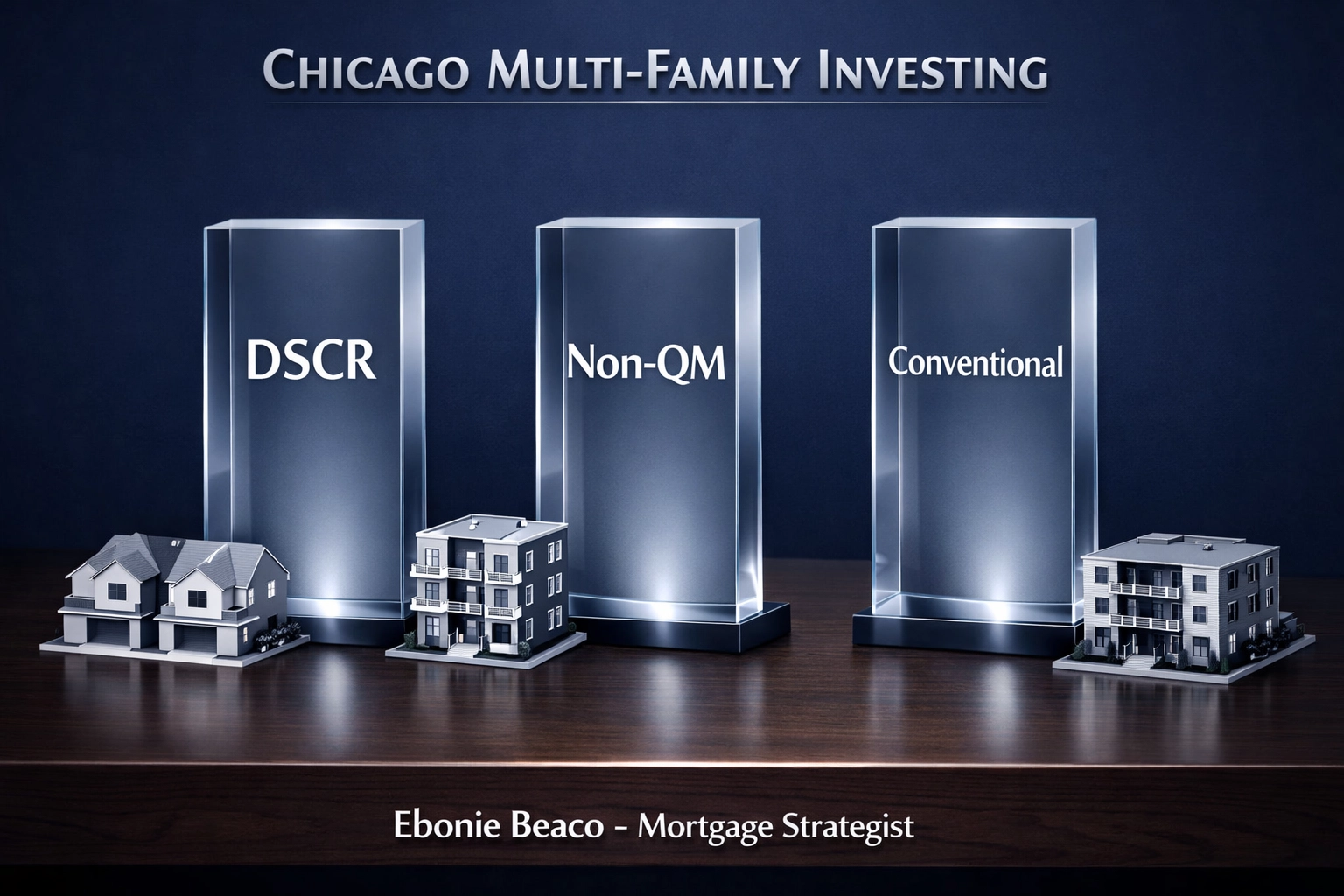 Image Description: A comparison chart of loan types including DSCR, Non-QM, and Conventional for 2-4 unit properties. Title: "Chicago Multi-Family Financing Options". Bottom text: "Ebonie Beaco - Mortgage Loan Officer". No cash or money icons.
Neighborhood Spotlights: Where to Look
Chicago is a "city of neighborhoods," and each one offers a different investment profile.
- The Urban Core (Downtown/North Lakefront): These areas have the lowest vacancy rates in the city. While the purchase prices are higher, the demand from high-earning renters is incredibly consistent.
- Southwest Suburbs and South Cook County: These areas are seeing minimal new construction. According to market research, South Cook and Will counties enter 2026 with vacancy rates near 2%. This lack of supply makes these areas prime targets for buy-and-hold investors.
- Northwest Side (Avondale/Irving Park): These areas continue to see strong demand from families and young professionals looking for more space than downtown offers, making two and three-flats highly valuable.
For a deeper look into how we handle these different regions, you can check our about us section to see our experience in the Illinois market.
Value-Add Strategies for Chicago Landlords
In a market where cap rates are sitting near 6%, increasing the value of your property is essential for long-term wealth building. Chicago renters are increasingly looking for modern conveniences in vintage buildings.
Value-Add: The process of increasing a property's value through physical improvements or operational efficiencies that lead to higher rental income.
Based on local demand, the highest ROI improvements include:
- In-unit Laundry: This is often the number one request for Chicago renters.
- Updated Kitchens and Baths: Clean, modern finishes can significantly boost monthly rent.
- Smart Home Features: Smart locks and energy-efficient thermostats are becoming standard expectations.
- Energy Efficiency: Replacing old windows or upgrading HVAC systems can lower utility costs and attract long-term tenants.
If you already own a property and want to access equity for these renovations, a cash-out refinance might be the right move.
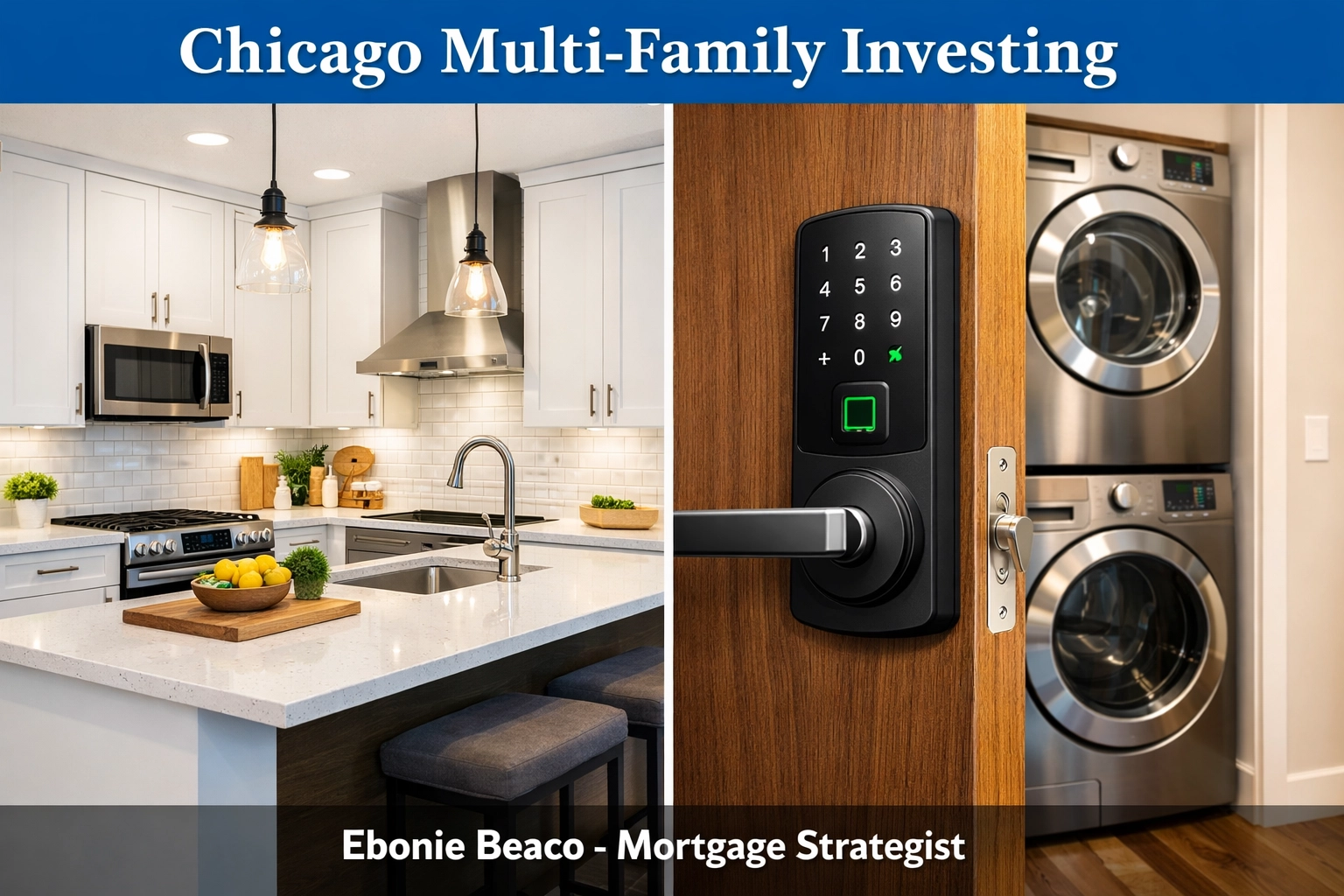 Image Description: A list of property improvements like In-unit Laundry, Updated Kitchens, and Smart Locks with high ROI potential. Title: "Value-Add Strategies for Chicago Multi-Family". Bottom text: "Ebonie Beaco - Mortgage Loan Officer". No cash or money icons.
Long-Term Outlook for the Windy City
Despite the rising costs of labor, materials, and insurance, Chicago remains one of the most attractive cities for multifamily investment in the United States. Its affordability compared to coastal cities like New York or San Francisco, combined with its robust transit infrastructure and diverse job market, ensures a steady stream of renters.
Investors who focus on the fundamentals: tight supply, low vacancy, and strategic financing: are well-positioned to build significant wealth. Chicago’s aging housing stock provides a durable opportunity for those willing to invest in maintenance and modernization.
Compare your current investment strategy with the latest market trends by visiting our FAQ page for more insights into the lending process.
Take the Next Step in Your Investment Journey
Building a real estate portfolio in Chicago is a marathon, not a sprint. Having a knowledgeable mortgage strategist on your side can make the difference between a deal that barely breaks even and one that generates life-changing wealth. Whether you need a DSCR loan for your next five-unit building or you want mentoring on how to analyze your first two-flat, I am here to guide you through the process.
Access the tools you need to succeed by visiting our online forms to get started.
Looking for multi-family deals in Chicago? Contact Ebonie Beaco for financing and mentoring.
Schedule a 1 on 1 at https://calendly.com/homeloansnetwork
Ebonie Beaco Mortgage Strategist | Senior Loan Officer Home Loans Network powered by Loan Factory Inc. NMLS #2389954 HomeLoansNetwork.com 312-392-0664