Cash Flow Matters: The 5-Step HELOC Blitz to Kill High-Interest Debt Once and For All

High-interest debt is a quiet weight that holds back even the most successful homeowners and investors. Whether it is credit card balances creeping toward 29% or personal loans with rigid terms, these obligations drain your monthly liquidity. If you own a home in Alabama, Missouri, or any of the states where we operate, you are likely sitting on a reservoir of capital that can change your financial trajectory.
A Home Equity Line of Credit (HELOC) serves as a strategic alternative to traditional debt management. By tapping into your home’s value, you can transform high-cost liabilities into manageable, lower-interest credit. This is not just about moving numbers around; it is about reclaiming your monthly income.
What is a HELOC?
HELOC (Home Equity Line of Credit): A revolving credit line secured by the equity in your primary residence or investment property.
Practical Application: You can draw funds as needed, pay them back, and draw them again, similar to a credit card but at a significantly lower interest rate because it is backed by real estate.
Why Your Current Debt Strategy Is Failing
Most people try to pay off credit cards by simply sending a few extra dollars each month. At 20% interest or higher, the majority of your payment goes toward interest, not the principal. This keeps you in a cycle of debt for years.
When you work with a Missouri HELOC lender or an Alabama HELOC lender, you are looking for a way to break that cycle. You are choosing to use your property as a tool to lower your weighted average cost of capital. Explore our loan programs to see how equity-based lending compares to traditional options.
The 5-Step HELOC Blitz
To effectively kill high-interest debt, you need a disciplined framework. Follow these five steps to execute a successful debt consolidation blitz.
Step 1: The Comprehensive Debt Audit
Jump in by listing every single debt you currently carry. Do not just look at the monthly payment; look at the Annual Percentage Rate (APR).
- Credit Cards: Usually the highest interest rates.
- Personal Loans: Often carry fixed rates that are still higher than HELOCs.
- Auto Loans: Only include these if the rate is higher than current home equity rates.
- Store Cards: These often have the most predatory interest structures.
The goal is to identify exactly how much you owe and what it is costing you in interest every 30 days.
Step 2: Real-Time Equity Assessment
Calculate your available equity. You can start this process by using mortgage calculators to estimate your current loan-to-value (LTV) ratio.
Lenders generally allow you to borrow up to 80% or 85% of your home's total value, minus your existing mortgage balance. If you own a home in Virginia or Florida where values have seen significant shifts, you might have more equity than you realize.
Step 3: Credit Optimization
Before you apply, review your credit profile. Higher credit scores lead to lower HELOC margins. Even a 20-point difference in your score can result in thousands of dollars saved over the life of the draw period.
If you are an investor in Chicago or an Airbnb host in California, your credit health is paramount to securing the best terms. Access your reports and ensure there are no errors that could hinder your approval.
Step 4: Securing Strategic Terms
Not all HELOCs are created equal. You need to compare the features that fit your specific financial goals.
- Variable Rates: These often start lower but can fluctuate with the market.
- Fixed-Rate Draw Options: Some lenders allow you to lock in a portion of your balance at a fixed rate.
- Interest-Only Payments: These can maximize cash flow during the draw period, though they do not reduce principal. You can learn more about interest-only mortgage concepts to see if this style fits your needs.
Step 5: The Execution and Repayment Phase
Once your HELOC is funded, use the capital to pay off the high-interest accounts immediately. This is the "Blitz." You are replacing multiple high-interest payments with one lower-interest payment.
The cliffhanger here is the discipline. You must avoid the temptation to run up the credit card balances again. The HELOC is your exit strategy, not a reason to spend more.
Analyzing the Math: A Real-World Example
Let’s look at how this works for a homeowner in a market like Michigan or Georgia.
Imagine you have a home valued at $450,000.
Your current mortgage balance is $280,000.
You have $50,000 in credit card debt at an average interest rate of 22%.
If you only pay the minimum on those cards, you will spend tens of thousands in interest over the next decade.
By securing a HELOC at a 9% interest rate, you can pay off the entire $50,000 balance.
The Breakdown:
- Current Credit Card Interest: ~$916 per month.
- New HELOC Interest (approximate): ~$375 per month.
- Monthly Savings: $541.
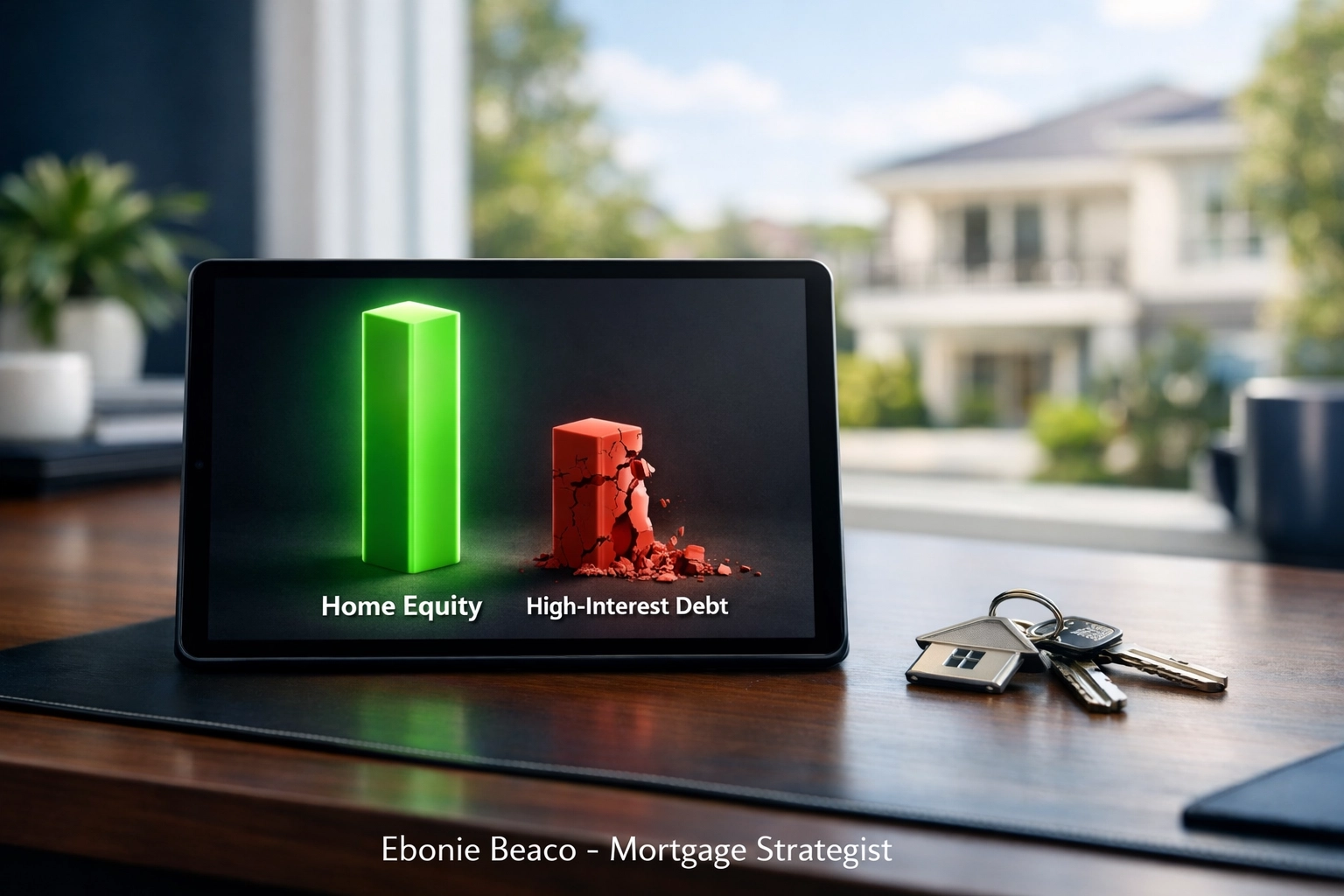
By taking that $541 in savings and applying it back toward the HELOC principal, you can pay off the debt in a fraction of the time. This strategy works just as well for real estate investors using the BRRRR method or landlords managing rental portfolios in Indiana or Kentucky.
Transparency in Equity Lending
At Home Loans Network, we believe in complete transparency. Using a HELOC to consolidate debt is a powerful strategy, but it does carry risk. Since the loan is secured by your home, failing to make payments puts your property at risk of foreclosure.
This is why we encourage a "Cash Flow First" mindset. If you are struggling with a high Debt-to-Income (DTI) ratio, a HELOC can lower that ratio by reducing your required monthly payments. This often makes it easier for investors to qualify for their next DSCR rental property loan or a fix and flip loan.
Regional Market Insights
Whether you are looking for an Alabama HELOC lender or a Missouri HELOC lender, the local market conditions impact your appraisal and your equity.
- Alabama & Arkansas: Stable growth markets where equity has built steadily over the last five years.
- Florida & California: Higher volatility but significant equity gains, making them prime locations for large HELOC lines.
- Illinois (Chicago): A competitive market where consolidating debt can help homeowners navigate rising property taxes.
- Virginia & Georgia: Markets with strong military and professional populations who often use HELOCs to fund home improvements or secondary investments.
The Investor’s Perspective
Experienced investors do not just use HELOCs for debt. They use them as a "ready-to-go" fund for new opportunities. If you are a wholesaler in Michigan or a developer in Virginia, having a HELOC in place allows you to move quickly when a deal hits the table.
You can use the line to cover a down payment on a jumbo loan or to fund the renovation of a short-term rental. The flexibility of the revolving line is what makes it a staple in any real estate pro's toolkit.
Final Thoughts on the HELOC Blitz
Stop letting high-interest rates dictate your financial health. Your home is more than just a place to live; it is a financial instrument. By moving high-cost debt into a lower-cost home equity line, you immediately improve your monthly cash flow and create a clear path to being debt-free.
Explore the loan process to see how we guide you through every step, from the initial application to the final funding of your line of credit.
If you are ready to stop the interest drain and start building real wealth through your equity, let’s talk about your specific scenario.
Schedule a 1 on 1 at https://calendly.com/homeloansnetwork
Ebonie Beaco
Mortgage Strategist | Senior Loan Officer
Home Loans Network powered by Loan Factory Inc.
NMLS #2389954
HomeLoansNetwork.com
312-392-0664