Big-Tenant Office Bets Are Back: Bank of America’s 2.4M SF Lease + Financing Plays for Chicago Trophy Assets
The headlines might tell you that office space is a relic of the past, but the "smart money" just placed a massive bet that says otherwise. As we sit here in March 2026, the narrative around Commercial Real Estate (CRE) is shifting from "survival" to "selection."
If you want to know where the market is headed, you don't look at the empty Class C buildings in the suburbs; you look at what the giants are doing in the heart of major financial hubs. Last week, Bank of America sent a shockwave through the industry by announcing a massive expansion at One Bryant Park in Manhattan. We aren't just talking about a few extra desks. We are talking about a move from 1.8 million to 2.4 million square feet on a 20-year lease.
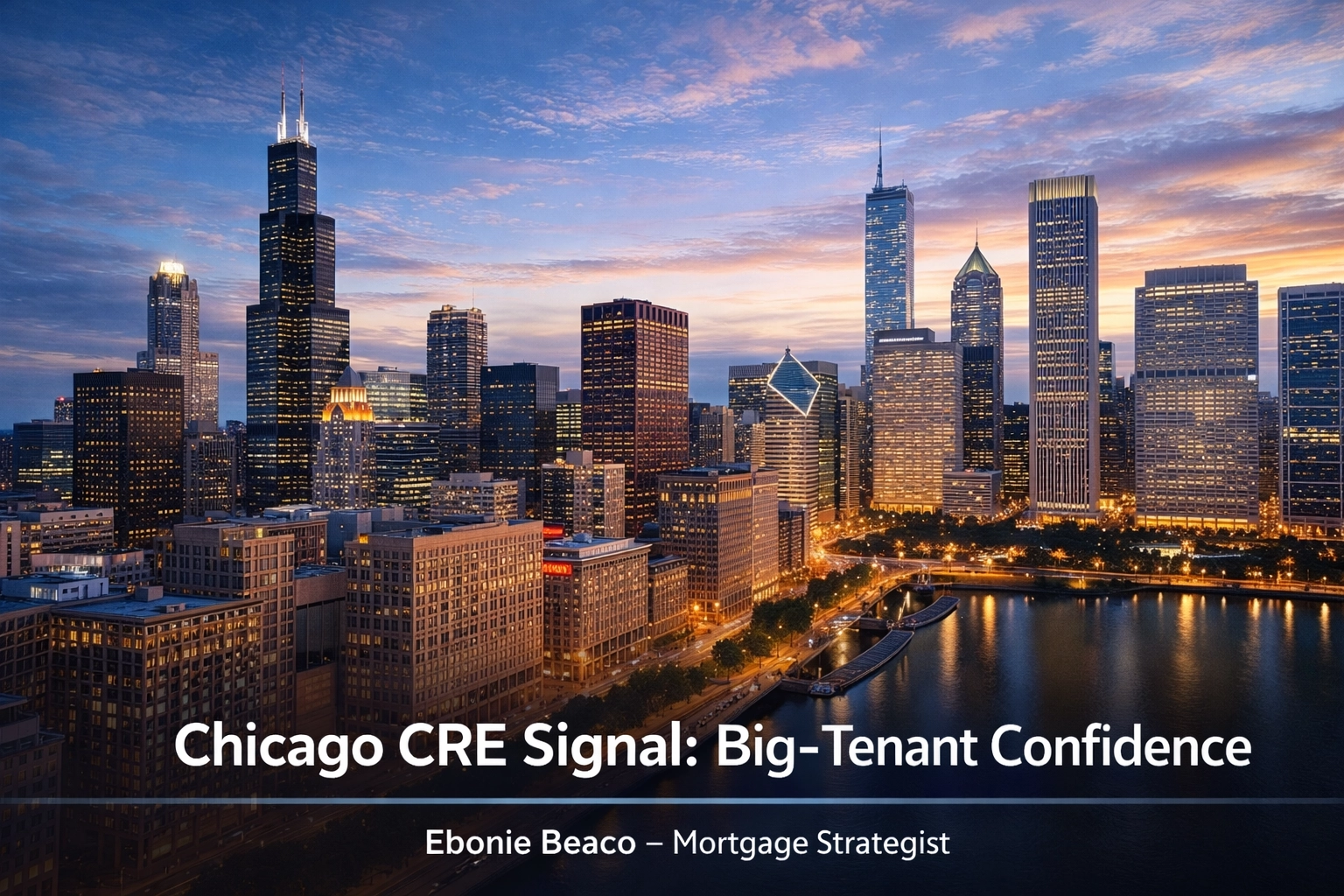
For Chicago investors, this NYC headline is not a coastal curiosity. It is a data point that supports long-term corporate confidence in premium, transit-friendly, amenity-rich office in cities that anchor finance, law, tech, and consulting.
As a mortgage strategist, I see this as a defining moment for 2026. This isn't just a lease; it's a structural pivot toward Trophy Assets. If you are evaluating Chicago investment property loans for mixed-use, multifamily, or office-adjacent acquisitions, you want to understand the financing mechanics behind these "Big-Tenant" bets and how you can apply the same principles to your own portfolio.
The Flight to Quality: Why the 20-Year Lease Matters
In the world of CRE, a 20-year commitment from a tenant like Bank of America is the ultimate "de-risking" event. The bank is effectively taking over nearly the entire office footprint of the 55-story tower. For the owners (the Durst Organization and BofA themselves), this secures long-term cash flow that makes the asset incredibly attractive for CMBS (Commercial Mortgage-Backed Securities) refinancing.
What is a Triple-Net (NNN) Lease?
Definition: A lease agreement where the tenant is responsible for all property expenses.
Practical Application: In a Triple-Net setup, the tenant pays the base rent plus property taxes, insurance, and maintenance costs (the "three nets"), which protects the landlord from rising operating costs and inflation.
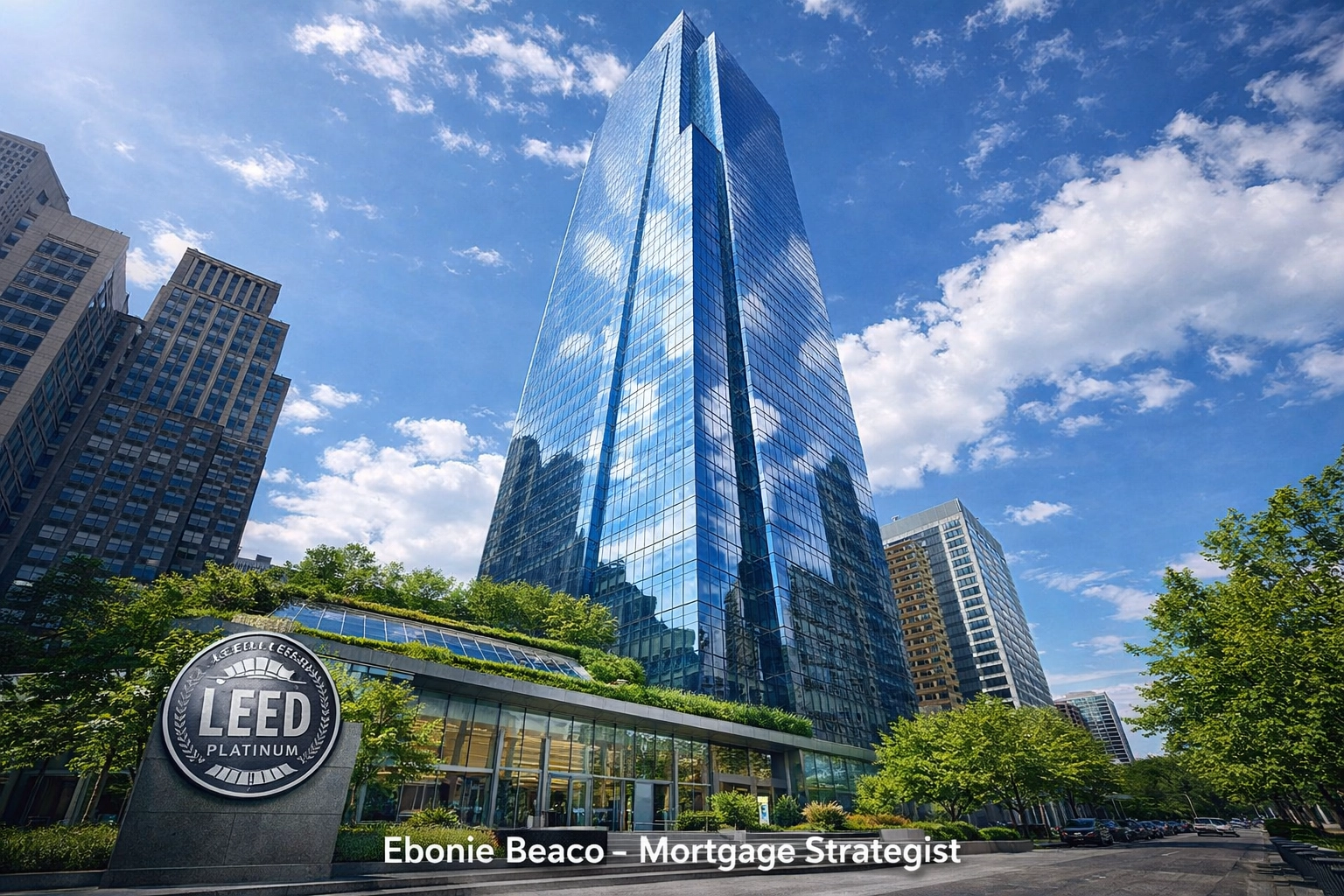
This BofA deal is structured as a triple-net lease. For investors watching this from Chicago, the lesson is clear: high-quality tenants want high-quality, sustainable spaces. One Bryant Park was the first skyscraper in North America to achieve LEED Platinum Certification. In 2026, "Green Financing" and ESG-compliant buildings are no longer optional: they are primary drivers of institutional capital.
Decoding the Financing: The $1.6 Billion Refinance Play
To understand how these mega-deals work, we have to look at the debt structure. Back in 2019, One Bryant Park was refinanced for a staggering $1.6 billion. That package was a mix of $950 million in CMBS loans and $650 million in public-assisted financing. At the time, the building was valued at $3.5 billion.
Why does this matter to you? Because it demonstrates the power of Debt Yield and LTV (Loan-to-Value) management.
When you are looking at commercial real estate loans, lenders in 2026 are looking closely at:
- DSCR (Debt Service Coverage Ratio): Does the property generate enough net operating income to cover the debt?
- Occupancy Longevity: Is there a "sticky" tenant that ensures the building won't go dark?
- Trophy Status: Is the asset "recession-proof" because of its location and amenities?
Explore how these metrics affect your ability to secure funding by visiting our mortgage basics page.
The Bifurcation of the Office Market
We are seeing a massive split in the 2026 office market. On one side, you have "Commodity Office" spaces that are struggling with high vacancy rates. On the other, you have "Trophy Assets" like One Bryant Park that are seeing record-breaking expansions.
Major financial institutions are building "integrated campuses." JPMorgan Chase and Citadel have already blazed this trail in Midtown Manhattan. By consolidating their footprint, these companies create a hub that draws talent back to the office.
Access the same logic for your smaller commercial plays. Whether you are looking at a 12-unit multifamily building in Indianapolis or a medical office building in Tampa, the "Flight to Quality" remains the dominant strategy. You want to own the asset that tenants want to be in, not the one they have to be in.
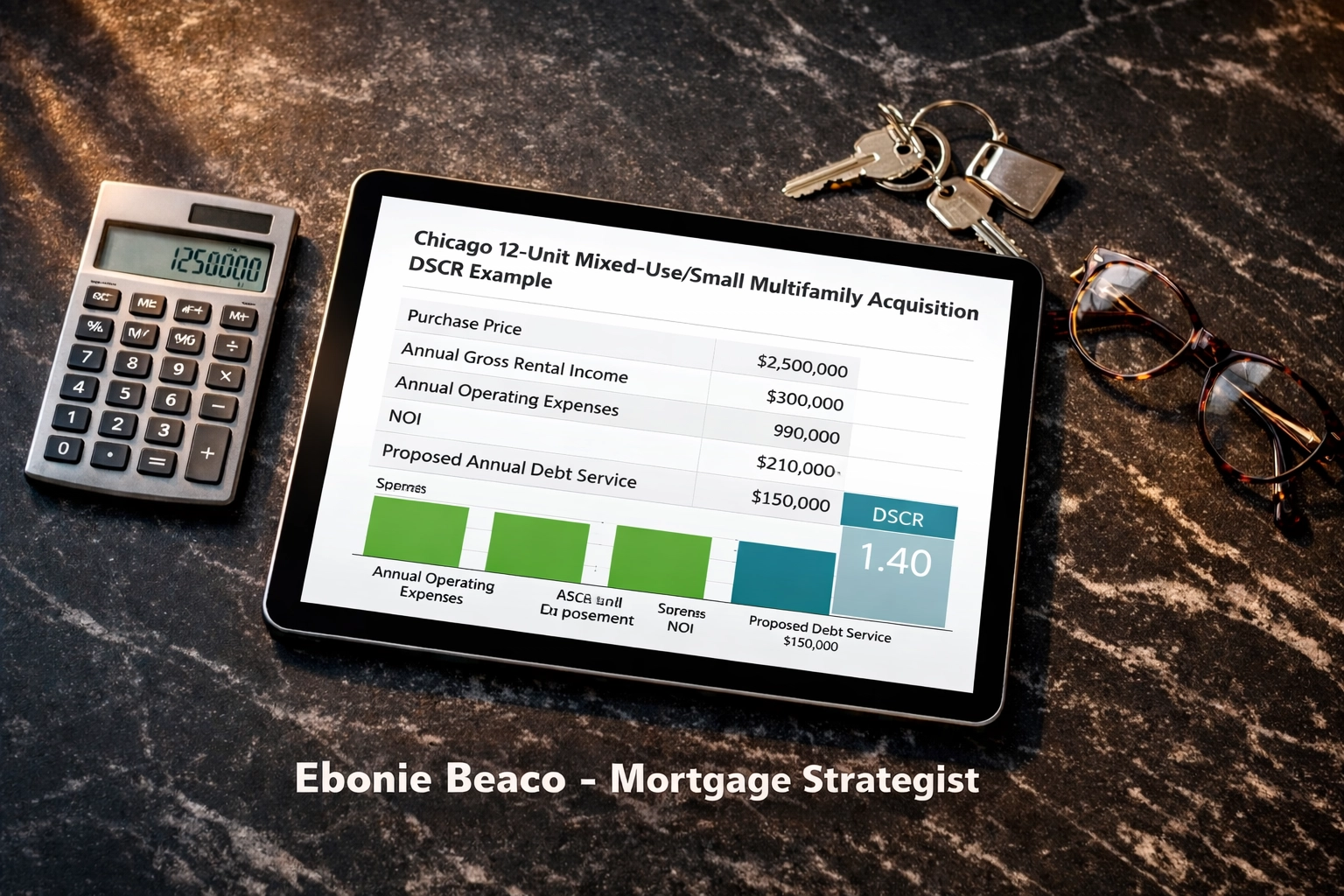
Practical Example: The Commercial DSCR Calculation (Chicago)
Let's look at how a professional investor might analyze a smaller-scale commercial acquisition in today’s market using a DSCR Investor Loan. Suppose you are looking at a multi-tenant professional building in Chicago, Illinois.
- Purchase Price: $2,500,000
- Annual Gross Rental Income: $300,000
- Annual Operating Expenses (Taxes, Insurance, Maint): $90,000
- Net Operating Income (NOI): $210,000
- Proposed Annual Debt Service (Mortgage Payments): $150,000
To find the DSCR, we divide the NOI by the Debt Service:
$210,000 / $150,000 = 1.40 DSCR
A DSCR of 1.40 is strong. Most commercial lenders look for a minimum of 1.20 to 1.25. This ratio tells the lender that the property generates 40% more income than is required to pay the mortgage. This is the "margin of safety" that allows you to secure competitive rates and terms.
How the "BofA Effect" Connects to Chicago
While the BofA deal is a New York story, the implications matter for major financial hubs like Chicago. When a global institution signs a long-term, big-footprint lease in a core CBD building, it signals durable demand for high-quality space that supports talent retention, client-facing work, and operational continuity.
For your Chicago underwriting lens, translate that signal into three practical questions:
- Tenant Quality: Does your property attract credit tenants, medical users, professional services, or necessity retail that can hold up through cycles?
- Location Utility: Is the building positioned near transit, major employers, hospitals, or established retail corridors?
- Capex and Compliance: Can you modernize HVAC, lobbies, and energy performance to compete for the “flight to quality” tenant?
When you structure acquisitions or repositioning deals in Cook County, you often need speed and flexibility. That is where Chicago bridge loans can help you close, stabilize, and then transition into long-term financing once the NOI is proven.
If you are holding a property and looking to unlock capital, a cash-out refinance might be the play to fund your next commercial acquisition. By leveraging the equity in your current portfolio, you can pivot into these high-demand trophy assets or value-add opportunities.
Navigating 2026 Financing Hurdles (Chicago Focus)
Securing Chicago investment property loans in 2026 requires a more sophisticated approach than in years past. Banks are more conservative, which is where Non-QM Mortgage Loans and Chicago bridge loans come into play.
- Bridge Loans: Use these for quick acquisitions or to stabilize a property before moving into long-term financing.
- Hard Money Loans: Ideal for "fix and flip" commercial plays where speed is more important than the interest rate.
- Landlord Loans: Specifically designed for those building a rental portfolio, focusing on the property's cash flow rather than just your personal income.
Jump in and compare your options by looking at our loan programs to see which structure fits your current deal.
Conclusion: The Strategist's View
Bank of America’s 2.4 million square foot commitment is a signal that the "Big-Tenant" era is back, but only for the best of the best. As a mortgage strategist, my job is to help you position your portfolio so you can compete for these types of high-value assets or find the "diamond in the rough" that can be converted into a trophy property.
Whether you are looking at Jumbo Loans for a luxury mixed-use project or DSCR Investor Loans for a suburban office park, the key is transparency and strategy. Don't just look for a loan; look for a financing structure that supports your long-term growth.
Are you ready to structure your next commercial play?
The market is moving fast, and the best opportunities don't wait for the cautious. Let’s look at your numbers, analyze your DSCR, and get you the funding you need to scale.
Scedule a 1 on 1 at https://calendly.com/homeloansnetwork Ebonie Beaco
Mortgage Strategist | Senior Loan Officer
Home Loans Network powered by Loan Factory Inc.
NMLS #2389954
HomeLoansNetwork.com
312-392-0664