Atlanta Real Estate: Why This Market is Still Hot for Investors

Atlanta continues to solidify its reputation as one of the most resilient and profitable real estate markets in the United States. As we move through March 2026, the data shows that the "City in a Forest" is far from reaching its ceiling. For investors in Georgia and those looking from states like Florida, Illinois, or California, the Atlanta metro area offers a unique combination of job diversity, infrastructure expansion, and a variety of financing paths.
Whether you are a seasoned landlord managing a dozen doors or a first-time investor looking at your first duplex, understanding the local dynamics is key to making a smart move.
The Economic Engine: More Than Just Peaches
Atlanta's growth is fueled by a massive influx of tech, healthcare, and finance jobs. Major hubs like Alpharetta and Sandy Springs are no longer just "suburbs"; they are economic powerhouses in their own right. Corporations such as Microsoft and Northside Hospital have significantly expanded their footprints in these areas, drawing in a high-quality tenant pool.
When high-paying jobs arrive, housing demand follows. This creates a ripple effect throughout the metro area. If you are exploring investment opportunities, you should look at the proximity to these job centers.
 Visual: A chart showing job growth trends in Atlanta metro tech and healthcare sectors. Title: Atlanta Growth Market. Ebonie Beaco - Mortgage Loan Officer.
Neighborhoods Poised for Appreciation
Strategic investors look for where the path of progress is headed. In Atlanta, infrastructure projects like the BeltLine expansion continue to transform neighborhoods that were previously overlooked.
West End and Oakland City
These areas are heating up as the BeltLine connects more communities. Young professionals are flocking to these neighborhoods for their historic charm and proximity to downtown. Investors are finding success here with the BRRRR strategy (Buy, Rehab, Rent, Refinance, Repeat).
Chamblee and Doraville
Located in North DeKalb, these cities offer a better price-per-square-foot compared to neighboring Brookhaven. With MARTA expansion and new infill developments, these spots are perfect for those looking for long-term equity growth. You can learn more about local market dynamics by visiting our mortgage basics page.
East Point and Hapeville
Proximity to Hartsfield-Jackson Atlanta International Airport and the booming film industry makes these areas highly attractive for Short-Term Rental (STR) investors. Many remote workers are also choosing these southern suburbs for their accessibility and relative affordability.
Understanding Real Estate Appreciation
Appreciation is the increase in a property's value over time. In a market like Atlanta, appreciation is a primary driver of wealth. Even a conservative growth rate can lead to significant equity gains.
Appreciation: The increase in a property's value over time due to market demand and inflation. Practical Application: High appreciation allows homeowners to access more equity for future investments through a HELOC or Cash-Out Refinance.
Let's look at a simple calculation to see how this works in a real-world Atlanta scenario.
The Appreciation Calculation
Imagine you purchase a rental property in East Point for $350,000. If the local market experiences a steady 5% annual appreciation (which is common in many Atlanta sub-markets), here is how your equity grows:
- Year 1: $350,000 x 1.05 = $367,500
- Year 2: $367,500 x 1.05 = $385,875
In just two years, you have gained $35,875 in home equity without lifting a finger. This equity is a powerful tool. You can leverage it to fund your next acquisition or renovate the current property to increase rents.
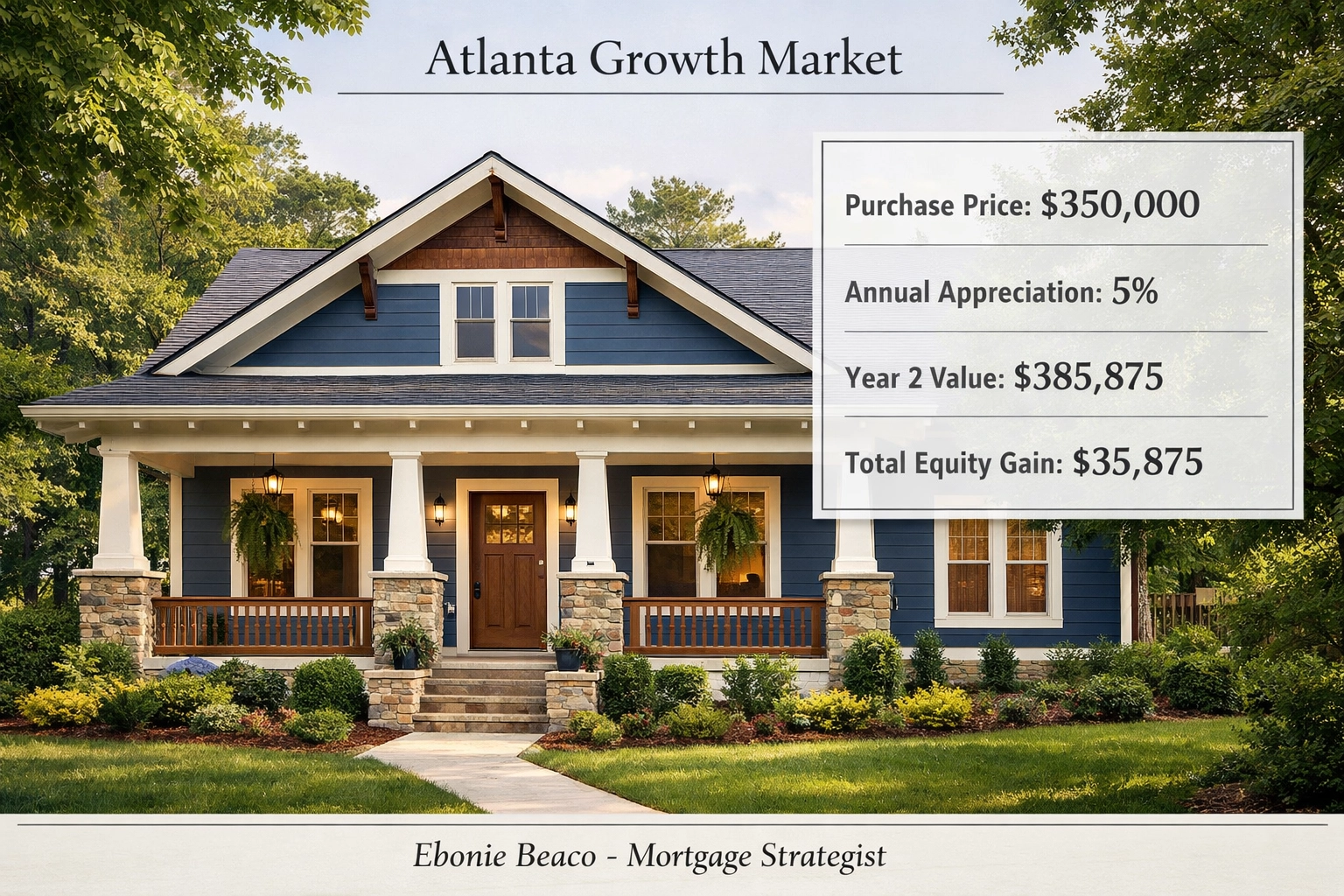 Visual: Calculation Graphic. Purchase Price: $350,000. Annual Appreciation: 5%. Year 1 Value: $367,500. Year 2 Value: $385,875. Total Equity Gain: $35,875. Title: Atlanta Growth Market. Ebonie Beaco - Mortgage Loan Officer.
Strategic Financing for Atlanta Investors
In 2026, the way you fund a deal is just as important as the deal itself. Many investors are moving away from traditional conventional loans and exploring Non-QM (Non-Qualified Mortgage) options that offer more flexibility.
DSCR Investor Loans
DSCR (Debt Service Coverage Ratio): A loan program that qualifies a borrower based on the property’s rental income rather than personal income or tax returns. Practical Application: Perfect for investors who are self-employed or have reached the limit on conventional financed properties.
In Atlanta, where rents are rising, many properties easily meet the DSCR requirements. If the monthly rent covers the mortgage payment (including taxes, insurance, and HOA), you are often good to go. You can check potential scenarios using our mortgage calculators.
Fix and Flip Financing
If you are eyeing a distressed property in the West End, a Fix and Flip Loan (or Hard Money Loan) is often the best route. These are short-term loans used to purchase and renovate a property before selling it for a profit or refinancing it into a long-term rental loan.
Accessing Equity: HELOC vs. Cash-Out Refinance
For current Atlanta homeowners, the equity in your primary residence is a "gold mine."
- HELOC (Home Equity Line of Credit): A revolving line of credit that lets you borrow against your equity as needed.
- Cash-Out Refinance: Replacing your current mortgage with a new, larger loan and taking the difference in cash.
Many landlords use a Cash-Out Refinance on one rental property to provide the down payment for the next. This is a common strategy in high-growth markets like Georgia and Florida. Learn more about the refinance process here.
 Visual: A comparison table between HELOC and Cash-Out Refinance for investment purposes. Title: Atlanta Growth Market. Ebonie Beaco - Mortgage Loan Officer.
The "Lock-In" Effect and Inventory Dynamics
One reason the Atlanta market remains "hot" is the low supply of homes. Many homeowners are currently "locked in" to low mortgage rates from years ago and are hesitant to sell. According to market research, this inventory shortage is a persistent challenge for entry-level buyers but a massive win for landlords.
When there are fewer homes for sale, more people are forced to rent. This keeps vacancy rates low and rental prices stable. For an investor, a tight inventory market provides a level of security that the property will remain occupied.
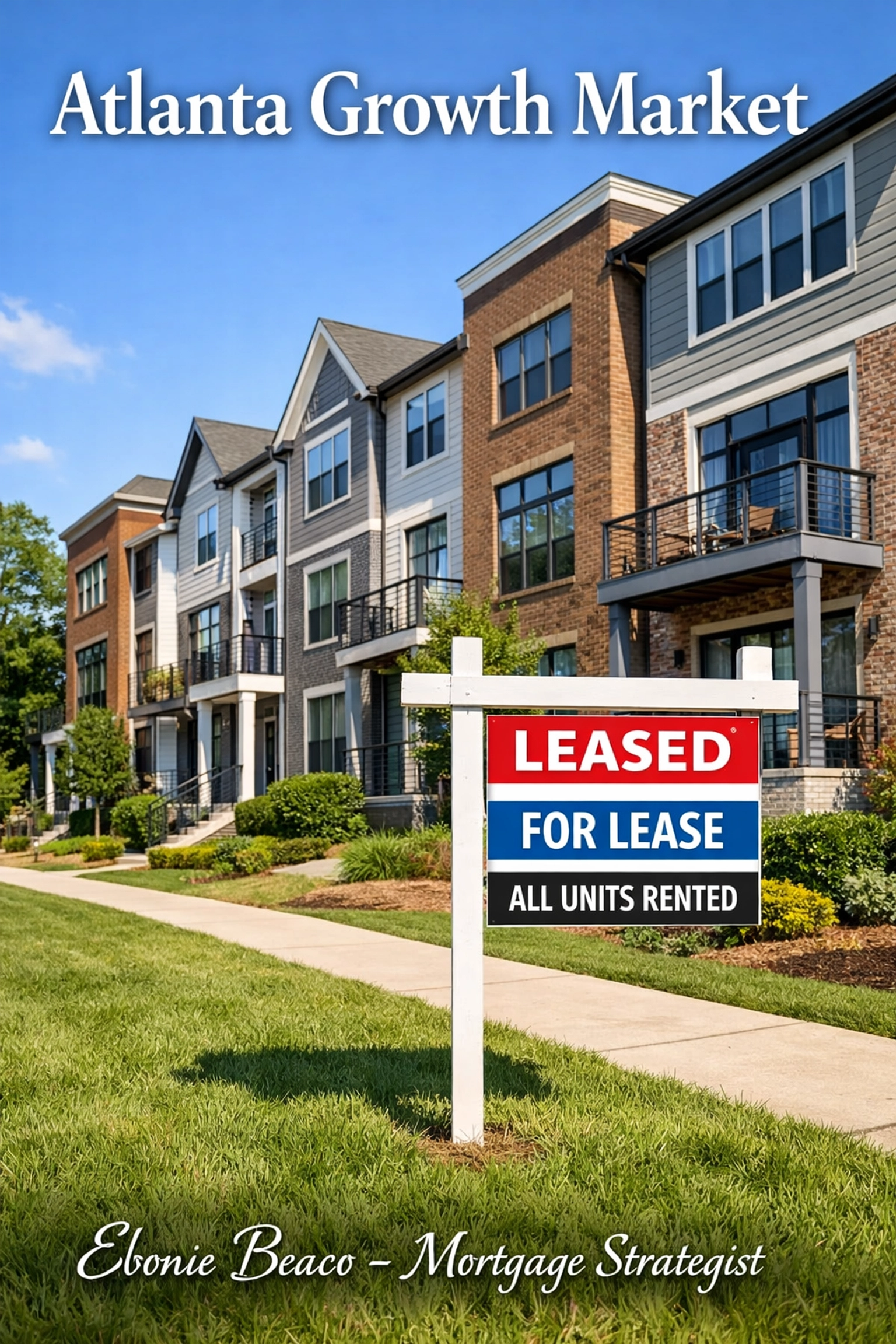 Visual: A graphic illustrating the relationship between low inventory and high rental demand. Title: Atlanta Growth Market. Ebonie Beaco - Mortgage Loan Officer.
Tips for Investing in Atlanta During 2026
- Prioritize Turnkey Properties: Today’s renters and buyers want move-in-ready homes. Properties with updated kitchens and modern flooring command premium rents.
- Look Near Transit: Proximity to MARTA or major highways like I-85 and I-75 is a huge draw for the local workforce.
- Explore Small Multifamily: Duplexes and four-unit buildings are excellent for "house hacking" or building a portfolio quickly.
- Stay Informed on Regulations: Atlanta has specific rules regarding short-term rentals (Airbnb). Always check local ordinances before buying an STR property. You can find more info in our FAQ section.
How We Help You Scale
Navigating the mortgage landscape requires a partner who understands the nuances of investment property financing. At Home Loans Network, we specialize in helping investors find the right structure for their deals, whether that involves Bridge Loans, ITIN Mortgage Loans, or Bank Statement Loans for the self-employed.
We work with clients across several states including Alabama, Arkansas, California, Florida, Illinois, Indiana, Kentucky, Michigan, Missouri, and Virginia. Each market has its own rhythm, but the fundamentals of smart financing remain the same.
If you are looking to purchase your first investment or need a strategy to pull equity from your current portfolio, let’s talk. We can walk through the loan process together and find a solution that fits your specific financial profile.
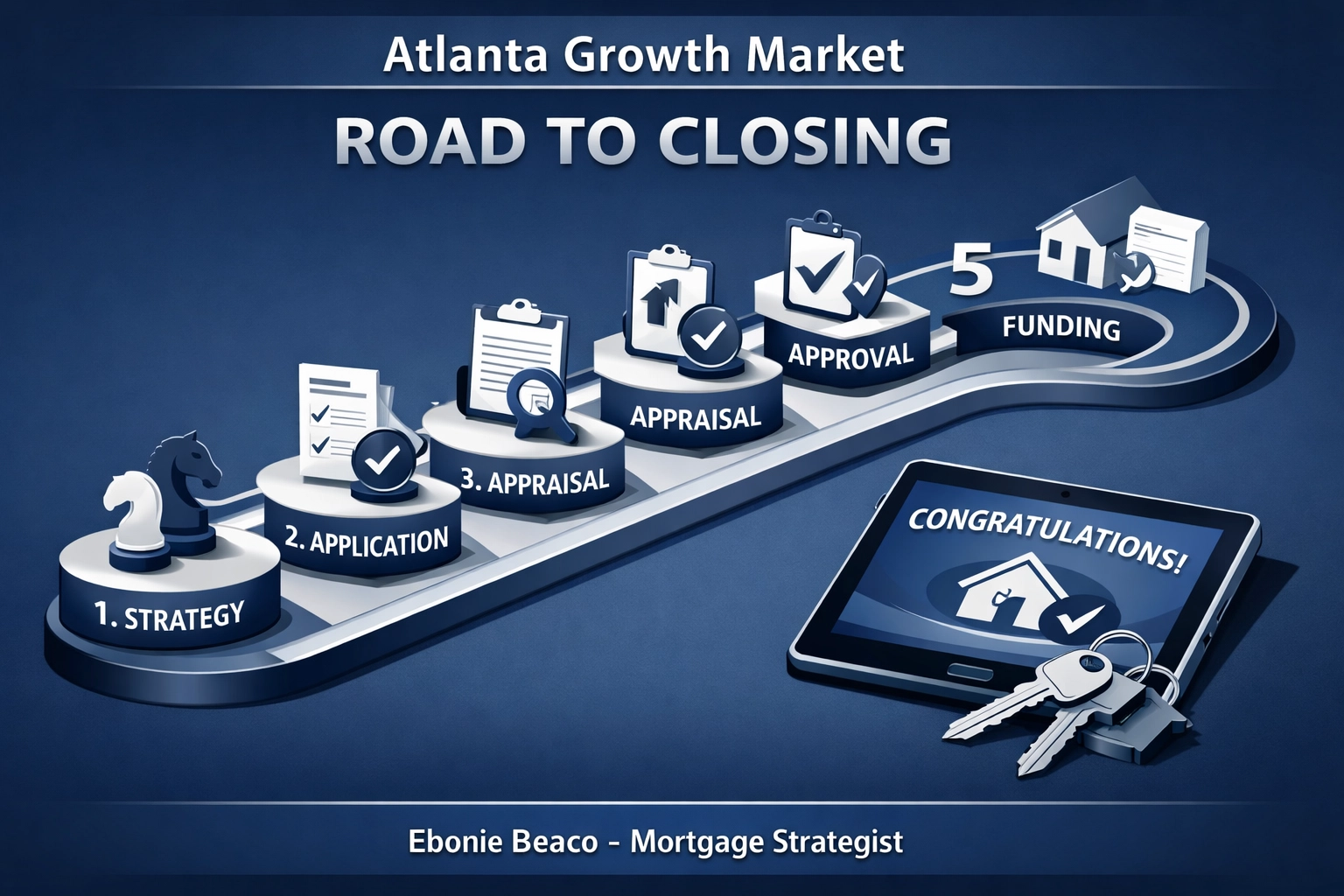 Visual: A step-by-step roadmap of an investment property loan approval. Title: Atlanta Growth Market. Ebonie Beaco - Mortgage Loan Officer.
Investing in Atlanta? Contact Ebonie Beaco at Home Loans Network for mortgage financing.
Scedule a 1 on 1 at https://calendly.com/homeloansnetwork
Ebonie Beaco Mortgage Strategist | Senior Loan Officer Home Loans Network powered by Loan Factory Inc. NMLS #2389954 HomeLoansNetwork.com 312-392-0664