Atlanta Industrial Is Heating Up Again: Bulk-Space Demand Rebounds (and How to Finance It)

If you have been watching the headlines lately, you know the narrative around commercial real estate has been a bit of a roller coaster. But as we move through March 2026, one sector is proving its resilience and heating up faster than the rest: Industrial.
Specifically, we are seeing a massive rebound in bulk-space demand. After a period of cooling while the market digested the post-pandemic surge, the "big box" warehouse is back in high demand. If you are an investor looking to scale or a business owner tired of leasing, now is the time to understand the financing mechanics behind these logistics powerhouses.
As a mortgage strategist, I am seeing a shift in how these deals are getting funded. The days of easy, cheap money are behind us, but the opportunity for those who know how to navigate commercial real estate loans has never been better.
The 2026 Supply Crunch: Why Rent Growth Is Back
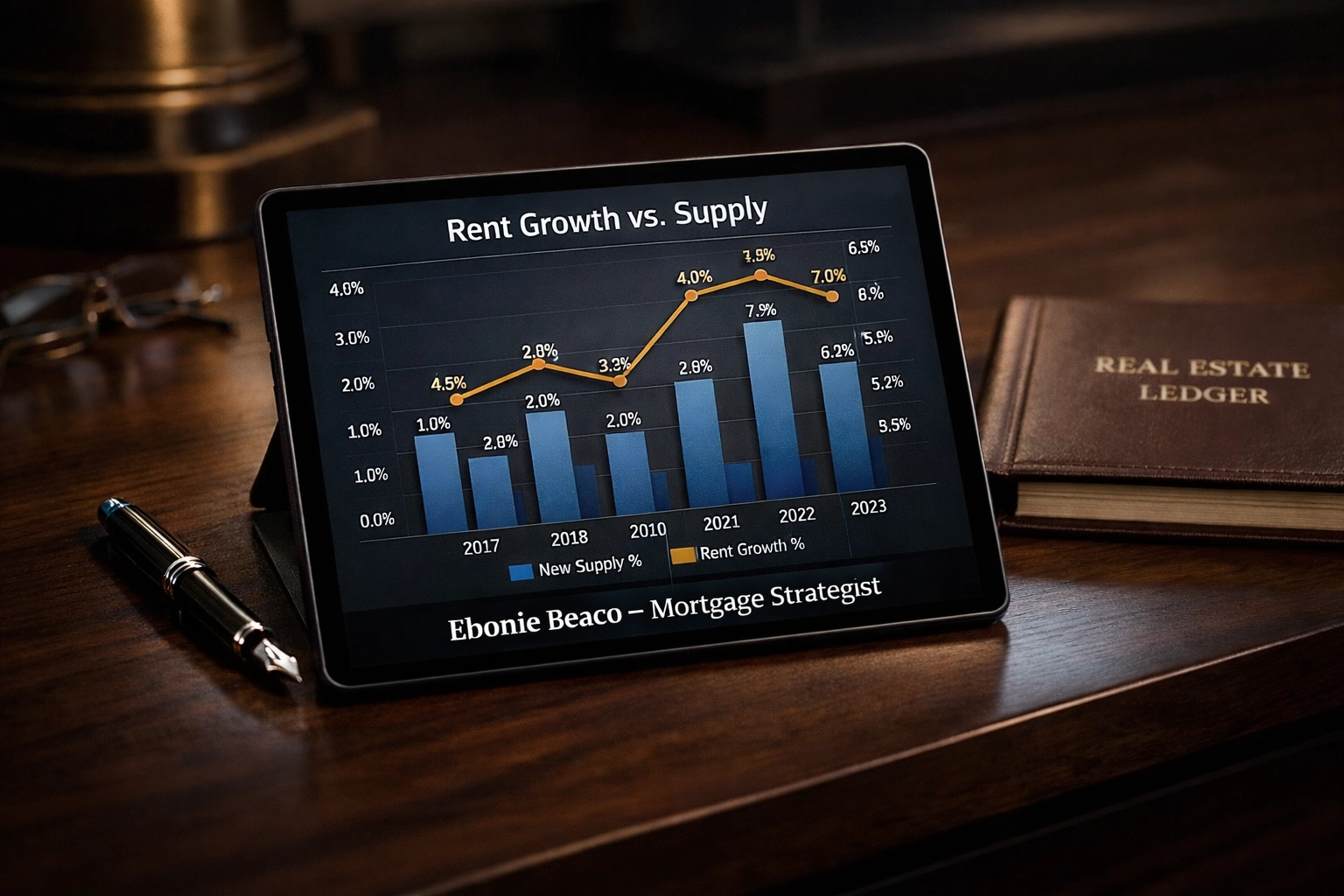
The most recent data from the last week shows a fascinating trend. Construction deliveries for industrial space have plummeted. In 2025, we saw about 281 million square feet delivered: a 35% drop from the previous year. This is the lowest total we have seen since 2017.
What does that mean for you as an investor? It means supply is finally catching up with demand.
When supply is low and demand stays steady, vacancy rates drop and rents go up. Moody’s is currently projecting a 3% annual rent growth for industrial properties in 2026. That is the highest projected growth among all commercial property types right now.
Whether you are looking at facilities around Atlanta and the I-75/I-85 corridors, or the growing industrial nodes across Georgia and Alabama, the fundamentals are screaming "opportunity."
Reshoring and Nearshoring: The Engines of Demand
Why is bulk-space demand rebounding so hard? Two words: Reshoring and Nearshoring.
Recent surveys show that 45% of manufacturers are prioritizing reshoring to keep their engineering teams close. Another 45% are doing it to slash the astronomical freight and duty costs we have seen in recent years.
Companies are no longer comfortable keeping their entire supply chain overseas. They want their "safety stock" on U.S. soil. This shift is driving a massive need for massive spaces. Build-to-suit projects now account for nearly 40% of all industrial space under construction.
If you are a developer or a long-term hold investor, targeting properties that cater to these manufacturing shifts is a winning strategy. These aren't just empty sheds; they are high-tech logistics hubs that require specific power, floor thickness, and loading dock configurations.
The Financing Reality: Cap Rates and Debt Yields
Let’s get into the numbers, because that is where the strategy happens.
In 2026, the financing environment is different. National industrial cap rates have climbed into the upper 6% range. For Class A distribution centers in primary markets like California or Florida, you might see 4.75% to 5.5%. If you are looking at secondary markets or older "Class B" assets, you are looking at 7% to 8.5%.
Cap Rate: A measure of the property's natural rate of return, calculated by dividing the Net Operating Income (NOI) by the purchase price.
Practical Application: In 2026, higher cap rates mean you are buying at a more realistic valuation than the "priced to perfection" market of 2021.
Lenders have tightened their belts. They are looking closely at DSCR (Debt Service Coverage Ratio). If the property’s income doesn't comfortably cover the mortgage payment plus a significant cushion, the deal won't fly.
Financing Strategies for Atlanta Industrial Properties (Georgia)
So, how do you actually get these deals across the finish line in a market like Atlanta, where speed and certainty matter? Here are the primary strategies I am seeing work right now for Atlanta investment property loans:
1. The Industrial DSCR Loan (Investor-Focused)
DSCR (Debt Service Coverage Ratio): A cash-flow metric that compares the property’s NOI to the proposed debt payment.
Practical Application: DSCR-focused programs can help you qualify for Atlanta investment property loans using property income and lease strength rather than only personal tax returns.
2. Atlanta Bridge Loans for Real Estate Investors (Value-Add + Lease-Up)
Bridge Loan: Short-term financing designed to “bridge” a property from acquisition or rehab to stabilized, long-term debt.
Practical Application: Atlanta bridge loans for real estate investors are commonly used to acquire older warehouses, fund upgrades (power, dock doors, lighting, HVAC), stabilize occupancy, then refinance once NOI supports a permanent loan.
3. SBA 504 Loans for Atlanta Owner-Occupants
SBA 504 Loan: A fixed-rate owner-occupied commercial program that combines a bank loan with a CDC portion to reduce down payment.
Practical Application: If your company will occupy the building, SBA 504 can preserve your working capital while you secure long-term financing in the Atlanta metro.
4. Blanket Loans for Georgia Industrial Portfolios
Blanket Loan: One loan secured by multiple properties.
Practical Application: If you are acquiring multiple smaller flex or light-industrial assets around the Atlanta region, a blanket structure can simplify management and improve scalability.

Crunching the Numbers: A 2026 Industrial Deal Example
Let's look at a real-world scenario. Imagine you are eyeing a 50,000-square-foot warehouse in an infill location near Atlanta.
- Purchase Price: $5,000,000
- Annual Net Operating Income (NOI): $375,000
- Cap Rate: 7.5%
- Loan Amount (65% LTV): $3,250,000
- Interest Rate: 6.75%
- Annual Debt Service: $253,000
- DSCR: 1.48x
In this scenario, a DSCR of 1.48x is considered very strong by most lenders in today’s market (most look for 1.25x or higher). This property provides a healthy "safety margin" for the investor while allowing for potential rent growth as leases renew in a supply-constrained environment.
| Industrial Investment Metric | Value |
|---|---|
| Purchase Price | $5,000,000 |
| Down Payment (35%) | $1,750,000 |
| Monthly Rental Income | $31,250 |
| Monthly Mortgage Payment | $21,083 |
| Monthly Net Cash Flow | $10,167 |
The "Last Mile" Advantage
One of the biggest trends this week is the premium being paid for "last-mile" logistics. These are smaller facilities located near major urban centers like Atlanta (especially close-in infill submarkets tied to I-75, I-85, and I-285).
Consumers expect same-day delivery. That means companies need to be within minutes, not hours, of their customers. These infill properties are commanding 15% to 25% rent premiums over the massive "big box" facilities located out in the sticks.
If you can find an older asset in a prime location, the "retrofit" play is incredibly lucrative. Upgrading an older building with energy-efficient lighting, improved HVAC, and modern loading docks can significantly increase the property value and attract top-tier tenants.
Navigating the 2026 Atlanta Industrial Market with Home Loans Network
Atlanta is not just “another” industrial market. It is a national logistics hub with persistent demand drivers: interstate access, airport cargo capacity, and a deep base of 3PL, distribution, and light manufacturing users.
That demand backdrop is exactly why you want your financing to match your business plan and timeline, especially when you are comparing Atlanta investment property loans versus Atlanta bridge loans for real estate investors.
At Home Loans Network, the goal is to help you compare options clearly and confidently, based on lease structure, tenant credit, exit strategy, and your portfolio plan.
Industrial real estate is heating up, and the windows of opportunity in supply-constrained markets are narrowing. Don’t let uncertainty around capital stack and timing slow down a strong acquisition.
Explore financing options for Atlanta industrial deals and get a clear scenario review.
Scedule a 1 on 1 at https://calendly.com/homeloansnetwork Ebonie Beaco
Mortgage Strategist | Senior Loan Officer
Home Loans Network powered by Loan Factory Inc.
NMLS #2389954
HomeLoansNetwork.com
312-392-0664