Are Reverse Mortgages Safe? The Truth About Mortgage Insurance and Non-Recourse Protections

For years, the phrase "reverse mortgage" carries a heavy reputation.
You might have heard horror stories from decades ago about banks seizing homes or heirs being left with nothing but a massive bill.
It is important to understand that the landscape of the reverse mortgage industry has changed significantly over the last 15 years.
Today, these financial tools are governed by strict federal regulations and built-in consumer protections designed to keep you in your home while providing much-needed liquidity.
If you are a homeowner in Chicago, Los Angeles, or Miami looking to tap into your equity, understanding the safety nets is the first step toward a smart retirement strategy.
Let’s peel back the layers on how mortgage insurance, non-recourse clauses, and mandatory counseling work together to protect your wealth.
What is a Reverse Mortgage, Really?
HECM: Home Equity Conversion Mortgage. This is the most common type of reverse mortgage, insured by the Federal Housing Administration (FHA).
This loan allows homeowners aged 62 or older to convert a portion of their home equity into cash without having to sell the home or take on monthly mortgage payments.
Instead of you paying the lender every month, the lender pays you.
The loan balance only becomes due when the last surviving borrower passes away, sells the home, or moves out for more than 12 consecutive months.
Explore the mortgage basics to get a firm grip on these terms before you dive deeper.
The First Line of Defense: Mandatory HECM Counseling
One of the most robust safety features of the HECM program is the mandatory counseling session.
Before you can even apply for a reverse mortgage, you must meet with an independent, HUD-approved counselor.
This session is designed to ensure you fully understand the loan's implications, costs, and alternatives.
The counselor does not work for the bank. Their job is to be an objective educator.
They will review your financial situation, explain how the loan balance grows over time, and discuss how it might impact your eligibility for programs like Medicaid.
Accessing this information early prevents homeowners from entering into a contract they don't fully understand.

(Suggested: https://cdn.marblism.com/y0HhHbleYh_.webp - A professional setting representing a consultation or counseling session.)

The Non-Recourse Protection: Your Ultimate Safety Net
The biggest fear most people have is that they will eventually owe more than the home is worth.
In a traditional "recourse" loan, if the house sells for less than the debt, the lender can come after your other assets or your heirs for the difference.
Non-Recourse Clause: A legal provision that prevents a lender from pursuing any assets other than the collateral (the home) for repayment of the loan.
With a HECM, you have non-recourse protection.
This means that if the loan balance grows to $500,000 but the home only sells for $450,000, the FHA steps in to cover the $50,000 gap.
Neither you nor your heirs will ever be personally liable for a deficit.
Your other investments, your car, and your children's inheritance remain safe.
Understanding Mortgage Insurance Premiums (MIP)
Safety has a cost, and in the world of reverse mortgages, that cost is known as Mortgage Insurance Premium (MIP).
MIP: An insurance policy required for FHA loans that protects the lender against loss while providing the borrower with the non-recourse guarantee.
You will typically pay two types of MIP:
- Upfront MIP: This is usually 2% of the home's appraised value, paid at closing (often rolled into the loan).
- Annual MIP: An ongoing fee (currently 0.5% of the outstanding loan balance) that is added to your loan balance every month.
It is a common misconception that this insurance protects your house from fire or theft.
Instead, it protects the entire HECM program.
It ensures that the lender will always be made whole, which is why lenders are willing to let you live in the home without making payments for 20 or 30 years.
HECM vs. Proprietary Reverse Mortgages
While the HECM is the gold standard for most, it isn't the only option.
In high-value markets like Orange County, California, or the luxury corridors of Florida, homeowners often have equity that exceeds the FHA lending limits.
Proprietary Reverse Mortgage: A private "jumbo" reverse mortgage not insured by the FHA, designed for high-value homes.
These loans often do not require the upfront or annual MIP, which can save you a significant amount of money over time.
However, because they aren't government-backed, they may have different interest rates and slightly different non-recourse rules.
Most reputable proprietary lenders have adopted the same non-recourse protections as the HECM to stay competitive and safe for consumers.

(Suggested: https://cdn.marblism.com/5dQDWOfXvL4.webp - A graphic showing various loan types and financial analysis tools.)

Case Study: Maria’s Chicago Renovation Strategy
Let's look at how this works in a real-world scenario.
The Subject: Maria is a 72-year-old retired schoolteacher living in a historic bungalow in Chicago, Illinois.
The Property: Her home is worth $600,000. She still owes $100,000 on her original mortgage, and the monthly payment is eating into her fixed income.
The Goal: Eliminate her monthly mortgage payment and unlock cash to repair her roof and update her kitchen.
The Calculation Breakdown:
- Home Value: $600,000
- Principal Limit (The amount she can borrow): Based on her age and current rates, her factor is roughly 42%.
- Gross Principal Limit: $252,000
- Mandatory Payoffs: $100,000 (to clear the old mortgage)
- Estimated Closing Costs & Upfront MIP: $18,000
- Net Cash Available: $134,000
Maria chooses to take $40,000 upfront for her renovations and leaves the remaining $94,000 in a Line of Credit.
The Safety Factor: Maria no longer has a monthly mortgage payment. She is still responsible for her property taxes and homeowners insurance, but her cash flow has increased by $1,200 a month.
Even if the Chicago housing market dips and her home value drops, her Line of Credit is guaranteed and cannot be frozen or reduced by the bank.
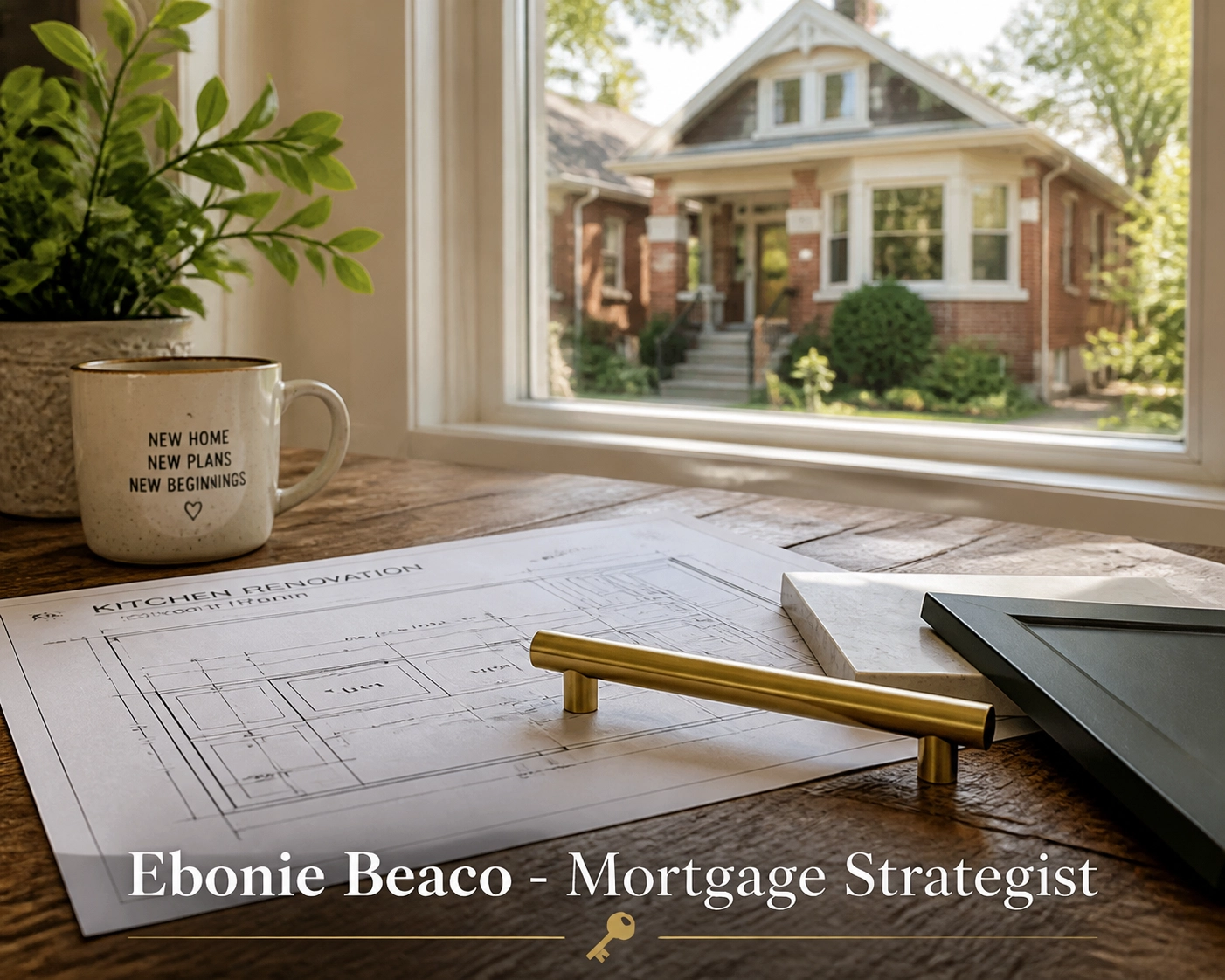
(Suggested: https://cdn.marblism.com/KJbAP2Fa3u-.webp - A financial calculation graphic illustrating loan breakdowns.)

Maintaining Your Safety: The Borrower's Responsibilities
A reverse mortgage is a "safe" product, but it isn't a "set it and forget it" product.
To keep the loan in good standing and avoid the risk of foreclosure, you must follow three simple rules:
- Pay your property taxes: The lender won't do this for you unless a set-aside account is established.
- Maintain homeowners insurance: You must protect the asset.
- Live in the home: It must remain your primary residence.
If you fail to meet these obligations, the loan can become due and payable.
This is why the financial assessment phase of the application is so vital: it ensures you have the financial "legs" to cover these costs long-term.
How Reverse Mortgages Benefit Real Estate Investors
If you are an investor with a portfolio of rental properties in Indiana or Michigan, you might wonder how this applies to you.
While HECMs are for primary residences, many savvy investors use a reverse mortgage on their own home to fund their next investment.
By eliminating their primary mortgage payment, they free up significant monthly cash flow that can be diverted into DSCR rental property loans or fix-and-flip projects.
Think of your home equity as a stagnant pool of capital.
A reverse mortgage turns that pool into a flowing river of opportunity, all while keeping the safety nets of non-recourse protection in place.

(Suggested: https://cdn.marblism.com/JYQPPvYeQ-M.webp - A professional banner focusing on strategy and wealth.)

Common Myths Debunked
Myth: The bank owns my house.
Reality: You stay on the title. The bank simply has a lien on the property, just like a traditional mortgage. You can sell the home at any time.
Myth: My children will be stuck with the debt.
Reality: The non-recourse clause prevents this. Heirs can choose to pay off the loan and keep the house, or sell the house and keep any remaining equity. If the debt is higher than the value, they can simply walk away.
Myth: I can be kicked out if I outlive the loan.
Reality: As long as you maintain the home and pay your taxes/insurance, you can stay in the house until you are 150 years old if you like.
Is a Reverse Mortgage Right for You?
The significance of these protections cannot be overstated.
By combining mandatory education with federal insurance and legal shields against personal liability, the HECM has become one of the most regulated and secure ways to access home equity.
Whether you are looking to age in place in a quiet suburb of Virginia or you want to use your equity to travel while living in your Florida condo, the reverse mortgage offers a level of flexibility that traditional loans simply cannot match.
If you have questions about how the math works for your specific home value or want to compare a cash-out refinance vs. a reverse mortgage, let’s talk.

(Suggested: https://cdn.marblism.com/PI0tahYX5dD.webp - A person looking at a laptop, suggesting research and planning.)

Jump in and explore your options today.
Every financial journey is unique, and having a strategist in your corner makes all the difference.
We serve homeowners and investors across the country, from the Great Lakes to the Gulf Coast, providing the clarity you need to move forward with confidence.
Schedule a 1 on 1 at https://calendly.com/homeloansnetwork
Ebonie Beaco
Mortgage Strategist | Senior Loan Officer
Home Loans Network powered by Loan Factory Inc.
NMLS #2389954
HomeLoansNetwork.com
312-392-0664