Are HELOCs a Bad Idea in 2026? The Surprising Truth for Homeowners from Florida to California

The Hidden Trap Lurking in Your 2026 Equity Access
You have worked hard to build equity in your home, whether you are sitting on a beach bungalow in Florida or a ranch in Michigan.
By April 2026, the equity landscape has shifted under your feet, and the old rules for using a Home Equity Line of Credit (HELOC) no longer apply.
Many homeowners assume a HELOC is a safety net they can tap into whenever they feel like it.
Recent market data suggests that thinking this way could lead to a financial headache you did not sign up for.
Before you sign on the dotted line with a Michigan HELOC lender or a bank in Virginia, you need to see what has changed.
The Mandatory Draw Clause That Could Drain Your Savings
In the past, you could open a HELOC and leave it sit at a zero balance until you actually needed the cash.
Today, many lenders have introduced Mandatory Initial Draws, often requiring you to take out 50% or more of your credit line the moment you close.
If you open a $100,000 line but only need $10,000 for a quick kitchen refresh, you might be forced to borrow $50,000 immediately.
This means you are paying interest on $40,000 that you did not even want to touch yet.
Lenders are also adding Inactivity Fees to punish homeowners who treat their HELOC as an "in case of emergency" fund.
Access the Mortgage Basics Glossary to understand how these fees are structured before you apply.
Defining the 2026 HELOC Landscape
HELOC (Home Equity Line of Credit): A revolving line of credit secured by the equity in your primary residence or investment property. Practical Application: Use it like a credit card for phased home renovations or as a bridge to fund a down payment on a new investment property.
Draw Period: The timeframe, usually 5 to 10 years, during which you can borrow money and typically make interest-only payments. Practical Application: This period allows for lower initial payments while you focus on property improvements or business growth.
Repayment Period: The phase following the draw period where you must pay back both principal and interest. Practical Application: Prepare for a significant jump in monthly payments once this phase begins.

Why Florida and California Homeowners Are Hedging Their Bets
In high-value markets like California and Florida, equity levels remain high, but the volatility of variable interest rates is causing concern.
Current HELOC rates in April 2026 are averaging around 7.18% to 8.5%, which is significantly higher than the rates available for a traditional Home Refinance.
If you are a Virginia HELOC lender client, you might notice that while rates are dipping slightly from their 2025 peaks, they remain unpredictable.
Variable rates mean your monthly payment could climb without warning if the Federal Reserve shifts its stance.
For investors using the BRRRR strategy (Buy, Rehab, Rent, Refinance, Repeat) in markets like Gary, Indiana or Little Rock, Arkansas, this unpredictability can eat into your cash flow margins.
The Math Behind the Money: A Real-World Equity Example
Let’s look at how a typical homeowner in a city like Richmond, Virginia or Grand Rapids, Michigan might calculate their available equity.
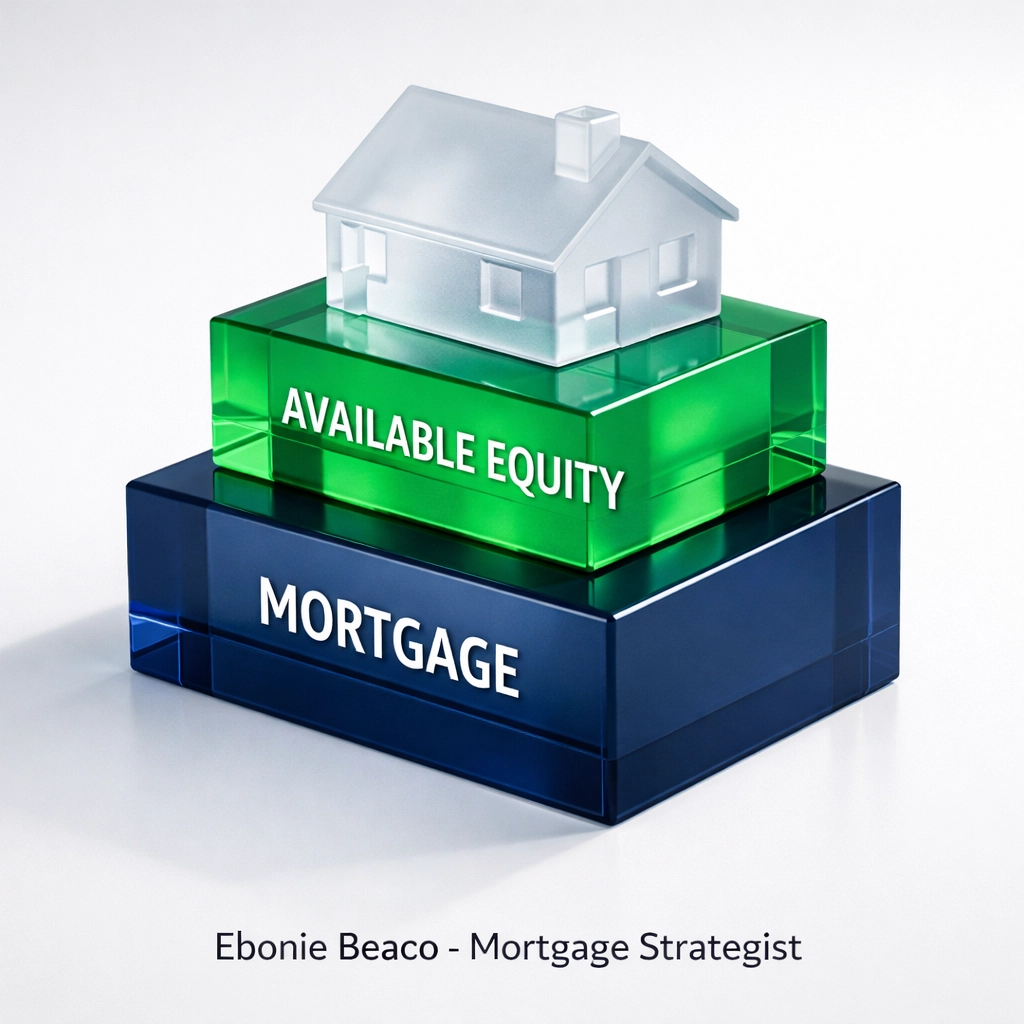
Imagine you own a home valued at $500,000. Your current mortgage balance is $280,000. Most lenders allow you to access up to 85% of your home’s value (Combined Loan-to-Value or CLTV).
Total Allowable Debt (85% of $500,000): $425,000 Minus Your Current Mortgage: $280,000 Available HELOC Limit: $145,000
If your lender requires a 50% mandatory draw, you would be required to take $72,500 at closing.
At an 8% interest rate, your interest-only payment on that $72,500 would be approximately $483 per month.
If you didn't actually need that $72,500 yet, you are effectively paying nearly $500 a month for the privilege of having the money sit in your bank account.
Are You a Prime Candidate for a HELOC in 2026?
Explore these criteria to see if a HELOC aligns with your current financial profile:
- Phased Renovations: You are doing a long-term remodel and need to pay contractors in installments.
- High Credit Scores: You can secure the lowest possible margins over the prime rate.
- Short-Term Needs: You plan to pay the balance back within 12 to 24 months.
- Investment Capital: You are an experienced investor using the funds for a Fix and Flip project in Alabama or Georgia.
If you do not fit these categories, you might be better off exploring a Cash-Out Refinance.
A cash-out refinance provides a fixed interest rate, which offers more stability for long-term budgeting than a variable HELOC.
The Danger of the "Underwater" Effect in Shifting Markets
Real estate markets in Missouri and Kentucky can experience localized cooling.
If you tap into 85% of your equity and home values drop by 10%, you could find yourself "underwater."
Being underwater means you owe more on your home than it is currently worth on the open market.
This makes it nearly impossible to sell the property or refinance without bringing cash to the closing table.
Always check your local market trends and consult an Appraisal Guide to ensure your valuation is realistic.
Comparing HELOCs to DSCR Rental Property Loans
For real estate investors in Chicago or Atlanta, a HELOC on a primary residence is often used to fund the down payment on a rental property.
Once that property is acquired, savvy investors often use DSCR (Debt Service Coverage Ratio) Loans to finance the new asset.
DSCR Loan: A mortgage program for investors that qualifies the loan based on the property’s rental income rather than the borrower’s personal income. Practical Application: This allows you to scale your portfolio without your personal debt-to-income ratio stopping your growth.
Jump in and learn more about DSCR Investor Loans if you are looking to grow your rental portfolio in 2026.
Why a Michigan HELOC Lender Might Be More Selective Right Now
Lenders in the Midwest, specifically Michigan and Illinois, have tightened their Credit Score requirements.
Borrowers with scores below 720 may find higher interest rates or lower maximum loan-to-value limits.
Access our Credit Guide to see how your score impacts your ability to pull equity from your home.
Transparent lending means telling you the truth: if your credit is not in the top tier, a HELOC might be a very expensive way to borrow money right now.
The Verdict: Is It a Bad Idea?
A HELOC is not a bad idea, but it is a dangerous tool if used without a specific plan.
In 2026, the lack of flexibility due to mandatory draws and variable rates makes it a "pro-level" financial move.
If you need a safety net, a HELOC with an inactivity fee is a poor choice.
If you need a specific amount of cash for a specific project with a clear exit strategy, it remains a powerful option.
Compare your options carefully by using our Mortgage Calculators to see the difference between a line of credit and a fixed-rate loan.
Final Steps Before You Tap Your Equity
- Check Your Appraisal: Ensure your home value hasn't plateaued in your specific neighborhood.
- Review the Draw Terms: Ask specifically about mandatory initial draws and inactivity fees.
- Calculate the "Worst Case": What happens to your payment if the rate jumps by 2%?
- Prepare Your Paperwork: Gather your tax returns and pay stubs using our Application Checklist.
The goal of Home Loans Network is to guide you clearly and confidently through these complex decisions.
Whether you are looking for a Virginia HELOC lender or exploring investment options in Arkansas, we are here to help you compare options.
Schedule a 1 on 1 at https://calendly.com/homeloansnetwork
Ebonie Beaco Mortgage Strategist | Senior Loan Officer Home Loans Network powered by Loan Factory Inc. NMLS #2389954 HomeLoansNetwork.com 312-392-0664