7 Scaling Mistakes You're Making with Your Portfolio (and How REI Vault Pro Fixes Them)
SEO Title: 7 Real Estate Portfolio Scaling Mistakes and How to Fix Them
Meta Description: Learn how to avoid common real estate scaling errors. Use REI Vault Pro tools like AI Deal Analyzer and Rent Analyzer to grow your portfolio safely.
URL Slug: scaling-mistakes-rei-vault-pro-solutions
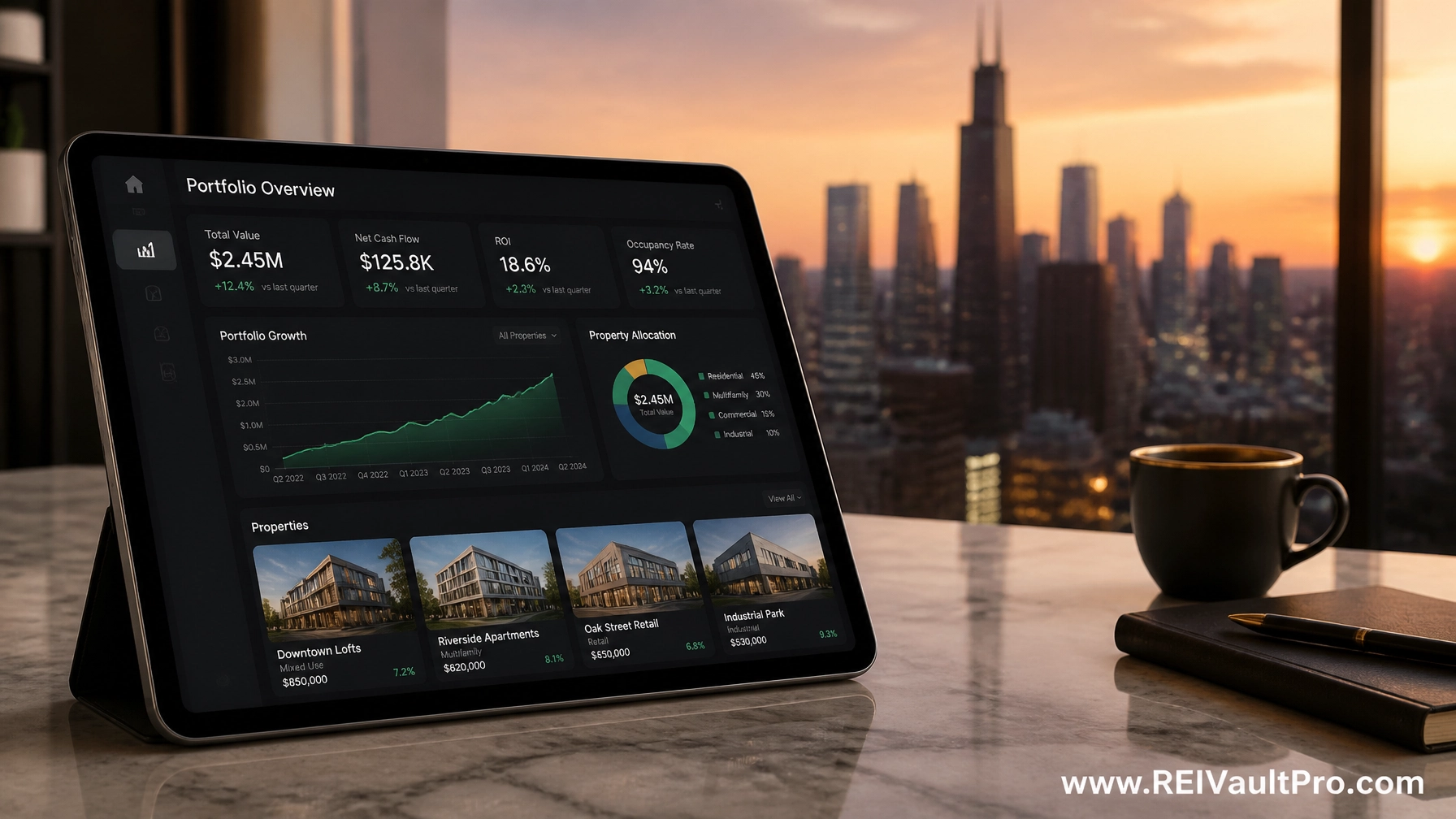
Featured Image Recommendation: A professional landscape photo showing a digital dashboard of real estate assets with "www.REIVaultPro.com" clearly visible.
SEO Alt Text: Real estate investment portfolio scaling dashboard showing growth metrics and property data for investors.
Social Media Excerpt: Are you hitting a wall with your property portfolio? Many investors struggle to scale because of manual processes and poor data. Discover the 7 most common scaling mistakes and how REI Vault Pro tools can help you reach the next level.
SEO Tags: Real Estate Investing, Portfolio Scaling, REI Vault Pro, DSCR Loans, Cash-Out Refinance, Property Management, Real Estate AI, Investment Strategies
Scaling a real estate portfolio requires a shift from individual deal-making to systemic asset management. Many investors find that the strategies used to acquire their first three properties do not translate successfully when moving toward ten, fifty, or one hundred units. Without the right framework, growth often leads to increased risk and operational fatigue.
In markets across Florida, Georgia, and Illinois, competition is high and margins are tight. Professional investors rely on precision rather than intuition to ensure their portfolios remain healthy during expansion. By identifying and correcting common scaling errors, you can build a sustainable real estate business that generates long-term wealth.
1. Underwriting Deals Based on Intuition
Underwriting: The process of evaluating the financial viability and risk of a real estate investment through data analysis.
Application: You use standardized data to ensure every acquisition meets your specific profit hurdles before committing capital.
The most frequent mistake made by growing investors is "gut-feel" underwriting. When you own one or two properties, you might feel you have a handle on the local market in cities like Chicago or Atlanta. However, as you scale, inconsistency in your calculations leads to overpaying for assets.
Manual spreadsheets are prone to formula errors and often overlook hidden costs like vacancy allowances or property management fees. REI Vault Pro’s AI Deal Analyzer removes this human error by providing a standardized, rigorous evaluation for every lead.
2. Miscalculating Available Equity for Reinvestment
Equity Extraction: The method of accessing the value built up in a property to fund the down payment or renovation of a new acquisition.
Application: You calculate your usable equity to determine exactly how much liquidity you can deploy into your next deal.
Many homeowners and investors sit on massive amounts of "dead equity" because they do not understand how to calculate their borrowing power. Scaling requires velocity of capital: the ability to move money from one completed project into the next.
Consider a scenario where you own a rental property in Virginia valued at $450,000. If your current mortgage balance is $250,000, you might assume you have $200,000 to spend. In reality, lenders typically cap the Loan-to-Value (LTV) ratio at 80%.

As shown in the calculation above:
- Property Value: $450,000
- Current Mortgage: $250,000
- 80% LTV Limit: $360,000
- Available Equity: $110,000
By using a Cash-Out Refinance or a HELOC, you can unlock that $110,000 to purchase your next multi-unit building in Alabama or Missouri. Failing to run these numbers accurately means missing out on expansion opportunities.
3. Ignoring Localized Market Shifts
Market Analysis: The systematic study of supply, demand, and economic drivers within a specific geographic area.
Application: You monitor neighborhood-level data to avoid buying in areas where rental demand is cooling or inventory is oversupplied.
Investors often make the mistake of assuming a "good market" remains good forever. A strategy that worked in the suburbs of Indianapolis two years ago might not perform the same way today. Scaling across different states like Arkansas and Kentucky requires deep, localized data that goes beyond national headlines.
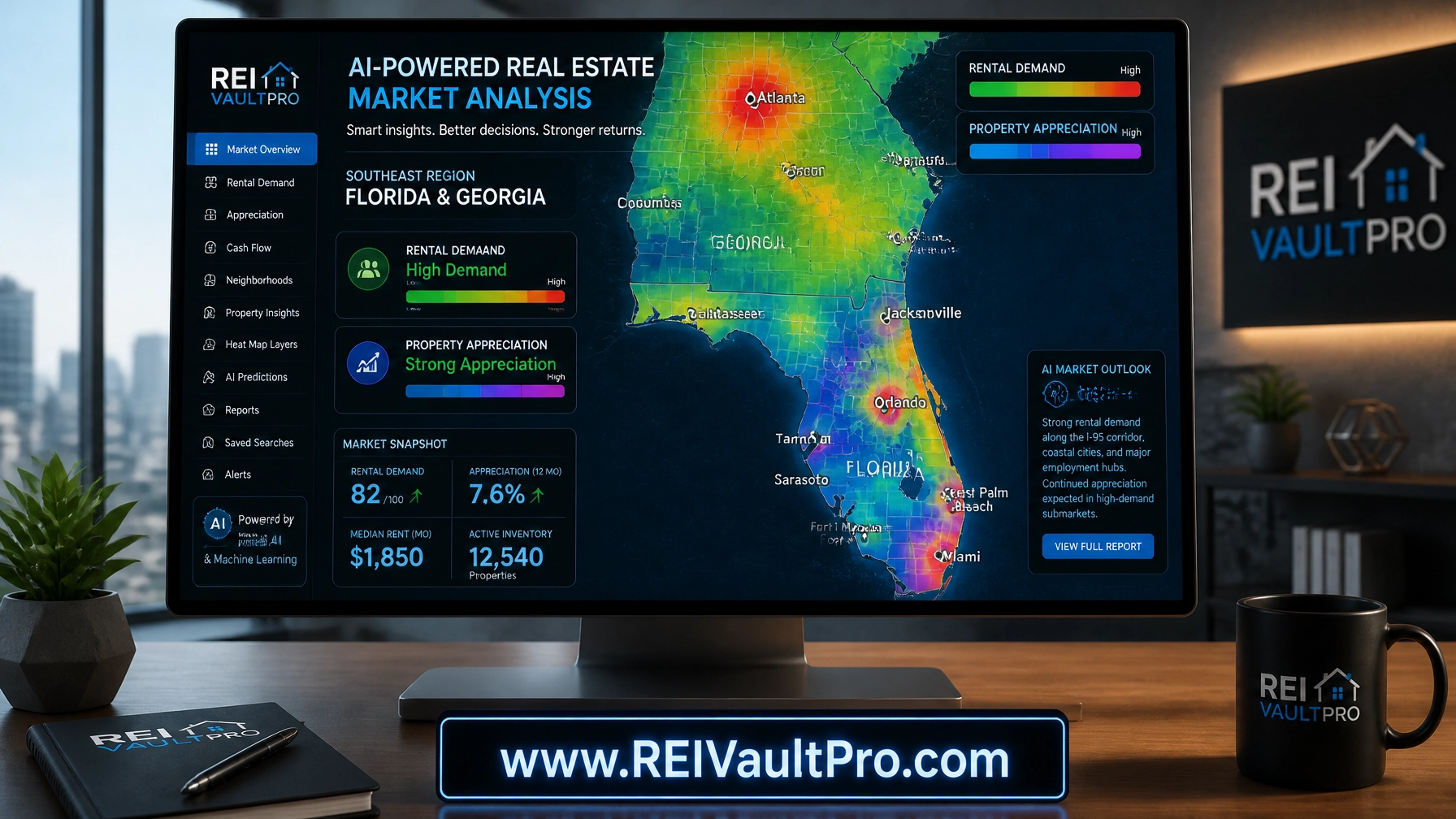
The REI Vault Pro AI Market Analysis tool allows you to visualize demand heatmaps. If you are looking at Short-Term Rental (STR) opportunities in Florida, you need to know which blocks are over-saturated and where the highest occupancy rates are located. Scaling without this data is essentially gambling with your portfolio's performance.
4. Underestimating Rehab and Maintenance Costs
Rehab Estimation: The projected cost of labor and materials required to bring a distressed property to its After Repair Value (ARV).
Application: You generate detailed line-item budgets to ensure your renovation does not consume your entire profit margin.
Fix-and-flip investors and BRRRR (Buy, Rehab, Rent, Refinance, Repeat) practitioners often struggle with "budget creep." As your portfolio grows, managing multiple renovations simultaneously becomes a logistical challenge. If one project goes $20,000 over budget, it can stall your ability to fund the next deal.
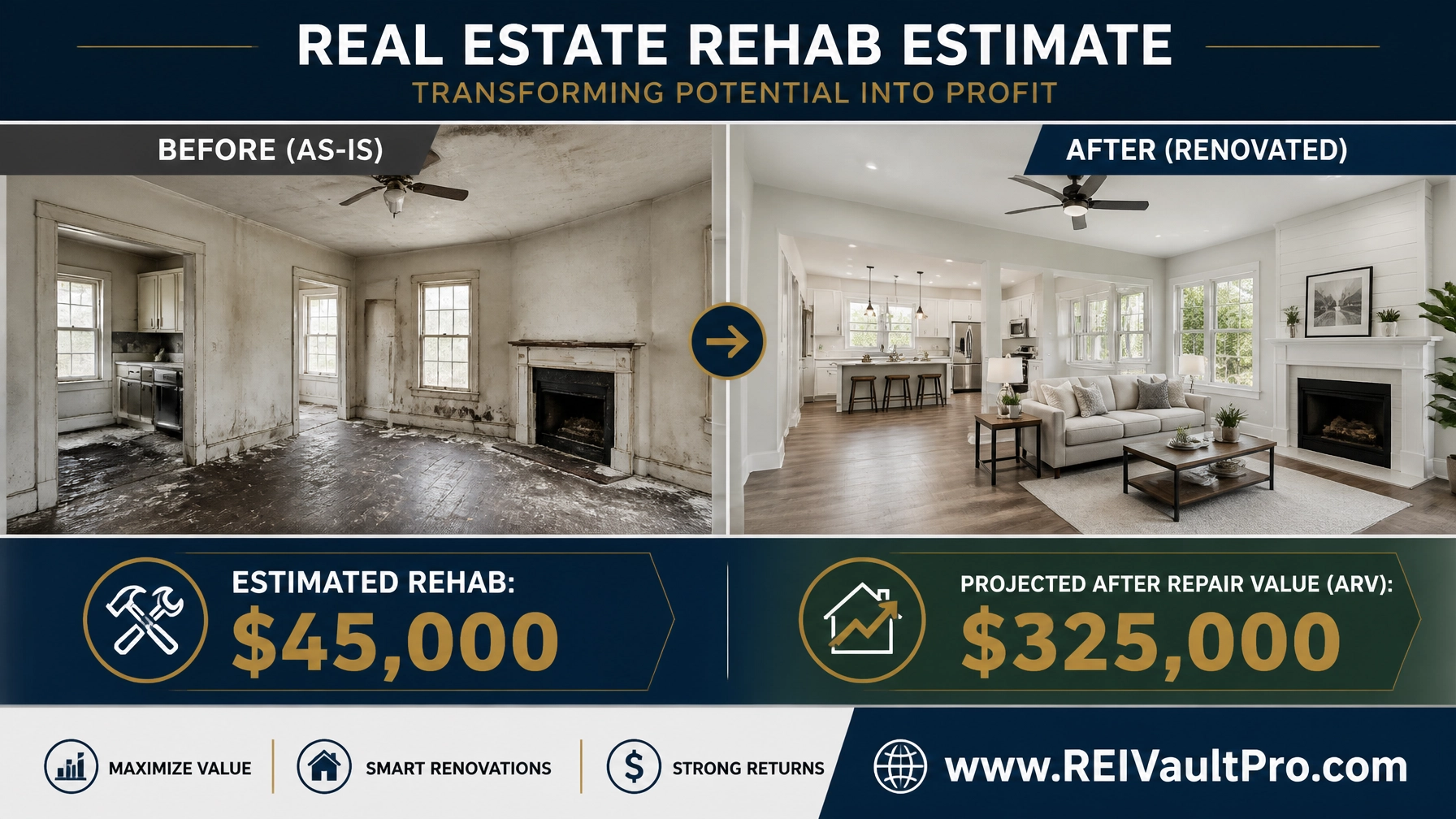
Using the AI Rehab Estimator helps you set realistic expectations before you ever pick up a hammer. It provides localized cost data so that a renovation in California isn't priced using Missouri labor rates. Accurate estimates ensure your exit strategy remains intact.
5. Overlooking the Power of DSCR Financing
DSCR (Debt Service Coverage Ratio): A mortgage loan where qualification is based on the property's rental income rather than the borrower's personal income.
Application: You use DSCR loans to scale your portfolio without hitting the personal debt-to-income limits of conventional financing.
A common roadblock for W-2 earners and self-employed borrowers is the "mortgage ceiling." After four or five conventional loans, banks often stop lending based on your personal income. This is where many investors stop growing.
Strategic investors utilize DSCR Investor Loans to bypass these limits. Because the loan focuses on the cash flow of the property itself, you can continue to acquire assets as long as they are profitable. Understanding this financing bridge is essential for anyone looking to move from a handful of units to a commercial-scale portfolio.
6. Failing to Optimize Rent Comps
Rent Analysis: Comparing a subject property’s potential income against similar nearby properties that have recently leased.
Application: You set your rental rates at the optimal level to maximize cash flow while minimizing vacancy time.
Leaving $100 per month on the table might not seem significant for one house. However, across a 20-unit portfolio, that is $24,000 in lost annual income. Many investors rely on outdated Zestimates or anecdotal evidence from neighbors, which leads to inaccurate pro formas.
The AI Rent Analyzer provides real-time data on what tenants are actually paying in your specific neighborhood. Whether you are operating in Michigan or Georgia, knowing the exact market rent allows you to underwrite with confidence and secure better financing terms, as higher income improves your DSCR ratio.
7. Staying Stuck in Manual Operations
Operational Scalability: The ability of a business to handle an increased workload without a proportional increase in costs or stress.
Application: You implement automated systems and AI tools to manage deal flow and property performance so you can focus on strategy.
If you are still manually entering data into spreadsheets or chasing down property details through dozens of browser tabs, you are working in your business rather than on it. Scaling is a transition from being a "landlord" to being an "investor."
The REI Vault Pro platform acts as your digital back office. It centralizes your deal scoring, market research, and financial analysis into one ecosystem. This allows you to evaluate ten times as many deals in half the time, giving you a competitive edge in fast-moving markets like Northern Virginia or Central Florida.

Related REI Vault Pro Resources
- AI Deal Analyzer: This tool provides instant, deep-dive financial analysis on any property. Use it to verify that your scaling efforts are backed by profitable numbers. Access it here.
- AI Rent Analyzer: Essential for landlords and STR operators. It helps you find the "sweet spot" for rental pricing to ensure your portfolio’s cash flow remains robust. Check it out here.
- AI Rehab Estimator: Before you buy a distressed asset in Indiana or Illinois, run it through this tool to get an accurate picture of the renovation costs and projected ARV. Explore the estimator.
- AI Market Analysis: Use this to find the next hot market. It helps you compare demand trends across different states like Alabama and Kentucky. View market data.
Scaling your real estate portfolio does not have to be a chaotic process. By replacing manual errors with AI-driven precision and choosing the right financing strategies like DSCR or equity extraction, you can grow your wealth with clarity and confidence. The difference between a hobbyist and a professional investor is the quality of the systems they use.
Explore our platform and see how we help investors like you automate their growth. Watch a Demo today.
FAQ Section
What is the most common mistake when scaling to ten properties?
The most common mistake is failing to transition from personal income-based loans to asset-based financing like DSCR. Many investors hit a "debt-to-income" wall because they try to use conventional mortgage products for a commercial-scale portfolio.
How does REI Vault Pro help with out-of-state investing?
REI Vault Pro provides localized AI Market Analysis and Rent Comps for states including AL, AR, CA, FL, GA, IL, IN, KY, MI, MO, and VA. This allows you to research neighborhoods, demand, and pricing from anywhere in the world without needing to be physically present.
Can I use my home equity to start scaling my portfolio?
Yes. Many investors use a Cash-Out Refinance or a HELOC on their primary residence to fund the down payment for their first few rental properties. This is a common strategy for homeowners looking to transition into real estate investing.
Why is the DSCR ratio important for scaling?
The DSCR ratio tells a lender if the property’s income can cover its debt obligations. Because these loans do not look at your personal tax returns or W-2 income, they allow you to continue scaling your portfolio as long as the properties you buy are cash-flow positive.
What is the difference between a deal analyzer and a simple calculator?
A simple calculator just adds up the numbers you give it. An AI Deal Analyzer, like the one offered by REI Vault Pro, integrates market data, historical trends, and risk assessment to tell you if the deal actually makes sense in the current economic climate.