7 Mistakes You’re Making with Florida DSCR Loan Applications (And How REI Vault Pro Fixes Them)

7 Mistakes You’re Making with Florida DSCR Loan Applications (And How REI Vault Pro Fixes Them)
Avoid costly delays and denials in the Florida market by mastering the Debt Service Coverage Ratio (DSCR) loan process. Learn how REI Vault Pro tools help you calculate accurate cash flow and secure investment financing.
florida-dscr-loan-application-mistakes
A landscape-oriented photo of a modern luxury coastal home in Florida with palm trees and a clear blue sky. The website URL www.REIVaultPro.com is clearly visible in the bottom right corner.
Modern Florida luxury rental property with palm trees representing real estate investment opportunities.
Are you applying for a DSCR loan in Florida? Don't let high insurance costs or inaccurate rent estimates sink your deal. Explore the 7 most common mistakes investors make and how REI Vault Pro ensures your applications are bulletproof. #RealEstateInvesting #DSCRLoans #FloridaRealEstate #REIVaultPro
DSCR Loans Florida, Real Estate Investing Florida, Landlord Loans, Cash-Out Refinance Florida, REI Vault Pro, DSCR Calculation, Mortgage Strategies, Short-Term Rental Financing.
Navigating the Florida real estate market requires more than just finding a great property; it requires a strategic approach to financing. Debt Service Coverage Ratio (DSCR) loans have become the go-to solution for Florida investors because they prioritize property cash flow over personal income. However, the unique landscape of the Sunshine State, from volatile insurance markets to seasonal rental fluctuations, creates specific hurdles that can derail even the most promising application.
Understanding the technicalities of these loans is essential for success. Below are clear definitions of the core concepts used throughout the DSCR application process.
DSCR (Debt Service Coverage Ratio): A financial metric used by lenders to measure a property's ability to cover its debt obligations based on its annual net operating income.
Application: You use this ratio to determine if a rental property generates enough income to pay the mortgage, taxes, insurance, and association fees.
PITIA (Principal, Interest, Taxes, Insurance, and Association Dues): The total monthly cost of owning a mortgaged investment property.
Application: This figure serves as the "Debt" side of your DSCR calculation, and underestimating any component can lead to a loan denial.
LTV (Loan-to-Value): The ratio of the loan amount to the appraised value or purchase price of the property.
Application: Lenders use LTV to assess risk; lower LTVs often result in better interest rates and easier qualification.
Explore these seven common pitfalls and discover how the REI Vault Pro platform provides the tools you need to avoid them.
1. Underestimating Florida Insurance Costs
Florida is known for its beautiful coastlines, but those same coastlines lead to some of the highest property insurance premiums in the country. Many investors make the mistake of using national averages or "rule of thumb" percentages when calculating their DSCR. In Florida, windstorm and flood insurance are often separate requirements that can significantly increase your monthly PITIA.
If your insurance quote comes in higher than your initial projection, your DSCR might drop below the lender's minimum threshold, typically 1.0 to 1.25. This mistake often results in the lender requiring a larger down payment to lower the debt obligation and fix the ratio.
2. Overestimating Rental Income with "Best Case" Scenarios
It is tempting to look at the highest possible Airbnb rates or peak-season rents when underwriting a deal. However, DSCR lenders typically use the lower of the actual lease amount or the "Market Rent" determined by an appraiser (Form 1007 for long-term rentals).
In tourist-heavy markets like Orlando, Miami, or Tampa, seasonality is a major factor. If you assume peak March rents for your entire year, your application will likely fail the appraisal stage. Jump in and use the REI Vault Pro AI Rent Analyzer to get conservative, data-driven rental estimates that align with what professional appraisers actually see in the market.
3. Ignoring Florida-Specific HOA and Special Assessments
Florida has a high concentration of condominiums and townhomes governed by Homeowners Associations (HOAs). Following recent legislative changes regarding building safety and reserves, many Florida associations have increased their dues or implemented special assessments.
Lenders count every dollar of HOA dues against your DSCR. A mistake many investors make is failing to verify if there is a pending assessment or a significant scheduled increase in dues. If you don't account for a $400 monthly HOA fee in a condo deal, your cash flow analysis is fundamentally flawed.
4. Miscalculating the DSCR Threshold
Lenders have different "floors" for their DSCR requirements. While some programs allow for a DSCR as low as 0.75 (meaning the property doesn't fully cover the mortgage), these loans often come with much higher interest rates and lower LTVs.
The mistake is assuming that a 1.0 ratio is "safe." In a fluctuating interest rate environment, a slight change in the rate between your application and your lock-in date can push a 1.01 ratio down to a 0.98. You can access the AI Deal Analyzer to stress-test your deals against various interest rate scenarios before you submit your formal application.
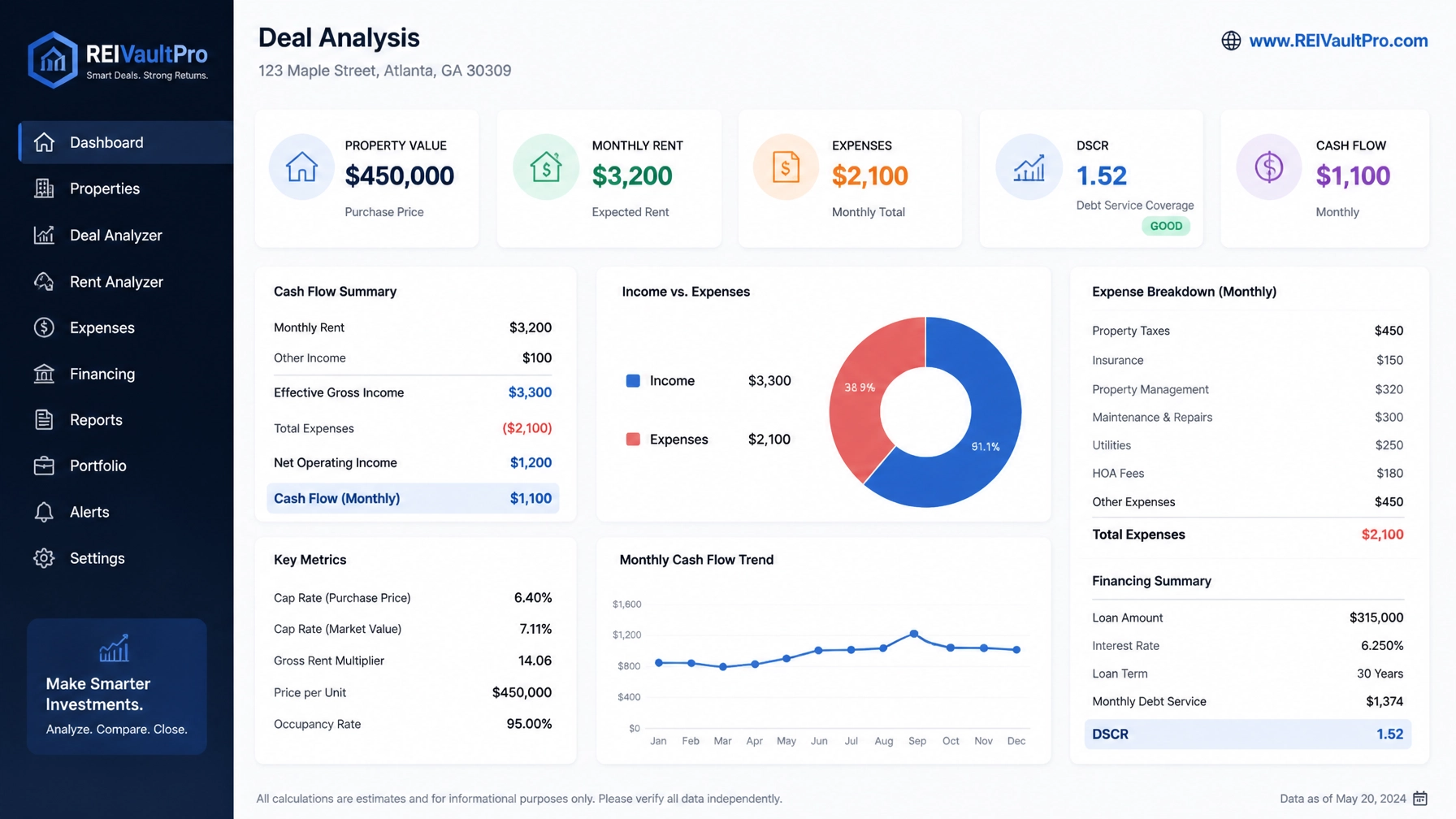
Financial Case Study: The Orlando Single-Family Investment
Consider a single-family home in Orlando, Florida, being purchased as a long-term rental.
- Purchase Price: $400,000
- Down Payment (25%): $100,000
- Loan Amount: $300,000
- Monthly Gross Rent: $2,800
- Principal & Interest: $1,900
- Property Taxes: $350
- Insurance (Wind/Flood): $200
- HOA Dues: $50
- Total PITIA: $2,500
The DSCR Calculation:
$2,800 (Income) / $2,500 (Debt) = 1.12 DSCR
In this scenario, the property qualifies for most standard DSCR programs requiring a 1.10 or 1.15 minimum. However, if the insurance was underestimated by just $100, the DSCR would drop to 1.07, potentially disqualifying the investor from the best available rates.
5. Failing to Document Proof of Reserves
While DSCR loans do not require W-2s or tax returns, they do require liquidity. Most lenders want to see that you have 3 to 12 months of PITIA payments sitting in a bank account, brokerage account, or even a retirement account.
A common error is moving money between accounts right before applying. Lenders usually require two months of bank statements to "source" those funds. If they see large, unexplained deposits, they may disqualify those funds from your reserves. Compare your available liquidity against lender requirements early by utilizing REI Vault Pro AI Underwriting tools to see how a lender views your financial profile.
6. Overlooking Prepayment Penalties
DSCR loans are business-purpose loans, which means they often carry prepayment penalties that are not allowed on primary residence mortgages. These penalties typically follow a "5-4-3-2-1" structure, where the fee decreases over five years.
If your strategy is a "Fix and Refinance" or a "BRRRR" (Buy, Rehab, Rent, Refinance, Repeat), choosing a loan with a 5-year prepayment penalty is a massive mistake. You might find yourself trapped in a high-interest loan when rates drop, or forced to pay a massive fee to exit the deal. Always align your loan terms with your 2-to-5-year exit strategy.
7. Not Verifying Short-Term Rental (STR) Eligibility
Florida is the capital of Airbnb and short-term rentals, but local regulations vary wildly between cities like Miami Beach, Destin, and Kissimmee. Some DSCR lenders will only allow STR income if the property has a "Short-Term Rental Permit" and a history of earnings (AirDNA data).
If you apply for a DSCR loan assuming STR income but the lender's appraiser treats it as a long-term rental because the area is not "zoned" for STR, your DSCR will likely collapse. Use the AI Market Analysis tool to verify market trends and rental demand types before committing to a property.
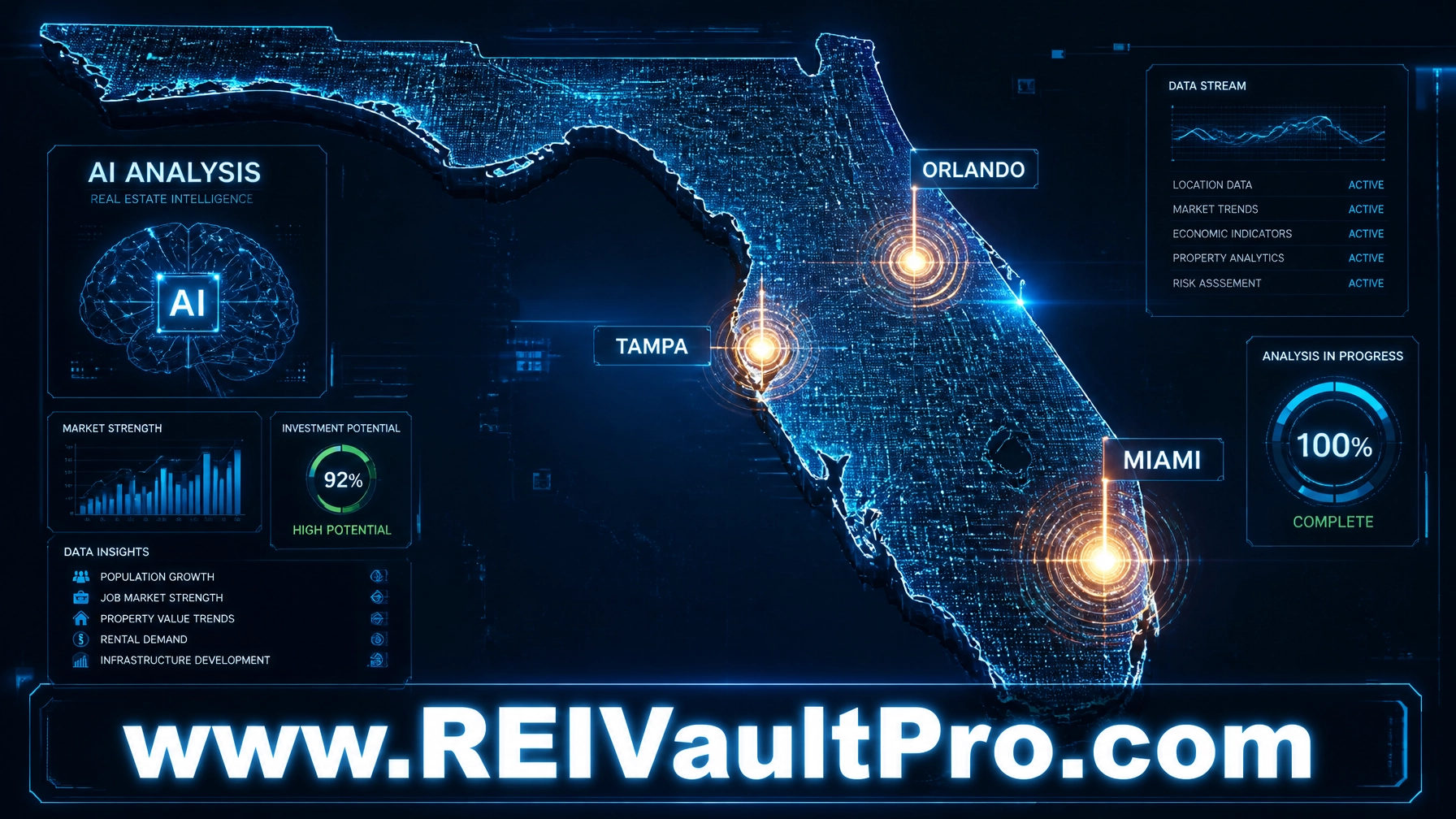
How REI Vault Pro Solves These Challenges
The REI Vault Pro ecosystem was built specifically to remove the guesswork from real estate investing and financing. By integrating high-level data with intuitive AI, the platform helps you act like a seasoned institutional investor.
- Accuracy: The AI Deal Analyzer forces you to input the line items that lenders actually care about, including those high Florida taxes and insurance costs.
- Speed: Instead of waiting weeks for an appraisal to find out your rent estimates were wrong, the AI Rent Analyzer gives you instant clarity on the revenue potential of a Florida property.
- Confidence: By using AI Underwriting, you can "pre-screen" your own deals. This allows you to walk into a mortgage application knowing exactly where your DSCR stands.
Whether you are a first-time landlord in Alabama, a fix-and-flip pro in California, or a multi-family investor in Georgia, the principles of accurate data remain the same. In Florida specifically, where the market moves fast and insurance adds complexity, having a digital partner like REI Vault Pro is the difference between a closed deal and a wasted appraisal fee.
Related REI Vault Pro Resources
- AI Deal Analyzer: This tool allows you to input property data and instantly see your projected DSCR, cash-on-cash return, and IRR. It is essential for verifying that your Florida application meets lender requirements before you pay for an appraisal.
- AI Rent Analyzer: Get a realistic look at long-term and short-term rental rates in any Florida zip code. This helps you avoid the mistake of overestimating income and failing the DSCR threshold.
- AI Rehab Estimator: If you are using a Bridge Loan or a Fix-and-Flip loan before transitioning to a DSCR loan, this tool helps you calculate renovation costs so you don't over-leverage the property.
- AI Market Analysis: Deep dive into Florida metropolitan areas to understand vacancy rates, price trends, and demand shifts that influence lender risk assessments.
Stop guessing and start closing. Building a real estate portfolio in Florida, Illinois, or Virginia requires precision. By avoiding these seven common application mistakes and leveraging the power of AI, you can scale your investments with confidence and clarity.
Watch a Demo of REI Vault Pro today to see these tools in action.
FAQ Section
What is the minimum DSCR required for a Florida investment property?
Most lenders prefer a DSCR of 1.20 or higher to offer the most competitive interest rates. However, many programs in Florida accept a 1.0 ratio, and some specialized programs can go as low as 0.75 if the investor has significant experience and high liquidity.
Can I use a DSCR loan for an Airbnb in Florida?
Yes, Florida is one of the most popular states for STR DSCR loans. However, the lender will typically require a "Short-Term Rental" appraisal or AirDNA projections to justify the higher income. You must also ensure the local municipality allows short-term rentals.
Do DSCR loans require a personal credit check?
Yes. While the loan is qualified based on the property's income, the lender will still check your personal credit score. Most DSCR programs require a minimum mid-score of 620 to 660, with higher scores resulting in better LTV options.
How much of a down payment is needed for a DSCR loan?
In Florida, most investors should expect to put down 20% to 25%. If the property has a lower DSCR (below 1.0), the lender may require a 30% or even 35% down payment to reduce the monthly debt and make the numbers work.
What are the reserve requirements for a Florida DSCR loan?
Lenders typically want to see 6 months of PITIA payments in reserves. For larger portfolios or multi-family properties, this requirement can increase to 12 months. These funds must be "liquid" or semi-liquid, like a savings account or stocks.