7 Mistakes You're Making with Fix and Flip Financing (and How AI Can Fix Them)
SEO Title: 7 Fix and Flip Financing Mistakes and AI Solutions for Investors
Meta Description: Avoid common fix and flip financing mistakes like underestimating rehab costs or misjudging ARV. Learn how AI tools from REI Vault Pro optimize your investment strategy.
URL Slug: fix-and-flip-financing-mistakes-ai-solutions
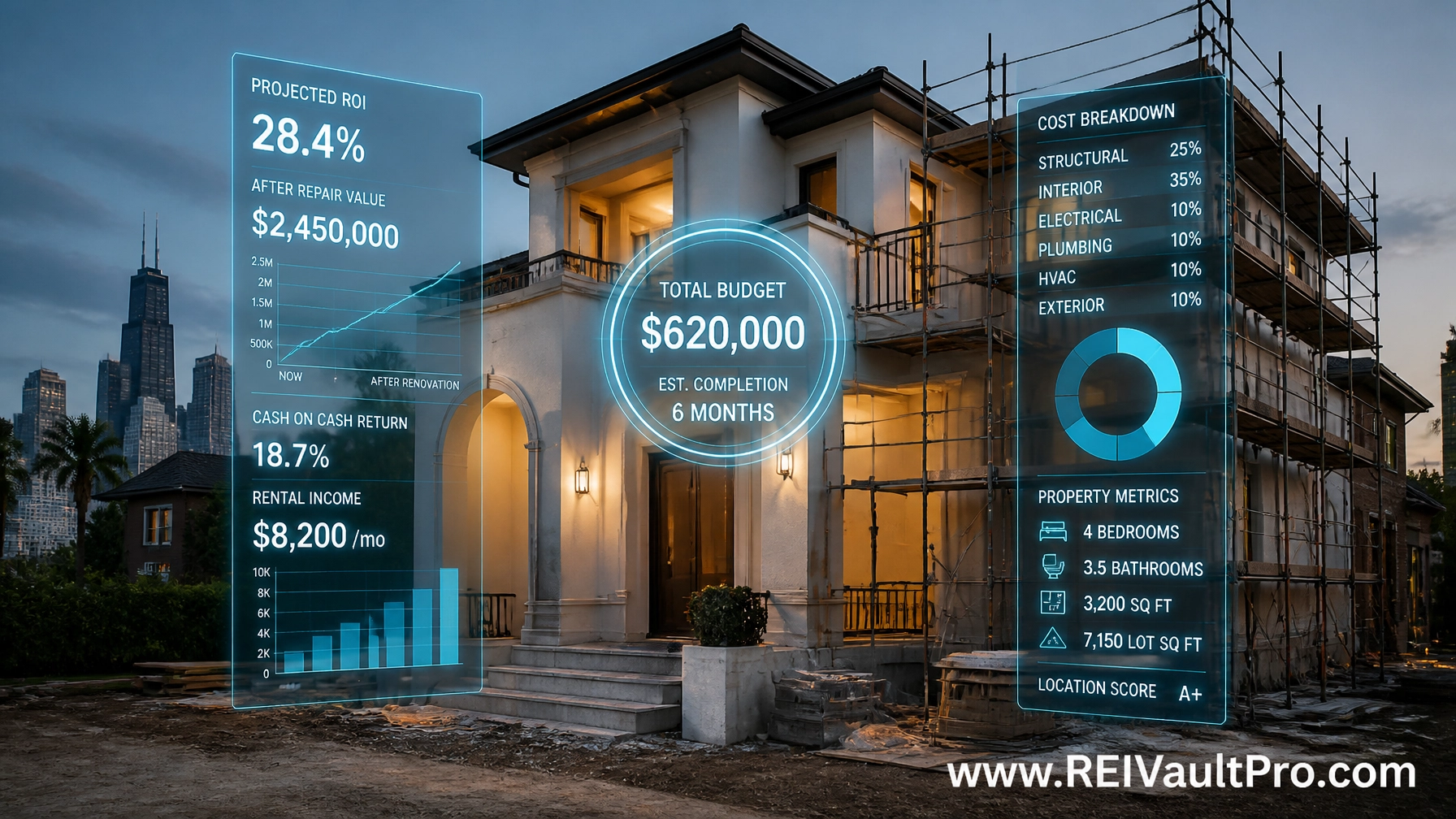
Featured Image Recommendation: Use the generated image showing a luxury house under renovation with a digital holographic overlay and the "www.REIVaultPro.com" branding.
SEO Alt Text: Professional real estate fix and flip renovation project with AI financial data overlay showing investment metrics for properties in Florida and Chicago.
Social Media Excerpt: Are you losing profit on your house flips? Discover the 7 most common financing mistakes real estate investors make and how AI-powered tools can safeguard your margins. From ARV accuracy to rehab estimates, see how technology is changing the game for investors in states like Florida, Illinois, and California.
SEO Tags: Fix and Flip Financing, Real Estate Investing, AI Real Estate Tools, ARV Calculation, Rehab Estimator, DSCR Loans, Hard Money Loans, Property Flipping Strategy, REI Vault Pro, Investment Property Analysis
Successful real estate investing requires more than just finding a distressed property and picking out new kitchen cabinets. In high-demand markets across Florida, Illinois, and California, the difference between a high-return project and a financial disaster often comes down to how you structure your financing and analyze your data.
Many investors rely on gut feelings or outdated spreadsheets to manage their projects. This approach frequently leads to expensive errors that erode profit margins. By leveraging artificial intelligence and advanced data modeling, you can identify risks before they become liabilities.
Explore the most common financing mistakes made by fix and flip investors and learn how to use digital tools to ensure your next deal is a profitable one.
1. Underestimating Rehab and Construction Costs
Underestimating rehab costs: The failure to accurately project the total expenditure required to bring a property to its after-repair condition. This error is the primary reason many flips fail to meet their projected ROI.
When you walk through a property in Chicago or Miami, it is easy to overlook hidden structural issues or rising material costs. A common mistake is using a "flat rate" per square foot for renovations without accounting for local labor variations or specific property needs.
Jump in with the AI Rehab Estimator to generate detailed, itemized cost projections based on current market data. This tool analyzes similar projects in your specific zip code to provide a realistic budget that includes contingencies for the unexpected.
2. Miscalculating the After Repair Value (ARV)
After Repair Value (ARV): The estimated market value of a property once all renovations and improvements are completed. Misjudging this figure leads to over-borrowing and thin equity positions.
Investors often look at the highest-priced sale in a neighborhood and assume their finished product will fetch the same price. However, AI-driven market analysis looks deeper into specific features, square footage, and local demand trends to provide a probabilistic range rather than a single, optimistic number.
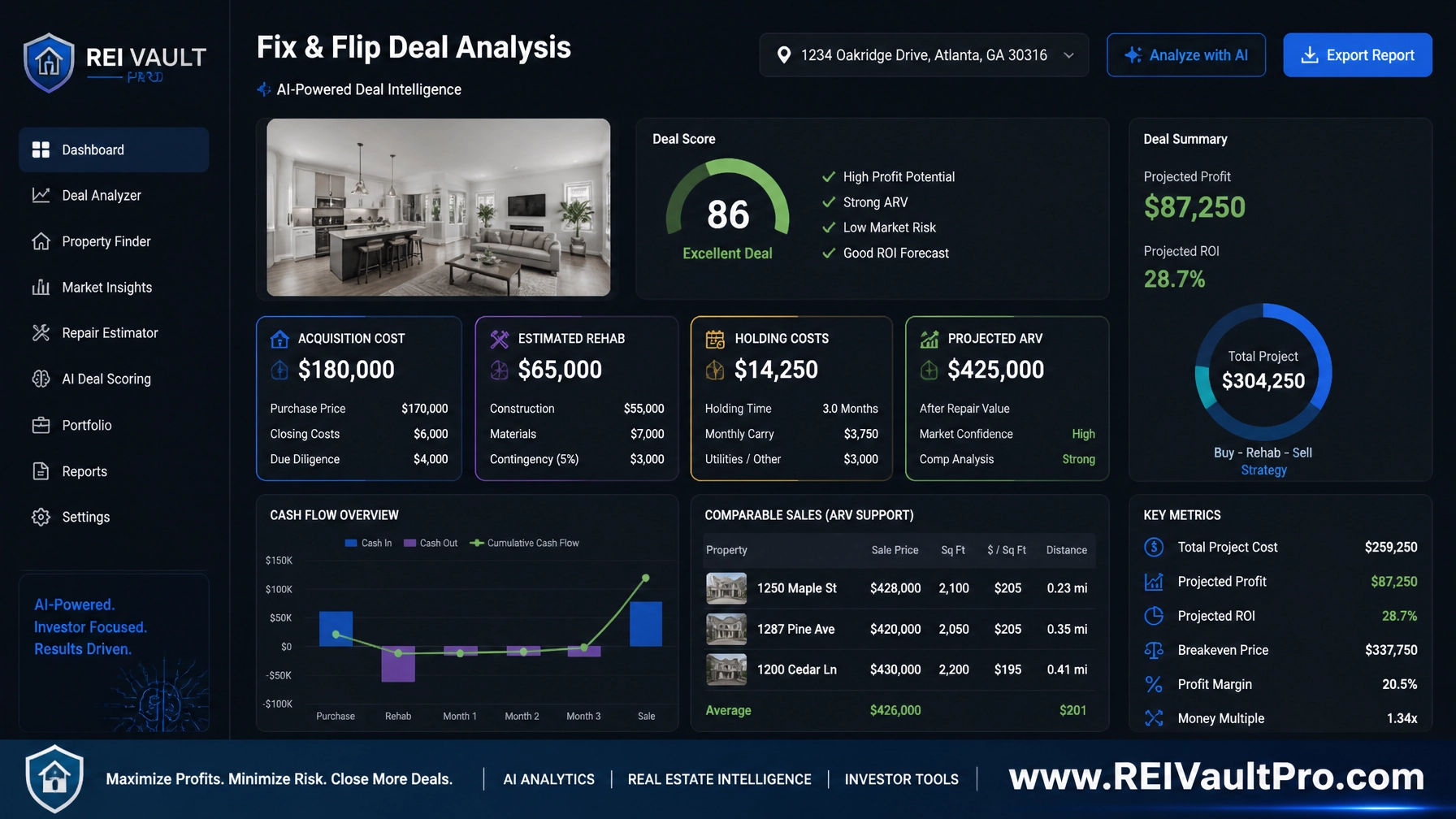
Using the AI Deal Analyzer, you can access real-time comparable sales data that filters out outliers and focuses on the most relevant market activity. This ensures you are buying at a price that allows for a safe margin of error.
3. Ignoring High Holding Costs and Timelines
Holding costs: The ongoing expenses incurred while owning a property, including loan interest, taxes, insurance, and utilities. These costs accumulate every day the property is not sold or refinanced.
A project that is scheduled for four months but takes seven can quickly turn into a loss. For example, if you have a Hard Money Loan for $300,000 at a 12% interest rate, your monthly interest payment is $3,000. Extending your timeline by just three months adds $9,000 in unplanned expenses.
AI simulation tools can help you forecast realistic timelines by analyzing contractor performance and local permitting speeds in states like Georgia and Virginia. Access the Investment Decision Engine to model different scenarios and understand how a delay impacts your bottom line.
4. Choosing the Wrong Financing Structure
Financing structure: The specific combination of loan terms, interest rates, points, and leverage used to fund a real estate acquisition. Selecting the wrong loan type can result in unnecessary fees and restrictive terms.
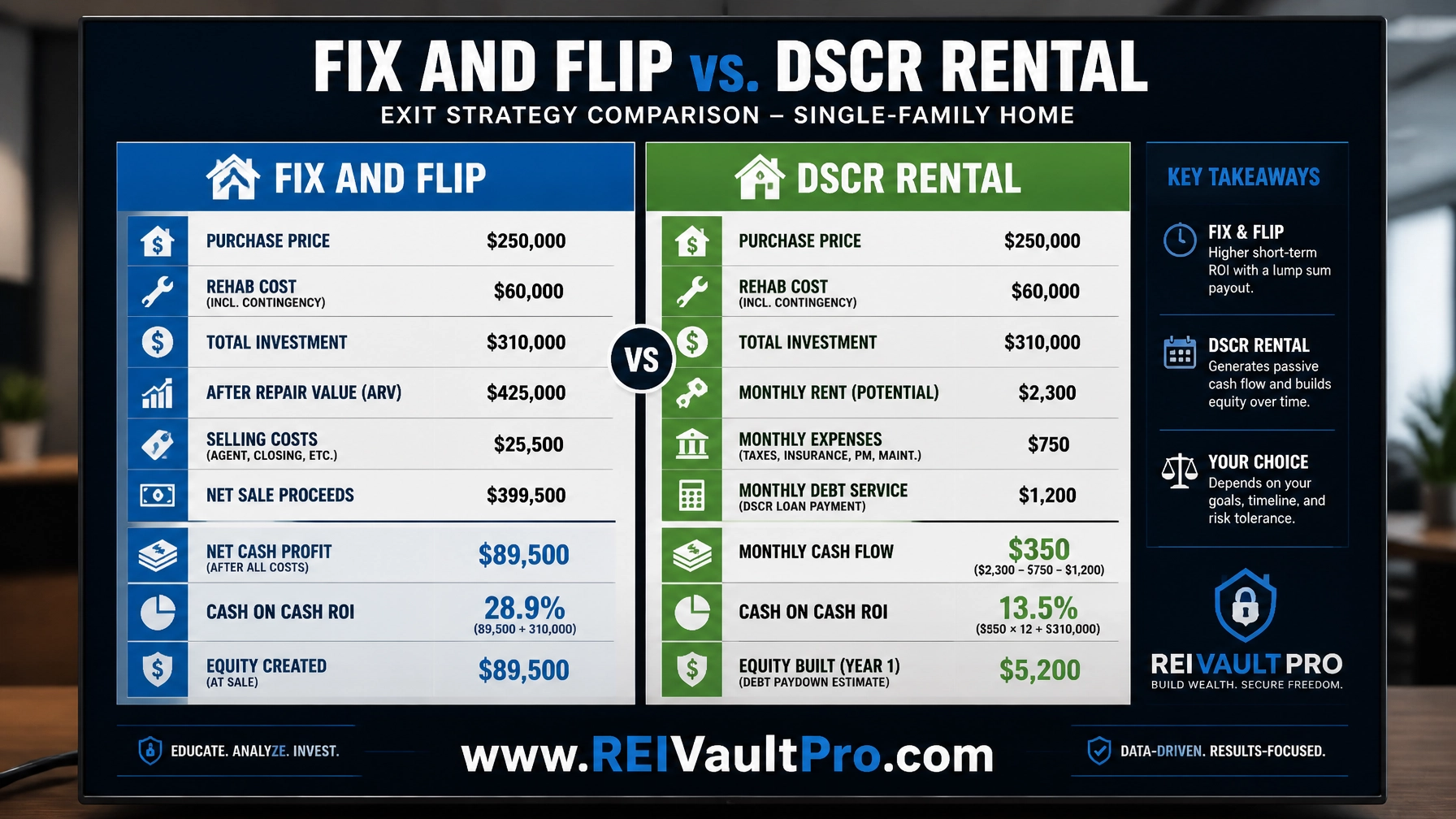
Many investors default to traditional hard money because it is familiar, but they might be better served by a bridge loan or a Non-QM mortgage depending on their long-term goals. If you plan to hold the property as a rental after the flip, a DSCR Investor Loan might be a more efficient path.
Compare your options by utilizing AI Underwriting to see which loan programs align with your specific credit profile and project scope. Choosing the right financing early on can save thousands in points and closing costs.
5. Failing to Plan a Secondary Exit Strategy
Exit strategy: A pre-determined plan for how an investor will divest from a property or transition its financing. Relying on a single exit path increases risk during market shifts.
If the retail market in Atlanta or San Diego cools during your renovation, you need a backup plan. A common mistake is not checking if the property will "pencil" as a rental. If you cannot sell the property for your target price, can you refinance it and cover the mortgage with rental income?
The AI Rent Analyzer allows you to instantly see the rental potential of any property. By knowing your rental income floor, you can confidently pivot to a long-term hold strategy if the flip market becomes unfavorable.
6. Over-Renovating for the Neighborhood
Over-renovation: The act of making improvements that exceed the market's willingness to pay a premium. This results in "sunk costs" that do not translate into a higher sale price.
Putting luxury finishes in a starter-home neighborhood in Indianapolis or St. Louis will not necessarily increase the ARV to match your spending. AI tools analyze "sold" listings to determine which features actually drive value in specific micro-markets.
Access AI Market Analysis to see which upgrades: such as finished basements or smart home tech: provide the highest return on investment in your target area. This keeps your budget focused on what buyers actually want.
7. Working with Incomplete Data and Poor Documentation
Data integrity: The accuracy and completeness of the financial and physical information used to evaluate a deal. Disorganized documentation leads to slow loan approvals and missed opportunities.
Lenders in the fix and flip space move fast, but they require clear proof of your project's viability. If your budget is a handwritten note or a messy spreadsheet, you risk a higher interest rate or an outright denial.
Using a professional platform to organize your deals ensures that your data is lender-ready. Tools like AI Deal Scoring help you present a professional package that highlights the strengths of your investment, making it easier to secure competitive financing.
Financial Calculation Example: The Impact of Accuracy
Consider a typical fix and flip scenario for a single-family home in a suburb of Chicago:
- Purchase Price: $225,000
- Projected Rehab: $60,000
- Holding & Closing Costs: $20,000
- Total Investment: $305,000
- Projected ARV: $400,000
- Potential Profit: $95,000
If the investor makes the mistake of underestimating the rehab by just 15% ($9,000) and the project takes two months longer than expected (adding $6,000 in interest and utilities), the profit drops to $80,000. If the ARV was also overestimated by 5% ($20,000), the profit plummets to $60,000.
In this scenario, a lack of accurate data cost the investor $35,000: nearly 37% of their expected profit. Using AI to refine these numbers ensures you keep that capital in your pocket.
Related REI Vault Pro Resources
- AI Rehab Estimator: This tool provides detailed construction and renovation cost projections based on local market labor and material data. It helps you avoid budget overruns by creating realistic spending plans.
- AI Deal Analyzer: Use this resource to quickly evaluate the profitability of any property. It calculates ROI, cap rate, and ARV to ensure your purchase price aligns with your profit goals.
- AI Rent Analyzer: This tool identifies the current rental market value for your property. It is essential for investors planning a BRRRR strategy or looking for a secondary exit plan.
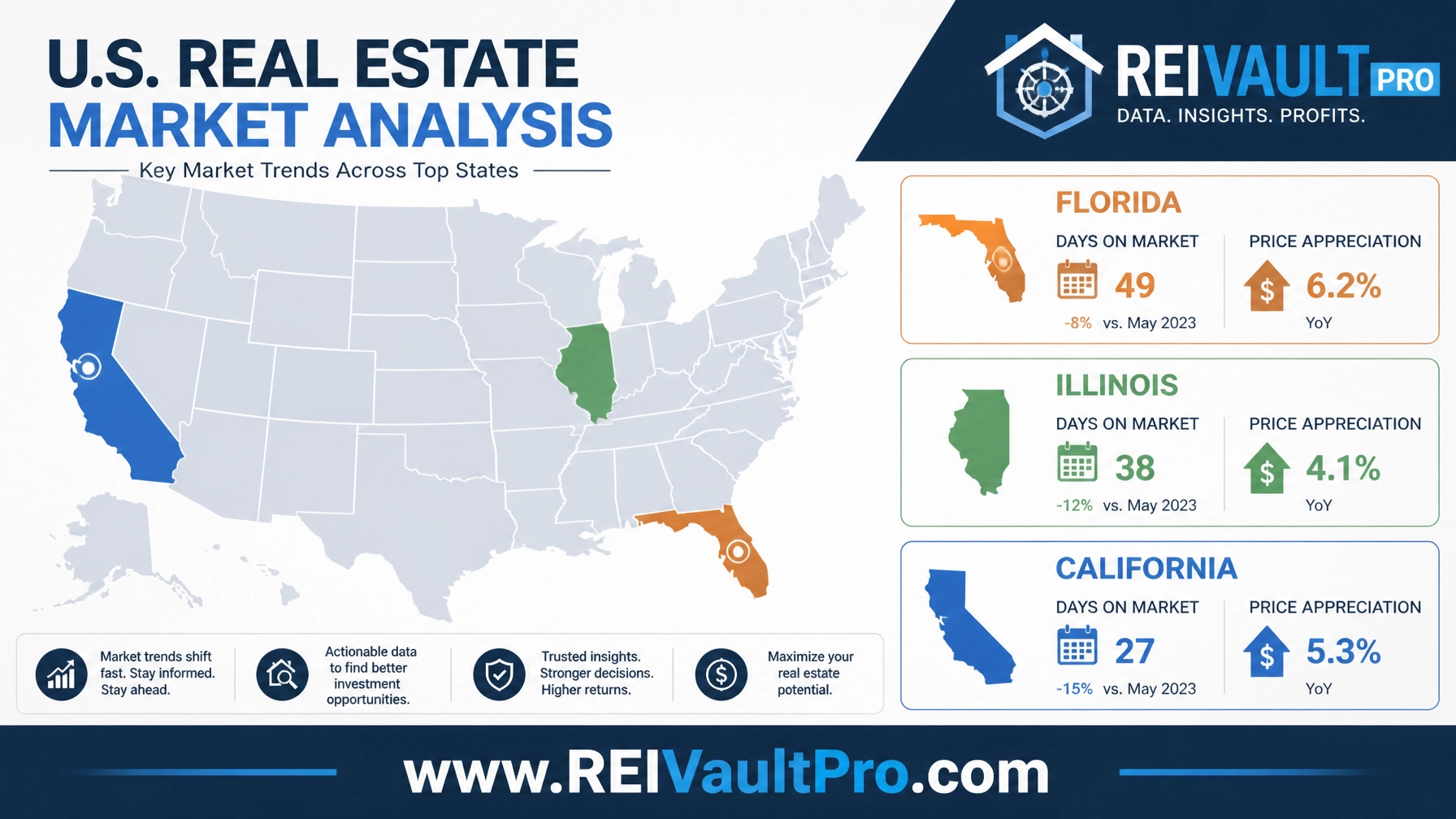
- AI Market Analysis: Access hyperlocal data on market trends, days on market, and price appreciation. This helps you choose the best neighborhoods for your next flip in states like Florida or Alabama.
- AI Underwriting: This feature streamlines the loan qualification process. It analyzes your deal against lender criteria to find the best financing options for your specific investment.
Conclusion
Navigating the fix and flip market requires a balance of speed and precision. By avoiding these seven common financing mistakes, you position your investment for maximum success. The integration of AI into your workflow provides the data-backed confidence needed to scale your portfolio in competitive markets.
Whether you are a seasoned investor or just starting your first project in California or Michigan, having the right tools makes a significant difference in your results. Focus on the data, refine your strategy, and ensure your financing is structured for growth.
Start a Free Trial to see how these tools can transform your next real estate deal.
FAQ Section
What is the "70% Rule" in fix and flip financing?
The 70% Rule is a guideline suggesting that an investor should pay no more than 70% of the After Repair Value (ARV) of a property, minus the estimated cost of repairs. This ensures a sufficient profit margin and covers unexpected costs.
How does AI improve ARV accuracy?
AI improves ARV accuracy by analyzing thousands of data points, including hyperlocal sales trends, specific property features, and seasonal market shifts. Unlike manual comps, AI can remove emotional bias and identify patterns that humans might miss.
Can I use a DSCR loan for a fix and flip?
A Debt Service Coverage Ratio (DSCR) loan is typically used for long-term rental properties rather than short-term flips. However, many investors use fix and flip financing (like a bridge loan) to renovate the property and then refinance into a DSCR loan once the property is leased.
What are the most common holding costs for a flip?
Common holding costs include monthly interest payments on your loan, property taxes, homeowner’s insurance, utilities (water, electricity, gas), and maintenance costs like lawn care or security.
Why is an exit strategy important for financing?
An exit strategy is important because it determines your loan repayment plan. Lenders want to know how they will be paid back. Having multiple exit strategies (selling vs. renting) reduces your risk and makes you a more attractive borrower to lenders.