7 Mistakes You're Making with Chicago Fix and Flip Loans (and How to Fix Them)
SEO Title: 7 Mistakes You're Making with Chicago Fix and Flip Loans (and How to Fix Them)
Meta Description: Avoid costly errors in the Chicago real estate market. Learn the top 7 mistakes with fix and flip loans, from ARV errors to permitting delays, and how to fix them.
URL Slug: chicago-fix-and-flip-loan-mistakes
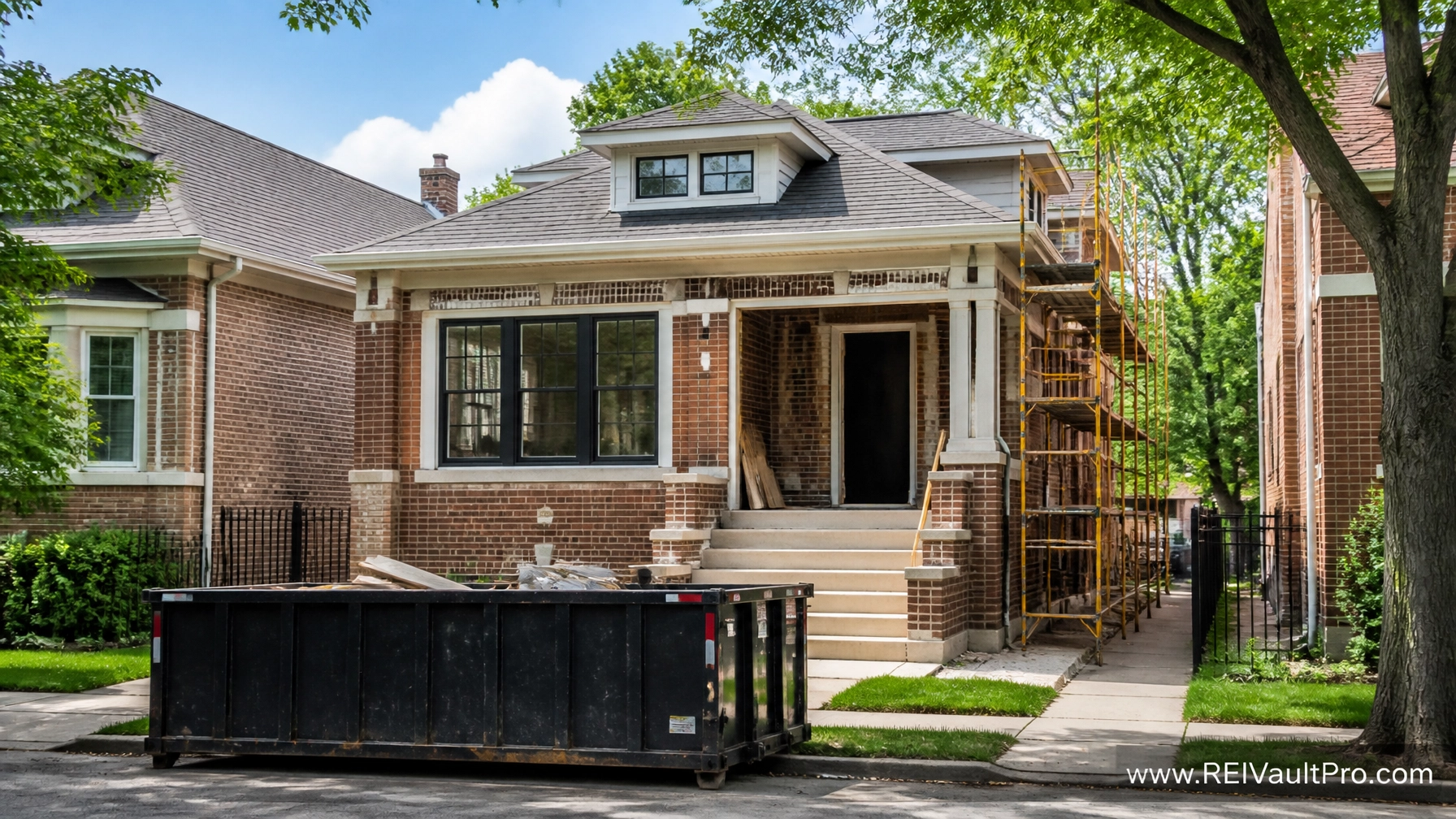
Featured Image Recommendation: A high-quality photo of a Chicago bungalow undergoing renovation with a clear view of the street and a construction dumpster.
SEO Alt Text: Chicago residential house undergoing renovation with construction equipment and a clear blue sky.
Social Media Excerpt: Flipping houses in Chicago? Don't let these 7 common loan mistakes eat your profits. Learn how to navigate ARV, permits, and financing like a pro. #ChicagoRealEstate #FixAndFlip #REIVaultPro
SEO Tags: Chicago Real Estate, Fix and Flip Loans, Mortgage Financing, Real Estate Investing, ARV, Rehab Costs, Property Investment Illinois.
Navigating the Chicago real estate market requires a sharp eye for property potential and a disciplined approach to financing. While the city offers a wealth of opportunities, from classic brick bungalows in Portage Park to historic graystones in Logan Square, the complexity of fix and flip loans can lead to significant financial setbacks for the unprepared. Many investors, both new and experienced, find their margins squeezed by avoidable errors in how they structure their debt and manage their projects.
At REI Vault Pro, we understand that real estate investment is a game of precision. Whether you are operating in Illinois, Florida, or California, the fundamentals of leverage remain the same. However, Chicago presents unique challenges, including strict local ordinances and a seasonal climate that can disrupt construction timelines. Understanding how to align your financing with these local realities is the difference between a profitable exit and a stalled project.
This guide explores the seven most frequent mistakes investors make with Chicago fix and flip loans and provides actionable solutions to keep your investment on track.
1. Overestimating the After Repair Value (ARV)
The After Repair Value (ARV) is the cornerstone of any fix and flip loan. It represents the estimated value of the property once all renovations are complete. In Chicago, values can fluctuate wildly from one block to the next. Relying on general neighborhood averages or "best-case" resale scenarios is a dangerous strategy.
Definition: After Repair Value (ARV)
The projected market value of a property after it has been fully renovated to modern standards and compared to similar recently sold properties. This figure determines your maximum loan amount and potential profit.
If your ARV is too high, your lender may approve a loan that leaves you over-leveraged. When the property fails to sell at that inflated price, you are stuck with high-interest debt and no clear exit strategy. To fix this, you should utilize detailed market data. Access the REI Vault Pro After Repair Value Justification Report to ensure your numbers are backed by hard facts and recent "solds" rather than "actives."
2. Underestimating Chicago Rehab Costs and Systems
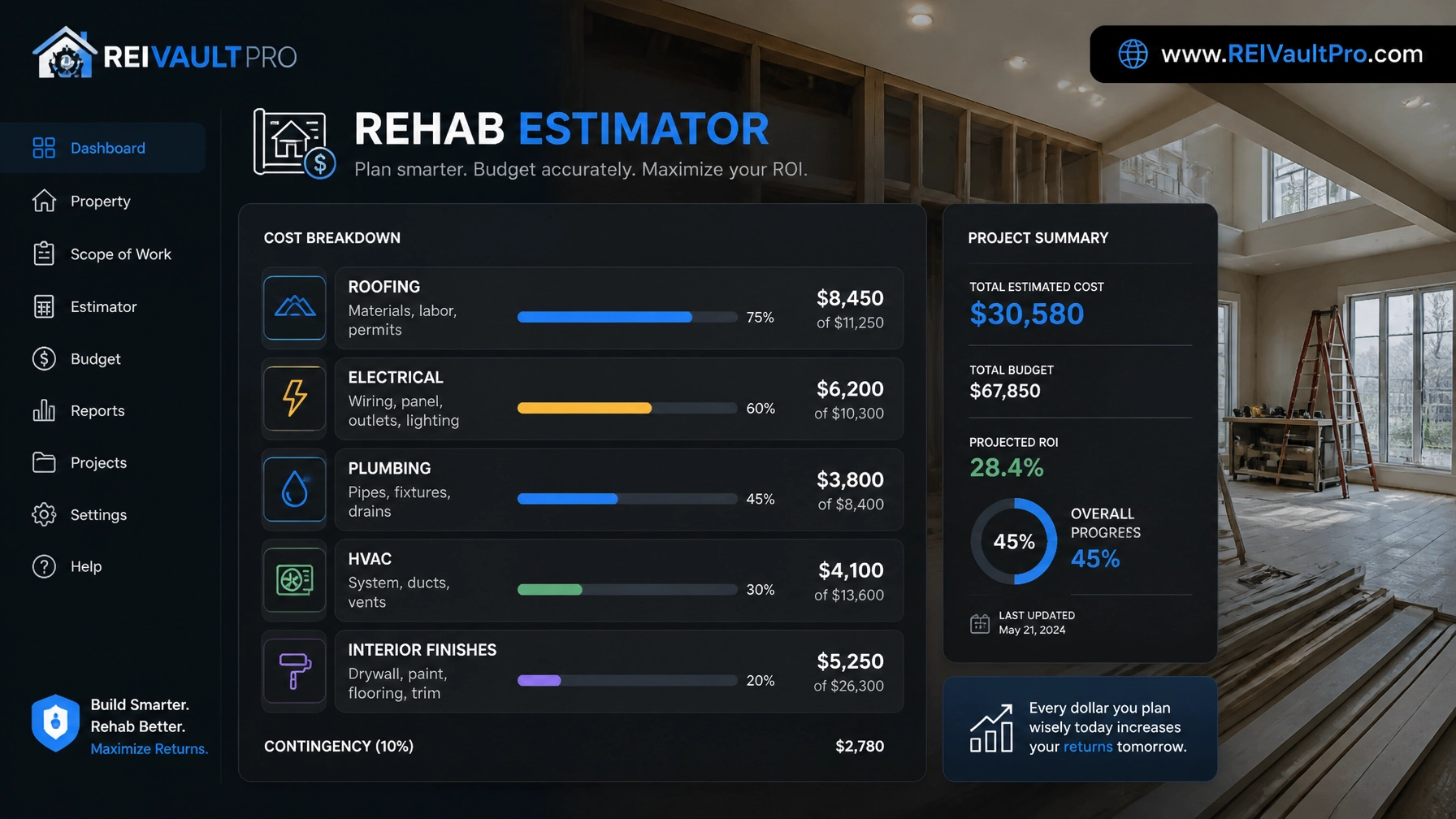
A common pitfall is focusing solely on cosmetic upgrades while ignoring the expensive "unseen" systems. Chicago's older housing stock often requires significant electrical, plumbing, and HVAC work to meet current codes. Skipping these in your initial budget leads to "budget creep" where you are forced to dip into your personal cash or high-interest credit lines to finish the job.
Lenders typically fund rehab costs in "draws" after work is inspected. If your initial budget is inaccurate, you may run out of funds before reaching a milestone that triggers the next disbursement. Use the REI Vault Pro Rehab Estimator to create a line-item budget that covers everything from the roof to the foundation.
3. Ignoring the "70% Rule" of Acquisition
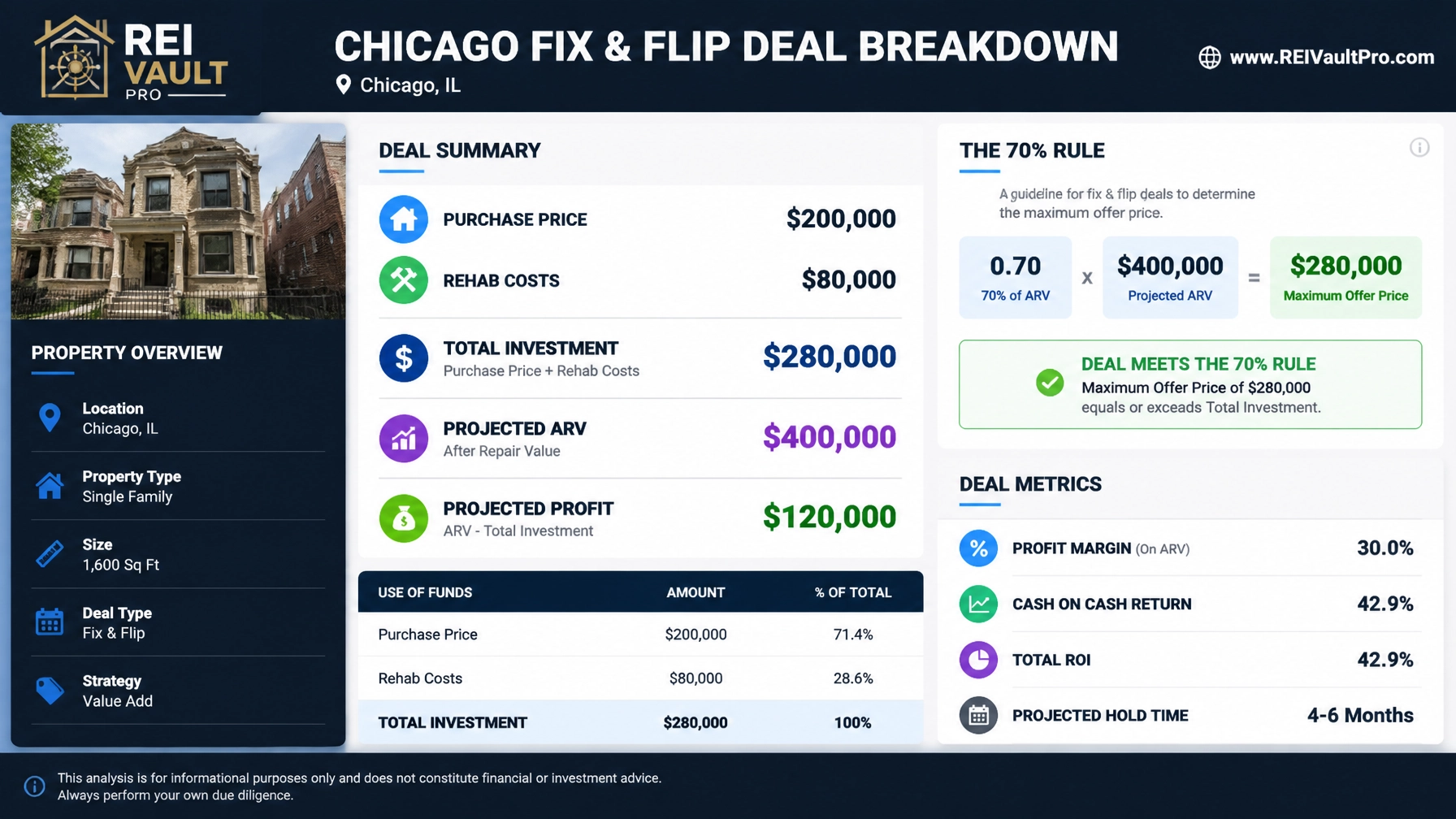
The "70% Rule" is a widely recognized standard in real estate investing designed to protect your equity. It suggests that an investor should pay no more than 70% of the ARV, minus the cost of repairs. In high-competition markets like Chicago, investors often get into bidding wars and ignore this ratio, leaving them with zero margin for error.
Definition: The 70% Rule
A formula used to determine the maximum purchase price for a distressed property. Formula: (ARV x 0.70) - Rehab Costs = Maximum Purchase Price.
Consider a typical Chicago scenario:
- Projected ARV: $400,000
- Estimated Rehab: $80,000
- Calculation: ($400,000 x 0.70) = $280,000. Then, $280,000 - $80,000 = $200,000 Max Purchase Price.
If you pay $230,000 for this property because you "really like the area," you have effectively gambled away $30,000 of your safety net. If interest rates rise or the market softens, your profit disappears. Use a Deal Analyzer to stay disciplined during the acquisition phase.
4. Failing to Account for Permitting and Zoning Delays
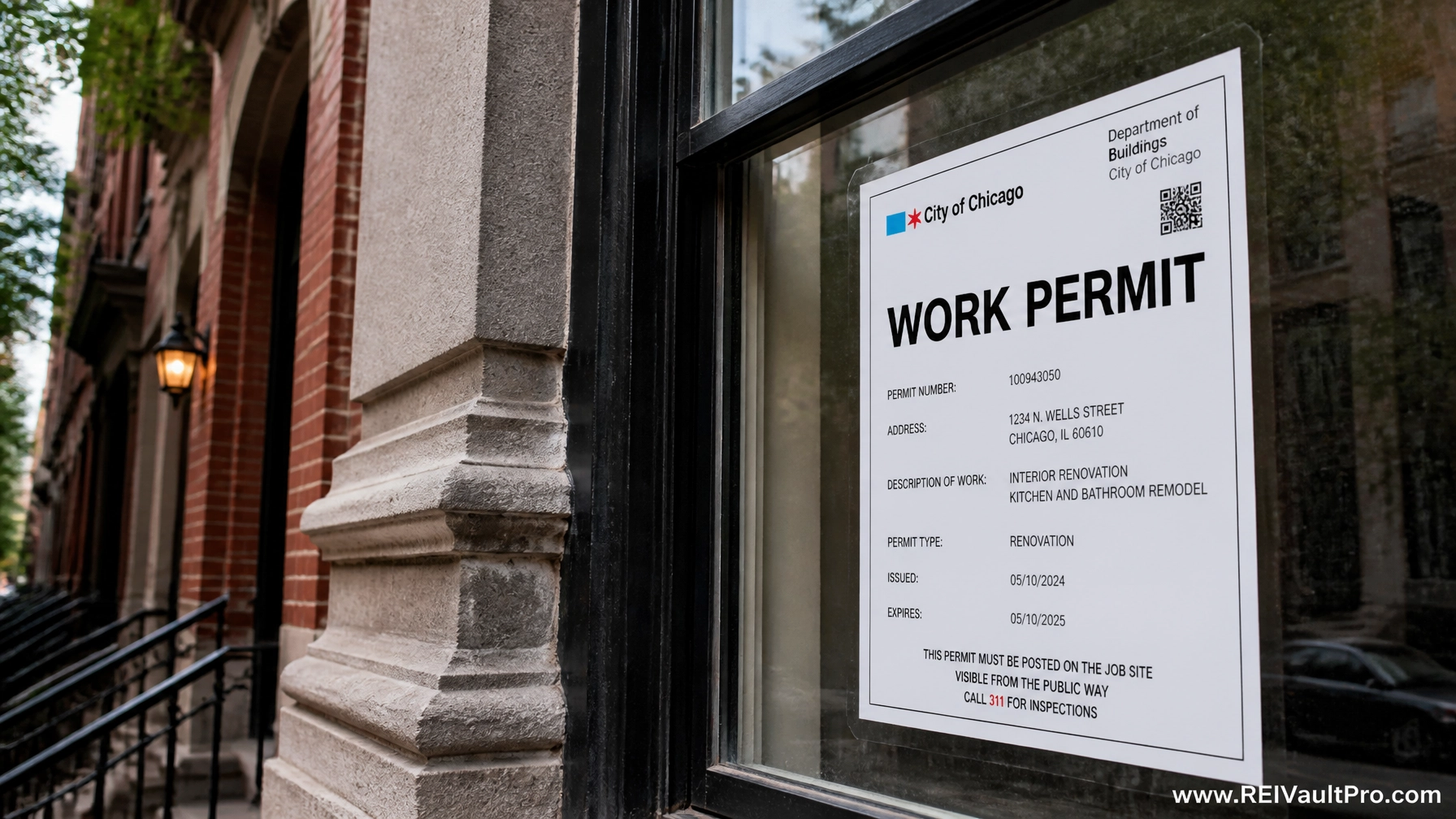
Chicago's Department of Buildings is known for its rigorous inspection processes and potentially long wait times for permits. Many investors take out a 6-month or 9-month fix and flip loan, assuming they can start work on day one. If your permit takes 3 months to clear, you are paying interest on a property where no work is being done.
Definition: Holding Costs
The ongoing expenses associated with owning a property before it is sold, including loan interest, property taxes, insurance, and utilities.
To fix this, you must build a realistic timeline into your loan application. It is often better to pay a slightly higher fee for an 18-month term than to face expensive extension fees or default on a 6-month loan. Ensure you have your Lender Package for Fix and Flip ready with a clear timeline that accounts for municipal approvals.
5. Over-Improving for the Neighborhood
It is easy to get carried away with high-end finishes, but if the surrounding homes do not support those luxury prices, you will not see a return on that investment. This is particularly relevant in Chicago’s emerging neighborhoods where "over-renovating" can lead to an appraisal gap.
If your loan is based on a high ARV that assumes marble countertops and custom cabinetry, but the local market only supports quartz and standard finishes, the appraiser will likely come in low. This forces you to bring more cash to the closing table or lowers your profit significantly. Compare your project to local standards using AI Market Analysis to stay aligned with what buyers actually want.
6. Choosing a Loan with High "Draw" Fees and Slow Processing
Not all fix and flip loans are created equal. Some lenders offer low initial interest rates but charge high fees for every inspection and "draw" request. In a project with 10 different draws, these fees can add thousands to your total cost. Furthermore, if a lender takes two weeks to process a draw, your contractors may stop working due to lack of payment, causing more delays.
When comparing mortgage loans and real estate financing in Illinois, jump in and ask about the specific draw schedule.
- How long does an inspection take?
- Are there fixed fees for each disbursement?
- Do you require a third-party inspector or can photos suffice?
Knowing these answers helps you maintain a consistent workflow and keep your contractors happy.
7. Not Planning for the "Chicago Winter" Factor
Investors from warmer climates like Georgia or Florida often forget how much the Chicago winter influences a flip. Construction slows down when temperatures drop. Concrete cannot be poured easily, exterior painting stops, and heating costs for a vacant property under renovation can skyrocket.
If your loan term ends in February, but the property isn't ready for market until April because of a snowstorm-delayed roof replacement, you are in a difficult position. Always include a "seasonal buffer" in your holding cost projections. Use a Cash Flow Calculator to see how an extra three months of holding costs (including high winter gas bills) impacts your bottom line.
Related REI Vault Pro Resources
- AI Market Analysis: Access real-time data to verify your ARV and neighborhood trends before you commit to a purchase. This tool helps you avoid over-improving and ensures your exit strategy is realistic.
- Rehab Estimator: A comprehensive calculator designed to help you itemize every renovation cost, from permits to plumbing, so you never run out of funds mid-project.
- Contractor Bid Comparison Sheet: Use this tool to vet and compare multiple contractor quotes, ensuring you get the best value and reliable timelines for your Chicago project.
- Deal Analyzer: Perform deep financial due diligence on any potential acquisition to ensure it meets the 70% rule and your personal ROI goals.
- Fix and Flip Exit Strategy Summary: A template to help you define exactly how and when you will repay your loan, a critical document for securing favorable financing.
The Chicago market is a high-reward environment for those who approach it with a structured, data-driven plan. By avoiding these common financing and project management mistakes, you protect your capital and build a sustainable real estate portfolio. Whether you are looking for cash-out refinance strategies to fund your next deal or exploring mortgage calculators to estimate your monthly carrying costs, education is your best asset.
Explore our suite of tools and templates to gain a competitive edge in your next investment.
FAQ Section
What is a Fix and Flip Loan?
A fix and flip loan is a short-term financing solution used by real estate investors to purchase and renovate a property with the intent of selling it for a profit. These loans are typically asset-based, meaning the lender focuses more on the property's potential value (ARV) than the borrower's personal credit score.
How does the "Draw" process work in Chicago?
In Chicago, lenders fund the renovation portion of the loan in stages called "draws." After you complete a specific portion of the work, you request a draw. The lender sends an inspector to verify the work is done according to the scope of work, and then releases the funds to reimburse you or pay your contractors.
Can I get a fix and flip loan for a multi-unit building?
Yes, many investors use fix and flip loans for small multi-family properties (2-4 units) in Chicago. This is a popular strategy for "house hacking" or creating high-value rental properties. For larger buildings, you might look into bridge loans or commercial financing.
What is the minimum down payment for a Chicago fix and flip loan?
While it varies by lender, many fix and flip loans require a down payment of 10% to 20% of the purchase price. Some lenders may fund up to 90% of the purchase and 100% of the rehab costs, depending on your experience and the strength of the deal.
Why is permitting so important for my loan?
If you perform structural, electrical, or plumbing work without the proper Chicago permits, you may face fines, stop-work orders, and difficulty selling the property later. Most lenders will not release rehab draws unless they see evidence that the work is being done legally with the required permits.