7 Mistakes You're Making with Chicago Fix and Flip Loans (and How to Fix Them)
SEO Title: 7 Mistakes You're Making with Chicago Fix and Flip Loans (and How to Fix Them)
Meta Description: Avoid costly pitfalls with Chicago fix and flip loans. Learn how to accurately calculate ARV, manage rehab budgets, and choose the right financing strategies.
URL Slug: chicago-fix-and-flip-loan-mistakes
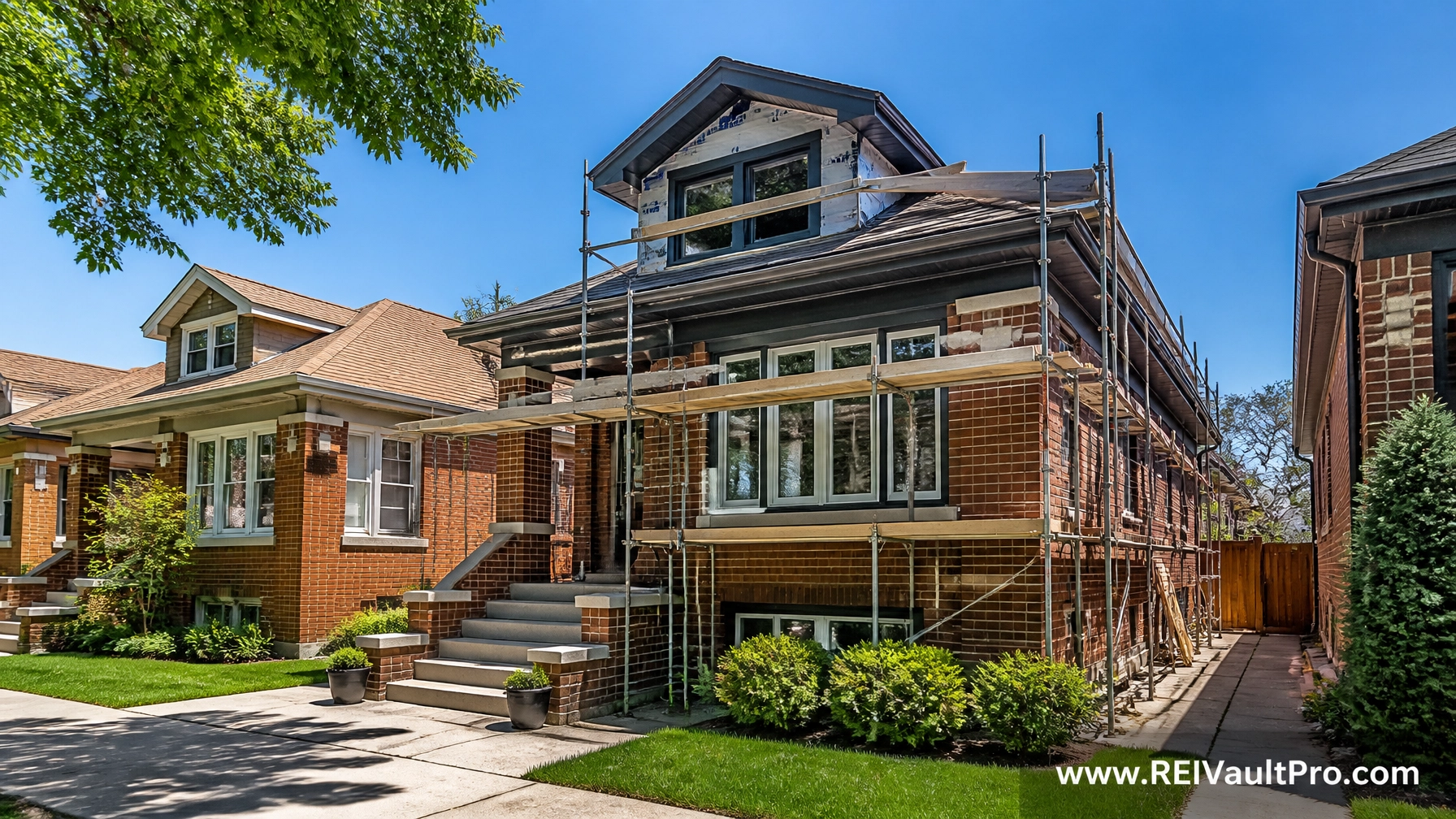
Featured Image Recommendation: A professional landscape shot of a Chicago residential property under renovation with clear REI Vault Pro branding.
SEO Alt Text: Chicago residential property undergoing renovation for a fix and flip investment project.
Social Media Excerpt: Thinking of flipping a house in Chicago? Don't let common financing mistakes drain your profit. Check out our latest guide on the top 7 pitfalls and how to avoid them! 🏠💰 #RealEstateInvesting #ChicagoRealEstate #FixAndFlip
SEO Tags: Chicago Fix and Flip, Real Estate Investing, Mortgage Loans, DSCR Loans, Rehab Loans, Property Investment Chicago, Fix and Flip Financing
Entering the Chicago real estate market as a fix-and-flip investor requires more than just a sharp eye for property potential.
Securing the right financing is the foundation of a successful project, yet many investors fall into predictable traps that erode their margins.
Whether you are a seasoned pro or a first-time flipper, understanding the nuances of Chicago fix and flip loans is essential for protecting your capital and maximizing your return on investment (ROI).
The Windy City presents unique challenges, from block-by-block value fluctuations to strict permitting requirements that can stall a project for months.
By identifying these seven common mistakes, you can refine your strategy, choose better funding options, and ensure your next project in Illinois remains profitable.
1. Miscalculating the After-Repair Value (ARV)
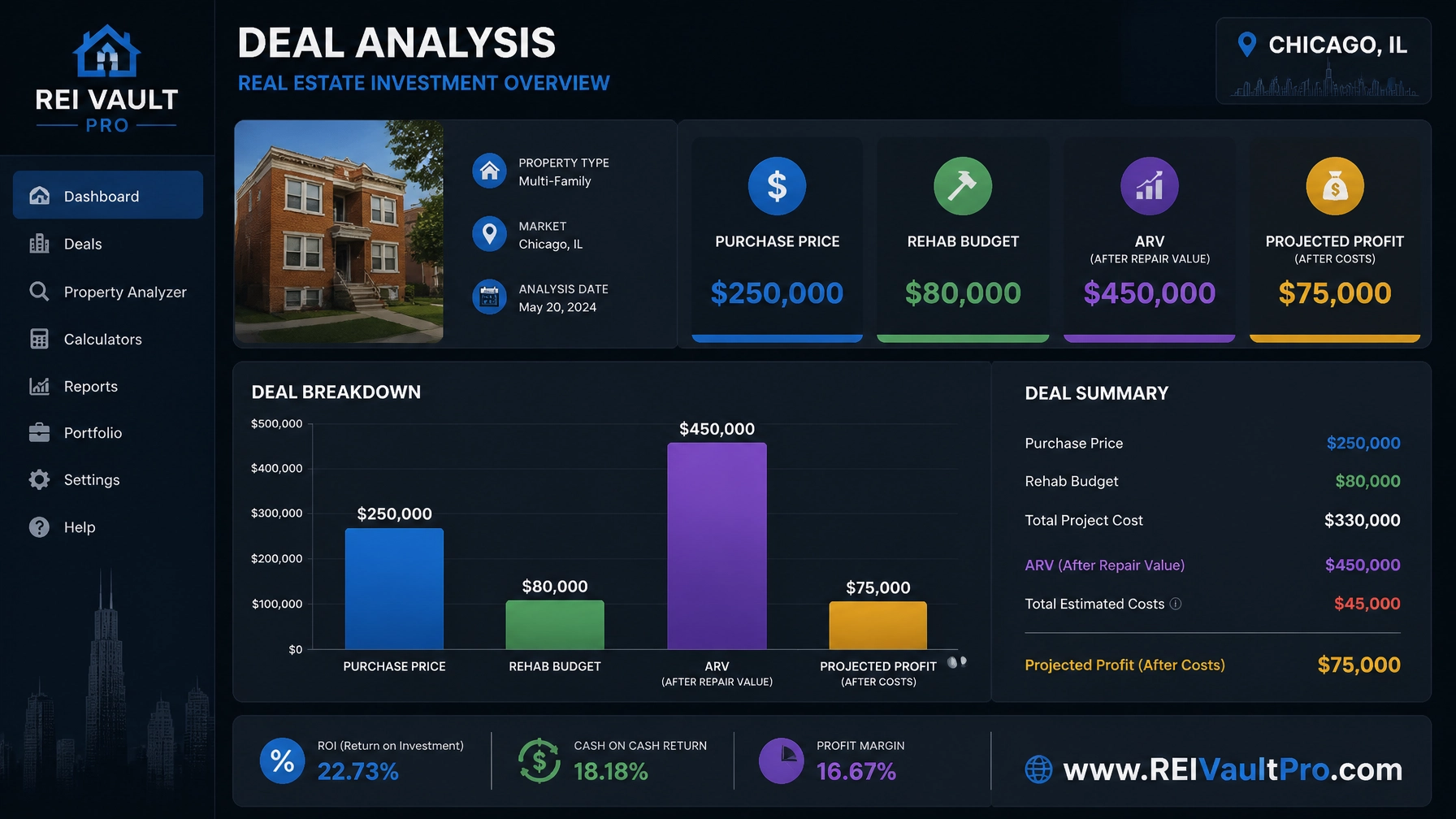
After-Repair Value (ARV) is the estimated market value of a property once all renovations and upgrades are complete.
It serves as the benchmark for determining how much a lender will provide for your fix and flip loan.
Many investors make the mistake of using "aspirational" pricing, looking at the highest possible sales in a wide radius, rather than focusing on hyper-local, recent comparable sales.
In Chicago, values can change significantly from one block to the next.
Failing to account for these micro-market shifts leads to an inflated ARV, which often results in overpaying for the acquisition.
To fix this, use an AI Deal Analyzer to objectively evaluate comparable sales and market trends.
Explore the data before you sign a contract to ensure your exit price is grounded in reality.
2. Underestimating Rehab Costs and Timeline
Rehab Budget: A detailed itemization of the costs required to bring a property to its projected ARV.
A solid rehab budget prevents cash flow shortages and ensures your bridge loan or fix-and-flip financing covers the necessary work.
One of the most frequent errors is lowballing renovation expenses or forgetting to include a contingency fund.
Chicago’s older housing stock often hides structural issues, outdated electrical systems, or plumbing problems that only appear once walls are opened.
Furthermore, Chicago’s seasonal weather can halt exterior work during winter months, extending your holding period and increasing your interest payments.
Utilize the AI Tools Showcase to access estimators that help you build more accurate project timelines and budgets.
Access professional-grade estimation tools to build a buffer into every project you undertake.
3. Ignoring the Specifics of Loan Draw Schedules
Draw Schedule: A pre-arranged timeline for the release of loan funds based on the completion of specific renovation milestones.
Understanding your draw schedule is critical because most real estate investor loans operate on a reimbursement basis.
Investors often start a project without enough liquid cash to pay contractors for the first phase of work.
If you cannot pay your crew, work stops, and you continue to accrue interest on your hard money loan.
This creates a "cash crunch" that can derail the entire timeline of a Chicago renovation.
Always maintain a reserve of at least 20-30% of your rehab budget to bridge the gap between contractor payments and lender draws.
Jump in with a clear understanding of your lender's inspection and reimbursement process to keep your project moving.
4. Choosing the Wrong Financing Structure
Not all loans are created equal, and choosing the wrong type of debt can lead to unnecessary fees.
For example, using a standard conventional loan for a distressed property is often impossible because the home may not meet habitability standards.
Some investors rely solely on hard money loans because they are fast, but they may overlook Non-QM mortgage loans or bank statement loans that might offer more competitive terms for self-employed borrowers.
In Chicago, where projects can face permitting delays, a loan with a short 6-month term and no extension options can be a disaster.
Compare your options between bridge loans, DSCR investor loans, and short-term renovation financing.
Compare loan terms and extension fees before committing to a lender to ensure you have the flexibility your project needs.
5. Forgetting About Holding and Closing Costs
Holding Costs: The ongoing expenses of owning a property while it is being renovated and sold, including taxes, insurance, and utilities.
Many flippers focus so much on the "buy" and "rehab" numbers that they neglect the "carry."
Chicago and Cook County have relatively high property taxes, which must be paid throughout the duration of the flip.
When you add in interest payments, builder’s risk insurance, and utility bills, your monthly carry can reach thousands of dollars.
If your project takes 10 months instead of 6, those extra four months of holding costs can vanish your projected profit.
Always include a line item for holding costs in your initial AI Deal Scoring analysis.
Analyze every expense, from origination points to city transfer taxes, to get a true picture of your net profit.
6. Overlooking Chicago's Permitting and Code Complexity
Chicago has a notoriously rigorous building department.
If you are performing structural work, changing the footprint, or doing significant electrical and plumbing updates, you must have permits.
Rookie investors often try to "fly under the radar" to save time, but this often leads to stop-work orders and heavy fines.
A stop-work order can freeze your project for months while you navigate the city’s bureaucracy, all while you continue to pay interest on your fix and flip loan.
Work with licensed Chicago contractors who understand the local code and can manage the permit process efficiently.
Inquire about a contractor's experience with the Chicago Department of Buildings before hiring them for your project.
7. Lacking a Secondary Exit Strategy
An exit strategy is your plan for how you will repay the loan and realize your profit.
Most flippers intend to sell the property immediately, but what happens if the market cools or interest rates spike?
If you cannot sell for your target price, you need a Plan B.
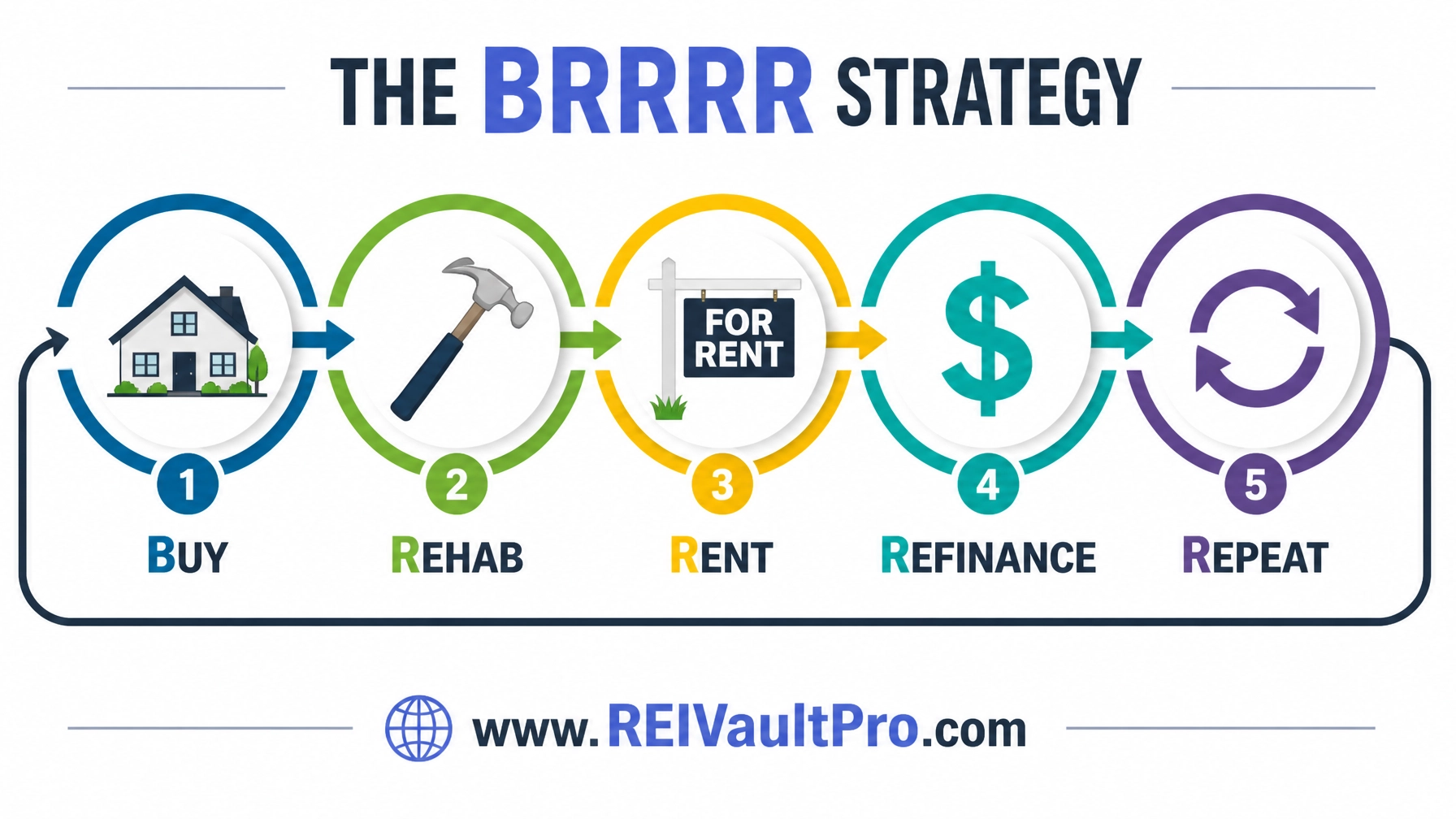
In many cases, this involves the BRRRR strategy: Buy, Rehab, Rent, Refinance, Repeat.
By transitioning your flip into a long-term rental, you can use a DSCR rental property loan to pay off your short-term debt.
This allows you to hold the asset, collect rental income, and wait for a better time to sell.
Financial Case Study: The Chicago Two-Flat Flip
To understand how these numbers work in a real-world scenario, let's look at a typical Chicago investment property.
Consider a distressed two-flat in a transitioning neighborhood:
- Purchase Price: $250,000
- Estimated Rehab Budget: $80,000
- Projected ARV: $450,000
- Loan Amount (85% of Purchase + 100% of Rehab): $292,500
- Interest Rate: 10% (Interest-only)
- Projected Timeline: 8 Months
In this scenario, your monthly interest payment is approximately $2,437.
Over 8 months, your total interest cost is $19,500.
If you add $10,000 for closing costs (in and out) and $8,000 for holding costs (taxes, insurance, utilities), your total investment looks like this:
- Total Costs: $250,000 (Purchase) + $80,000 (Rehab) + $19,500 (Interest) + $10,000 (Closing) + $8,000 (Carry) = $367,500.
With an ARV of $450,000, your projected profit is $82,500.
However, if you underestimated the rehab by $20,000 and the project took 4 months longer than expected, your profit would drop by nearly $30,000.
Using the Investment Decision Engine helps you run these "what-if" scenarios before you commit.
Related REI Vault Pro Resources
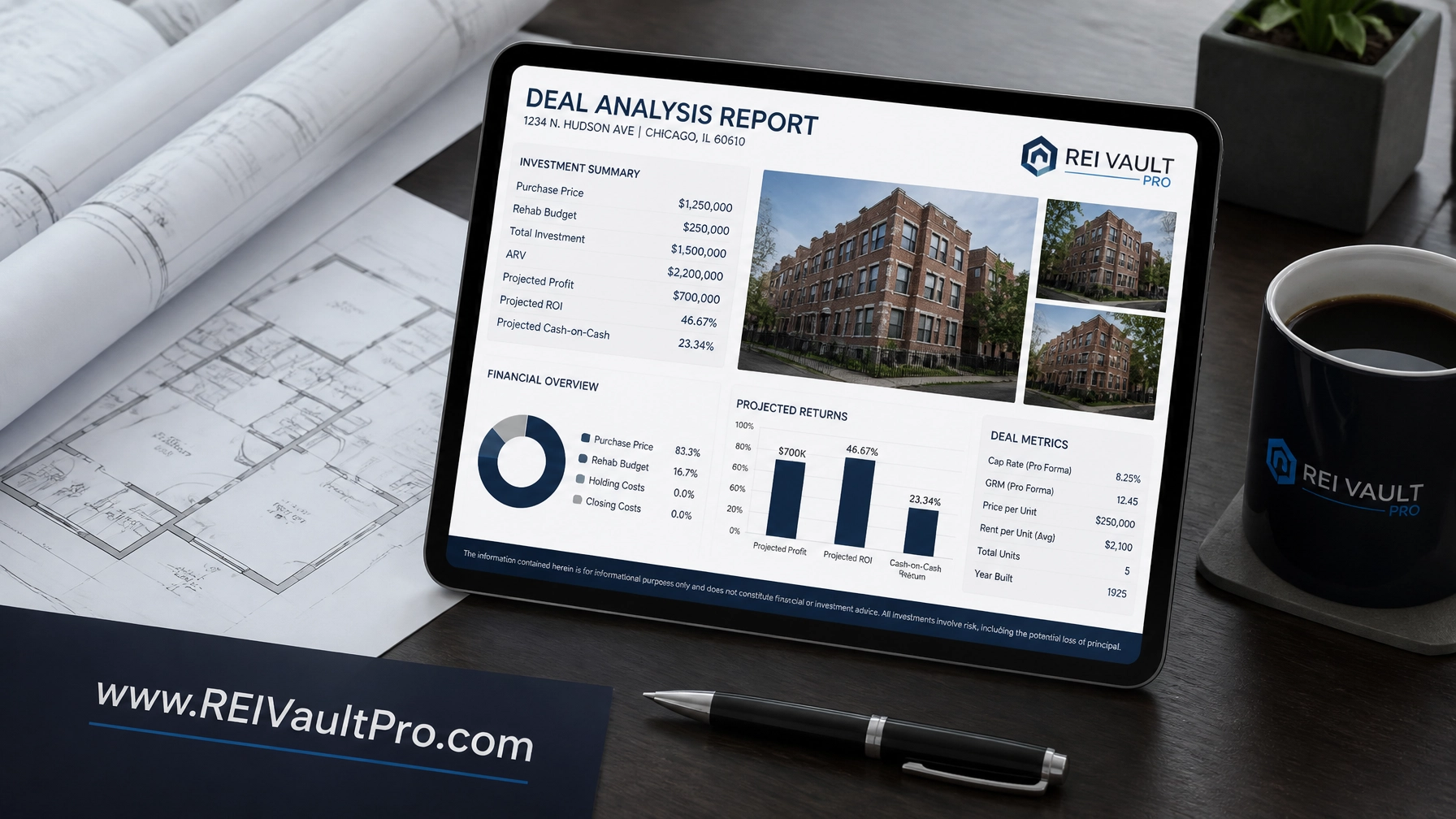
- AI Deal Analyzer: This tool provides a comprehensive breakdown of any real estate deal. It helps you verify ARV and acquisition prices so you don't overpay for your next Chicago flip.
- AI Listing Analyzer: Use this to quickly scan property listings for potential red flags. It saves you time by identifying which properties are actually worth a physical walkthrough.
- AI Deal Scoring: Get an objective score on the viability of your investment. This is perfect for comparing multiple properties in different Chicago neighborhoods.
- Investment Decision Engine: This advanced tool allows you to simulate different financing scenarios, helping you choose between a short-term flip or a long-term rental strategy.
- REI Vault Pro AI Tools: Access our full suite of technology designed to help real estate investors in Chicago, Florida, California, and across the country make data-driven decisions.
Refine Your Chicago Investment Strategy
Avoiding these common mistakes can be the difference between a profitable career in real estate and a one-time financial headache.
By focusing on accurate data, choosing the right fix and flip loans, and preparing for Chicago's unique market conditions, you position yourself for long-term success.
Whether you are looking to scale your portfolio or just starting your first renovation, having the right tools and financing in place is paramount.
We work with investors across Illinois, as well as AL, AR, CA, FL, GA, IN, KY, MI, MO, and VA, providing the guidance and lending solutions needed to navigate complex real estate markets.
Start a Free Trial to see how our technology can streamline your next deal.
Join REI Vault Pro today and take the guesswork out of your real estate investments.
Frequently Asked Questions (FAQ)
What is the maximum LTV for a Chicago fix and flip loan?
Most lenders will provide up to 85-90% of the purchase price and 100% of the renovation costs, as long as the total loan does not exceed 70-75% of the After-Repair Value (ARV).
Do I need a high credit score for a fix and flip loan?
While credit is a factor, many fix-and-flip lenders focus more on the asset and the investor's experience. Hard money loans and DSCR loans often have more flexible credit requirements than traditional mortgages.
Can I flip a house in Chicago using a bank statement loan?
Yes, if you are a self-employed investor, a bank statement loan can be a great way to qualify for financing without needing traditional W-2 documentation, though these are typically used for long-term holds rather than short-term flips.
How long does it take to get funding for a fix and flip?
Private lenders and hard money lenders can often fund a deal within 7 to 14 days, which is significantly faster than a traditional bank.
What happens if I can't sell my flip before the loan is due?
You may be able to negotiate an extension with your lender, or you can refinance the property into a long-term DSCR investor loan if the property is renovated and ready to be rented.