7 Mistakes You’re Making with Atlanta DSCR Loans (and How to Fix Them)

SEO Title: 7 Mistakes You’re Making with Atlanta DSCR Loans (and How to Fix Them)
Meta Description: Avoid costly Atlanta DSCR loan errors. Learn how to optimize your Debt Service Coverage Ratio, navigate Fulton County taxes, and scale your Georgia real estate portfolio.
URL Slug: atlanta-dscr-loan-mistakes-fix
Featured Image Recommendation: A professional aerial view of an Atlanta neighborhood with the city skyline in the background, featuring the title text and www.REIVaultPro.com.
SEO Alt Text: Atlanta Georgia real estate investment and DSCR loan analysis for rental properties.
Social Media Excerpt: Investing in Atlanta? Don't let common DSCR loan mistakes kill your cash flow. From tax reassessments to rent projections, here is how to navigate the Georgia market like a pro.
SEO Tags: Atlanta DSCR Loans, Georgia Real Estate Investing, DSCR Ratio, Rental Property Financing, REI Vault Pro, Atlanta Investment Properties, Cash Flow Analysis
Atlanta has become a premier destination for real estate investors seeking high rental demand and long-term appreciation.
From the historic bungalows of the West End to the luxury townhomes in Midtown, the "City in a Forest" offers diverse opportunities for portfolio growth.
However, many investors struggle to secure the right financing because they fall into common traps when applying for DSCR loans.
A Debt Service Coverage Ratio (DSCR) loan is a mortgage product where the property's income, rather than your personal income, determines your eligibility.
While these loans are powerful tools for scaling, making even a small mistake in your analysis can lead to a denied application or a deal that doesn't cash flow.
Explore these seven common mistakes and learn how to position your Atlanta investments for success.
1. Overestimating Rental Income for Underwriting
One of the most frequent errors investors make in the Atlanta market is using aggressive or unrealistic rent projections.
Many property owners look at the highest possible rent on a platform like Zillow and assume they will achieve that immediately.
In reality, DSCR lenders often use the lower of the actual lease amount or the appraiser's market rent estimate (form 1007).
If you are targeting a property in an up-and-coming area like Grove Park or College Park, relying on citywide averages rather than neighborhood-specific comps can be a fatal mistake.
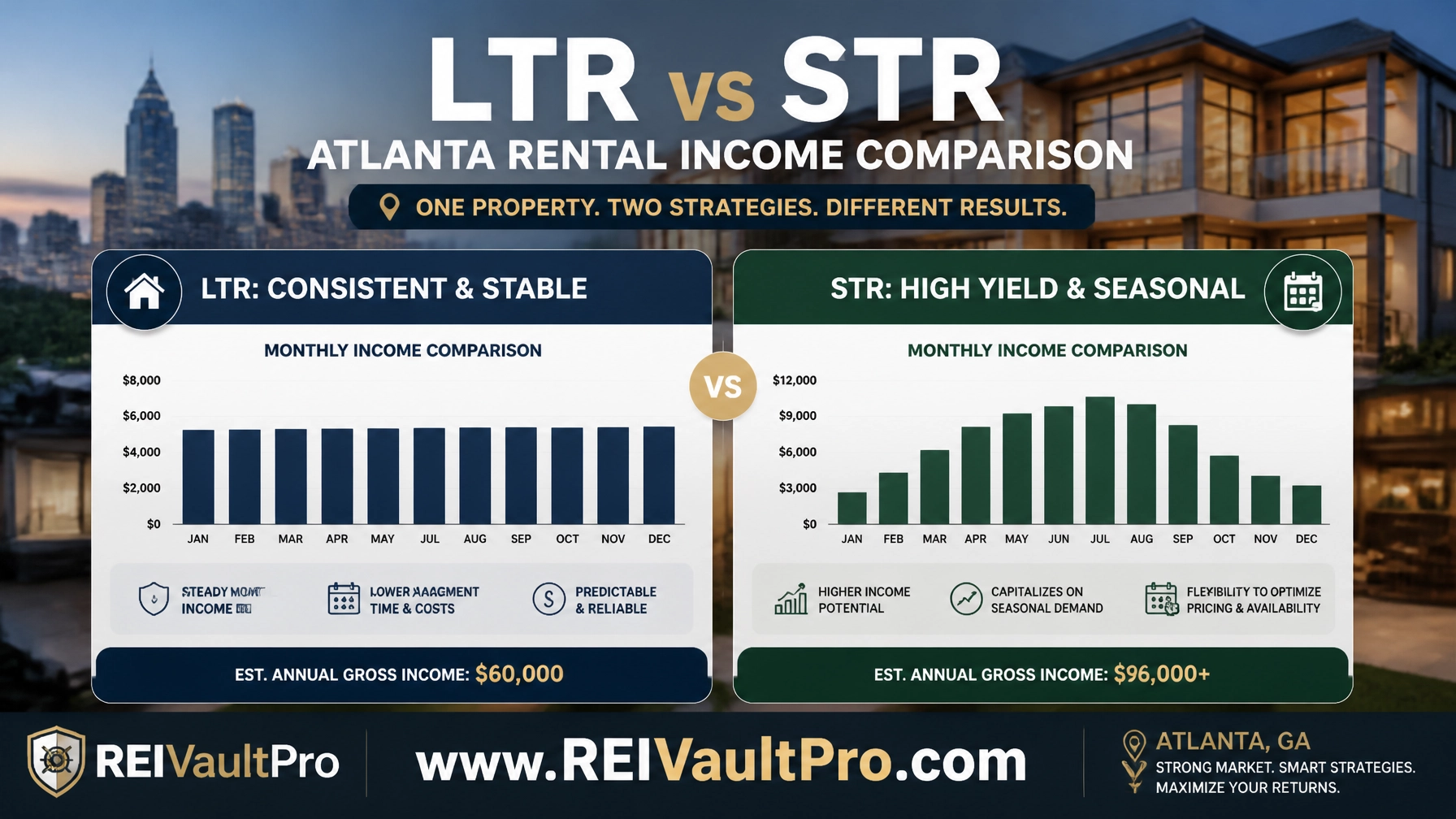
Lenders also distinguish between Long-Term Rental (LTR) and Short-Term Rental (STR) income.
If you plan to operate an Airbnb, many lenders will still underwrite the loan based on what the property would rent for as a traditional 12-month lease.
Jump in and use the AI Market Analysis tool to get conservative, data-backed rent estimates before you submit your loan application.
2. Ignoring Post-Sale Property Tax Reassessments
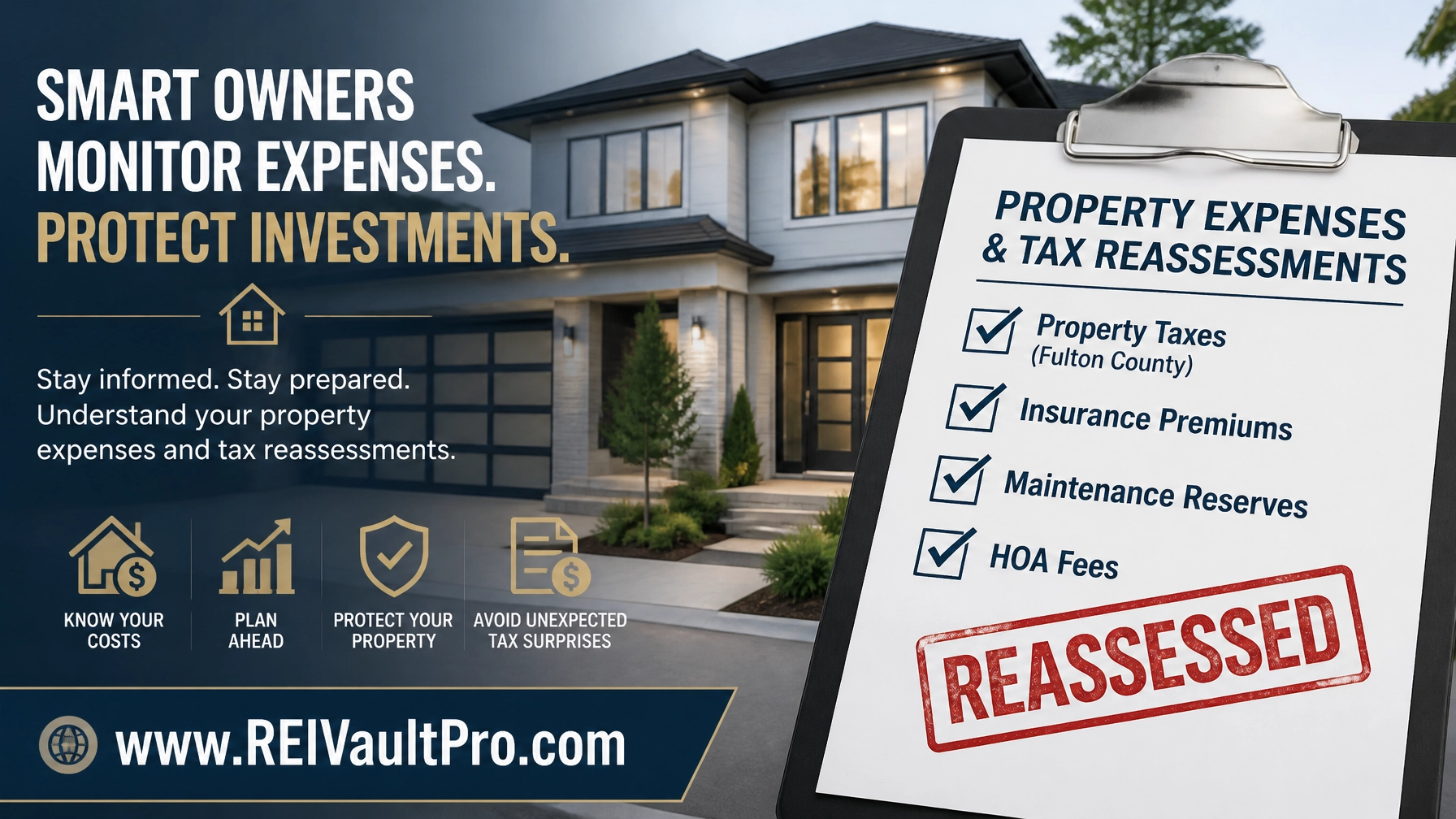
In Georgia, particularly in Fulton and DeKalb counties, property tax reassessments after a sale can catch investors off guard.
The current property taxes you see in a listing are often based on a valuation from years ago.
Once the property transfers to you at a higher price point, the county will likely reassess the value, causing your annual tax bill to spike.
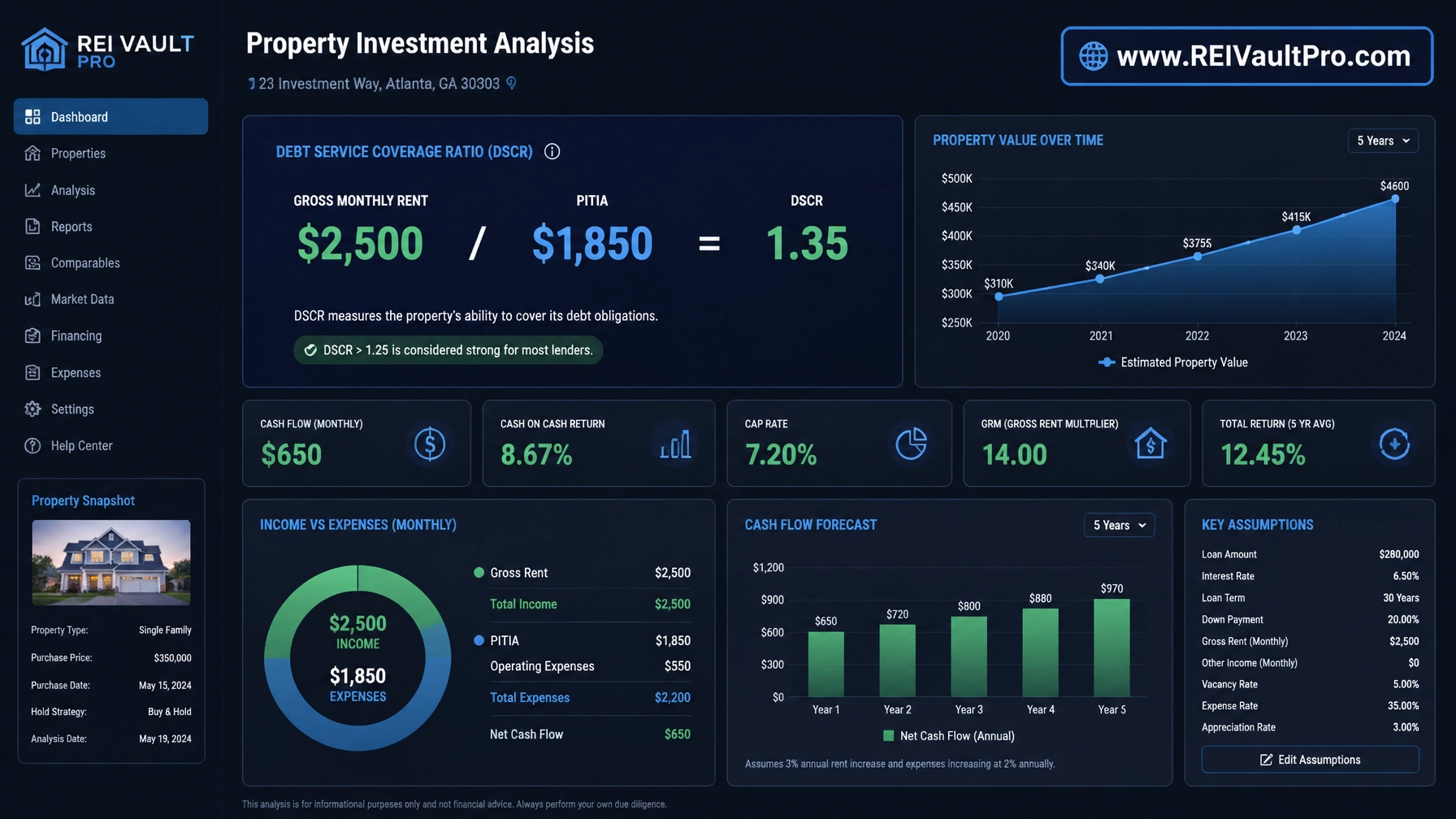
Because the DSCR calculation includes taxes in the PITIA (Principal, Interest, Taxes, Insurance, and Association dues), a sudden tax increase can drop your ratio below the required threshold.
Debt Service Coverage Ratio (DSCR): A financial metric used by lenders to measure a property's ability to cover its debt payments.
Practical Application: If your monthly PITIA is $2,000 and the rent is $2,400, your DSCR is 1.2. If a tax hike raises your payment to $2,200, your DSCR drops to 1.09, which may no longer meet lender requirements.
Access the AI Underwriting tool to stress-test your numbers against potential tax increases.
3. Underestimating Maintenance and CapEx Reserves
Atlanta’s housing stock varies significantly in age.
While a mid-century home in Cascade Heights has immense charm, it may also come with aging plumbing, electrical, or roofing systems.
Investors often fail to budget enough for Capital Expenditures (CapEx) and ongoing maintenance when calculating their net cash flow.
While many DSCR lenders look primarily at gross rent vs. PITIA, your long-term success depends on your ability to handle repairs without going into the red.
Failing to maintain the property can also lead to higher vacancy rates, which directly impacts your property's performance.
Utilize the AI Rehab Estimator to identify potential costs during your due diligence period.
4. Misunderstanding Property Eligibility
Not every property is a candidate for a DSCR loan.
Lenders typically require properties to be in "move-in ready" or "tenant-occupied" condition.
If you are purchasing a distressed property that needs a full gut renovation, a DSCR loan is likely not the right starting point.
In these cases, you might need a Fix and Flip Loan or a Bridge Loan to handle the renovation phase before refinancing into a long-term DSCR product.
Additionally, some Atlanta condos or mixed-use properties may have specific restrictions that exclude them from certain DSCR programs.
Compare different financing strategies by browsing the AI Tools suite to see which loan type fits your specific property condition.
5. Neglecting Prepayment Penalty Terms
DSCR loans are designed as long-term investment vehicles and frequently include a prepayment penalty.
This penalty is a fee charged if you pay off the loan (via sale or refinance) within a certain period, usually 1 to 5 years.
If your strategy is to Buy, Rehab, Rent, Refinance, Repeat (BRRRR), choosing a loan with a 5-year hard prepayment penalty could destroy your profits when you try to pull equity out.
Always check if the penalty is "Step-Down" (e.g., 5-4-3-2-1%) or "Hard" and align it with your planned hold period.
Watch a Demo of the AI Deal Analyzer to see how different exit strategies and penalty costs affect your overall Return on Investment (ROI).
6. Insufficient Cash Reserves
Even though DSCR loans don't focus on your debt-to-income (DTI) ratio, they do require liquidity.
Most lenders want to see 3 to 12 months of PITIA payments in your bank account as reserves.
Mistakenly spending all your capital on the down payment and closing costs can lead to a loan denial at the final underwriting stage.
In Atlanta’s competitive market, having healthy reserves also protects you during seasonal vacancy periods or unexpected tenant turnovers.
Before you commit, Search our database for Investor Starter guidelines to understand typical reserve requirements for your portfolio size.
7. Using an Individual Name vs. an LLC
Many seasoned investors prefer to close DSCR loans in the name of an LLC (Limited Liability Company).
While some programs allow for personal name closings, using an entity can provide liability protection and help you keep your personal and professional finances separate.
A common mistake is waiting until the last minute to set up your entity or failing to provide the necessary operating agreements and certificates of good standing.
This can cause significant delays in closing your deal, especially in a fast-moving market like Atlanta.
Ensure your Core Investor documentation is ready well in advance of your closing date.
How to Calculate a Winning Atlanta DSCR Deal
To avoid these pitfalls, you must run your numbers with precision.
Let's look at a practical example for a duplex in the Kirkwood neighborhood:
- Purchase Price: $550,000
- Down Payment (20%): $110,000
- Loan Amount: $440,000
- Estimated PITIA: $3,200 (including estimated Fulton County tax reassessment)
- Total Monthly Rent: $4,200 ($2,100 per unit)
- DSCR Calculation: $4,200 / $3,200 = 1.31
In this scenario, a DSCR of 1.31 is generally considered very strong, as most lenders look for a ratio of 1.2 or higher.
If your ratio is lower, you may need to increase your down payment to reduce the monthly debt service and improve the coverage.
Explore the AI Deal Scoring tool to see how your potential deals rank against market benchmarks.
Related REI Vault Pro Resources
Before you finalize your next Atlanta investment, leverage these specialized tools to ensure your financing strategy is sound:
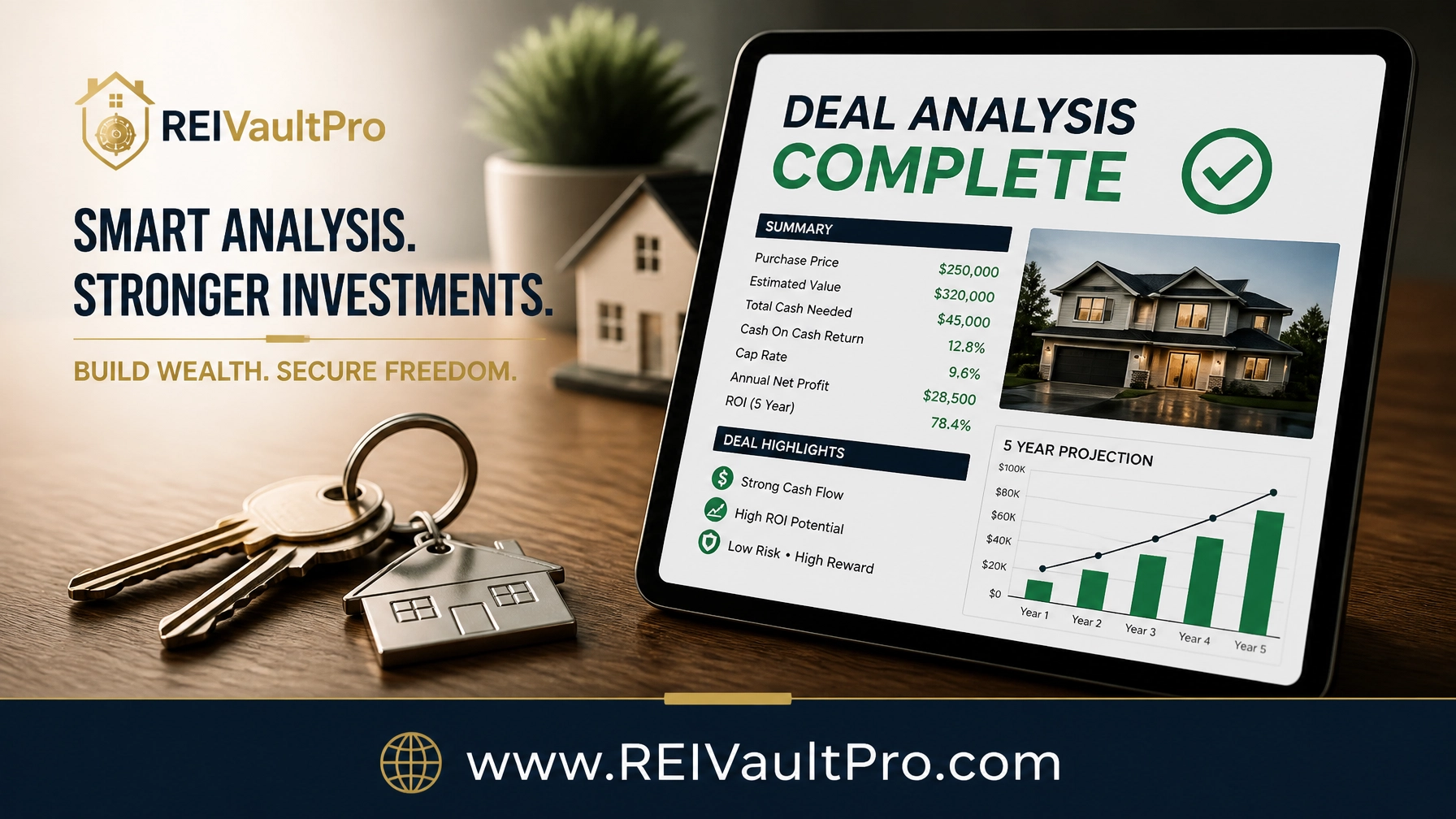
- AI Deal Analyzer: This tool allows you to input your property data and receive a comprehensive breakdown of your projected cash flow, ROI, and DSCR. It helps you see the impact of different interest rates on your investment.
- AI Underwriting: Use this resource to simulate a lender's review process. It identifies red flags in your deal structure, such as low DSCR ratios or high expense ratios, before you pay for an appraisal.
- AI Market Analysis: Access deep-dive data on Atlanta submarkets. This tool provides realistic rent comps and vacancy trends, helping you avoid the mistake of overestimating your income.
- AI Rehab Estimator: Perfect for BRRRR investors, this tool helps you calculate the cost of repairs to ensure your property meets the "move-in ready" standards required for DSCR permanent financing.
- REI Vault Pro Search: Quickly find specific loan programs, state-specific requirements, and investment guides tailored to the Georgia real estate market.
Navigating the world of DSCR loans in Atlanta requires a blend of local market knowledge and disciplined financial analysis.
By avoiding these seven common mistakes, you can secure the funding you need to grow your wealth through real estate.
Compare your options and secure your financial future by exploring our full suite of professional tools.
Start a Free Trial | Join the Community | Upgrade to Lifetime Membership | Watch a Demo
FAQ
What is the minimum DSCR ratio required for an Atlanta rental property?
Most lenders require a minimum DSCR of 1.2, meaning the property's gross income is 20% higher than the debt payments. However, some specialized programs may allow for a 1.0 ratio or even a "no-ratio" loan if you have a significant down payment and strong credit.
Can I use a DSCR loan for an Airbnb in Atlanta?
Yes, but you must verify the lender's underwriting guidelines. Many lenders will only use long-term rental market comps to qualify the loan, even if you plan to operate as a short-term rental. It is also critical to ensure the property complies with City of Atlanta STR ordinances and permits.
Do DSCR loans require a personal credit check?
While DSCR loans focus on the property's income, lenders still perform a credit check on the borrower to determine the interest rate and loan-to-value (LTV) limits. A higher credit score typically results in better terms and lower down payment requirements.
Are prepayment penalties mandatory on DSCR loans?
Most DSCR loans include a prepayment penalty to protect the lender's yield. However, many lenders offer the option to "buy out" or reduce the penalty in exchange for a slightly higher interest rate.
Can I use a DSCR loan for a multi-family property in Georgia?
Yes, DSCR loans are available for residential multi-family properties (2-4 units) and often for larger commercial multi-family buildings (5+ units). The underwriting process for larger buildings may involve a more detailed review of the property's operating history and expense reports.