5 Steps How to Scale Real Estate Wholesale and Find Your Next Atlanta Investment Property (Easy Guide for Investors)

Wholesaling is often the entry point for many looking to break into the real estate game. It requires less capital than a traditional fix and flip, but it demands a high level of hustle and market knowledge. If you have been doing a deal here and there in the Atlanta area, you might be wondering how to take that small operation and turn it into a high-volume machine.
Scaling real estate wholesale is about moving from a "solopreneur" mindset to a systems-based business. Whether you are hunting for an Atlanta investment property or looking at markets in Florida and California, the principles of growth remain consistent. You need to stop doing everything yourself and start building a structure that generates leads while you sleep.
Defining the Wholesale Foundation
Wholesaling
The process of finding a distressed property, securing it under contract, and then assigning that contract to a cash buyer for a fee.
Benefit: This allows you to generate liquidity without taking on the debt or renovation risks associated with traditional ownership.
Assignment Fee
The profit a wholesaler earns for connecting a motivated seller with a real estate investor.
Benefit: It provides immediate capital that can be used to fund larger deals or transition into long-term rentals.
Double Closing
A transaction where the wholesaler actually purchases the property and then immediately sells it to the end buyer in a second closing.
Benefit: This keeps your assignment fee private and is often used in larger commercial or residential transactions.
Step 1: Build and Prioritize Your Cash Buyers List
Before you even look for a property, you need to know who is buying. Scaling requires efficiency. You do not want to find a great deal and then scramble for two weeks trying to find someone to take it off your hands.
In a hot market like Atlanta, or even across various cities in Florida and California, the best wholesalers have a "pocket list" of active investors. Start with 5 to 10 high-quality buyers. Document their specific criteria: do they want single-family homes in Buckhead? Are they looking for multi-unit apartment buildings in the suburbs?
When you know exactly what your buyers want, your marketing becomes targeted. You stop wasting time on properties that won't move. You can learn more about how investors think about their purchases by exploring our mortgage basics section.

Step 2: Master Georgia’s Wholesaling Laws and Contracts
Every state has its own flavor of real estate law. Scaling your business means you cannot afford a legal hiccup that shuts you down. Georgia has specific regulations regarding how you can market a property you do not yet own.
You must be transparent. In Georgia, you are selling the contract, not the property itself, unless you are a licensed real estate agent. Ensure your contracts have the proper "and/or assigns" language and that you are providing clear disclosures to all parties involved.
If you are expanding your reach into Florida or California, the rules change again. Professionalism is your best defense. Using standardized, attorney-reviewed contracts ensures that as your volume increases, your risk does not. You can see how we handle the legal side of things at Home Loans Network by visiting our legal page.
Step 3: Conduct Market Analysis and Generate Consistent Leads
Scaling real estate wholesale is a numbers game. To find one "unicorn" deal, you might need to look at 100 properties. This requires a multichannel lead generation strategy.
In Atlanta, market analysis involves looking at neighborhood trends, school district ratings, and upcoming commercial developments. Are people moving toward the BeltLine? Is there a spike in demand for short-term rentals near the stadium?
Lead Generation Channels:
- Direct Mail: Sending postcards to owners with high equity or those in pre-foreclosure.
- Cold Calling: Reaching out directly to distressed property owners.
- SEO and Digital Ads: Capturing people who are searching for "sell my house fast Atlanta."
- Networking: Building relationships with probate attorneys and local agents.
Consistency is what separates a hobbyist from a professional. You need a dedicated CRM to track every lead. If you stop marketing because you are busy closing a deal, your pipeline will dry up, and your scaling efforts will stall.
Step 4: Develop a Repeatable Sales and Analysis Process
Once the leads start coming in, you need a way to vet them quickly. This is where your analysis skills come into play. You need to run "comps" (comparable sales) to determine the After Repair Value (ARV).
A common rule of thumb is the 70% rule: offering 70% of the ARV minus the estimated repair costs. While this is a starting point, every market is different. In high-demand areas of California or Florida, you might have to adjust your margins to stay competitive.
Standardize your negotiation script. Whether it is you or an acquisitions manager on the phone, the message should be the same. You are there to solve a problem for the seller. Transparent communication builds trust and leads to more signed contracts. For those moving from wholesaling into holding properties, check out our fixed-rate mortgage options to see how long-term financing looks.

Step 5: Structure Your Business Into Three Core Departments
You cannot scale if you are the one pulling the lists, making the calls, inspecting the houses, and finding the buyers. To grow, you must departmentalize.
- Marketing Department: Responsible for generating the leads. They manage the mailers, the ads, and the data.
- Acquisitions Department: These are your closers. They talk to sellers, go on appointments, and get the contracts signed.
- Dispositions Department: Their sole job is to sell the contracts. They talk to the cash buyers, send out the email blasts, and ensure the deal gets to the finish line.
As you build this team, you move from being a wholesaler to being a business owner. This structure allows you to handle 10 deals a month instead of one every two months.
Real-World Financial Example: The Atlanta Wholesale Deal
Let's look at how a typical wholesale deal might break down in an Atlanta suburb.
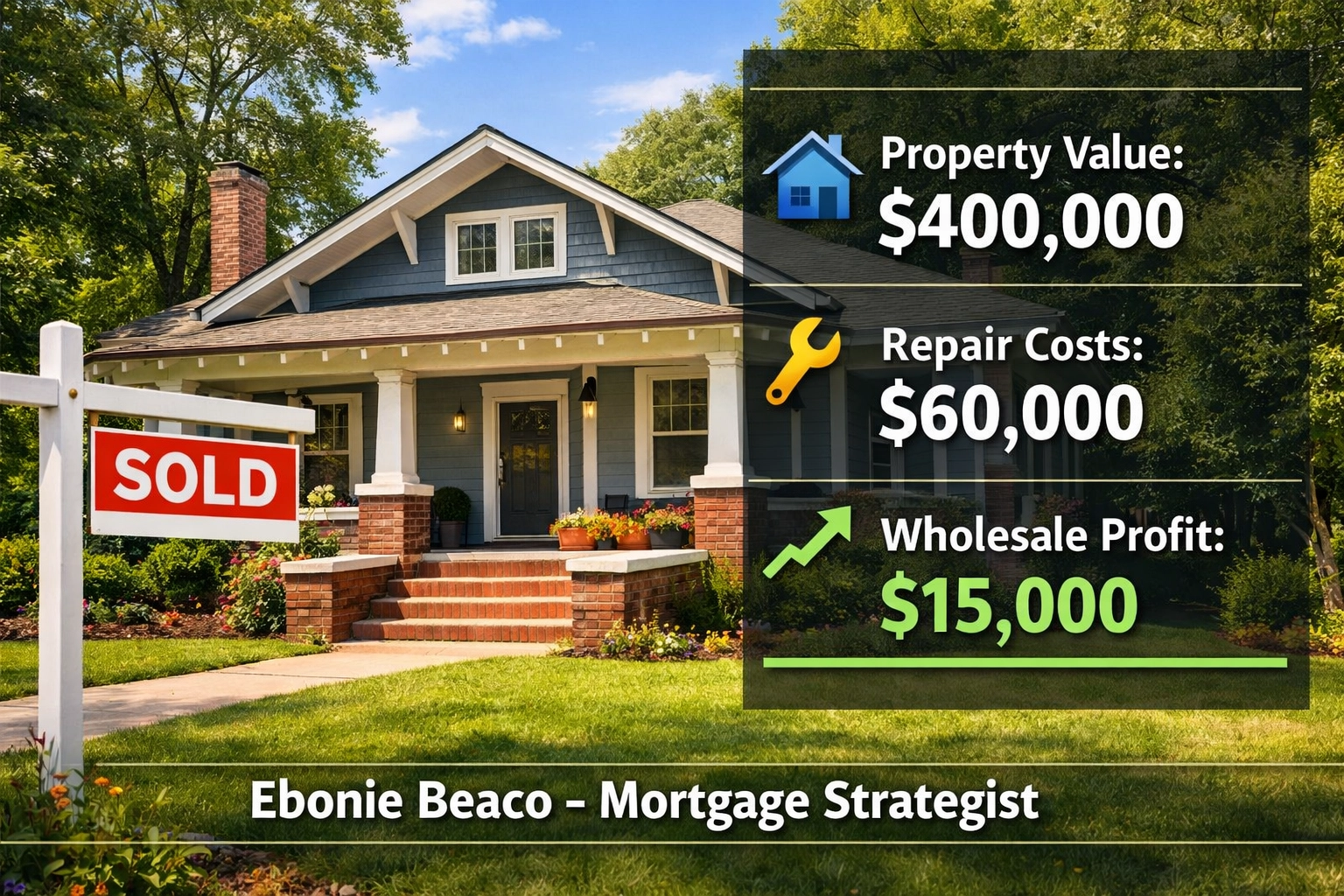
Scenario: You find a distressed 3-bedroom home in a neighborhood where renovated homes are selling for $400,000.
- After Repair Value (ARV): $400,000
- Estimated Repairs: $60,000
- Your Offer (approx 70% rule): ($400,000 * 0.70) - $60,000 = $220,000
- Contract Price with Seller: $210,000
- Assignment Price to Cash Buyer: $225,000
- Your Profit (Assignment Fee): $15,000
In this example, the cash buyer gets a property with $55,000 in potential equity after repairs, and you walk away with $15,000 for finding the deal and managing the paperwork.
Transitioning from Wholesaler to Investor
Many successful investors use wholesaling as a way to fund their own long-term portfolios. Once you have scaled your wholesale business, you might decide to keep the best deals for yourself.
When you find that perfect Atlanta investment property, you might look into DSCR investor loans or fix and flip loans. DSCR (Debt Service Coverage Ratio) loans are particularly popular because they qualify you based on the property’s income rather than your personal tax returns: perfect for a busy wholesaler with fluctuating income.
If you are looking to scale even further, consider jumbo loans for high-end flips or multi-family financing for apartment buildings. The skills you learn in wholesaling: market analysis, negotiation, and lead generation: are the exact skills needed to succeed in any level of real estate finance.
Scaling Beyond the Basics
To truly scale, you have to be comfortable with technology. Use automated follow-up systems. Use data skip-tracing services to find the right phone numbers. Use mortgage calculators to help your buyers understand their potential exit strategies.
Scaling real estate wholesale is not about working harder; it is about building a machine that works for you. By following these five steps, you can dominate the Atlanta market and beyond, providing value to sellers and high-quality inventory to investors.
If you are ready to take the next step in your investment journey or need to discuss financing for your next acquisition, explore our loan process to see how we support investors like you.
Schedule a 1 on 1 at https://calendly.com/homeloansnetwork
Ebonie Beaco
Mortgage Strategist | Senior Loan Officer
Home Loans Network powered by Loan Factory Inc.
NMLS #2389954
HomeLoansNetwork.com
312-392-0664